Bill Rice on Messaging and Pipeline Mechanics (Part 2)
Craig and Jason are licensed P&C agency owners, co-authors of Million-Dollar Agency, creators of the trademarked Telefunnel, hosts of The Insurance Dudes podcast, and speakers.
Written and reviewed under our editorial process. Found an error? See our corrections policy.
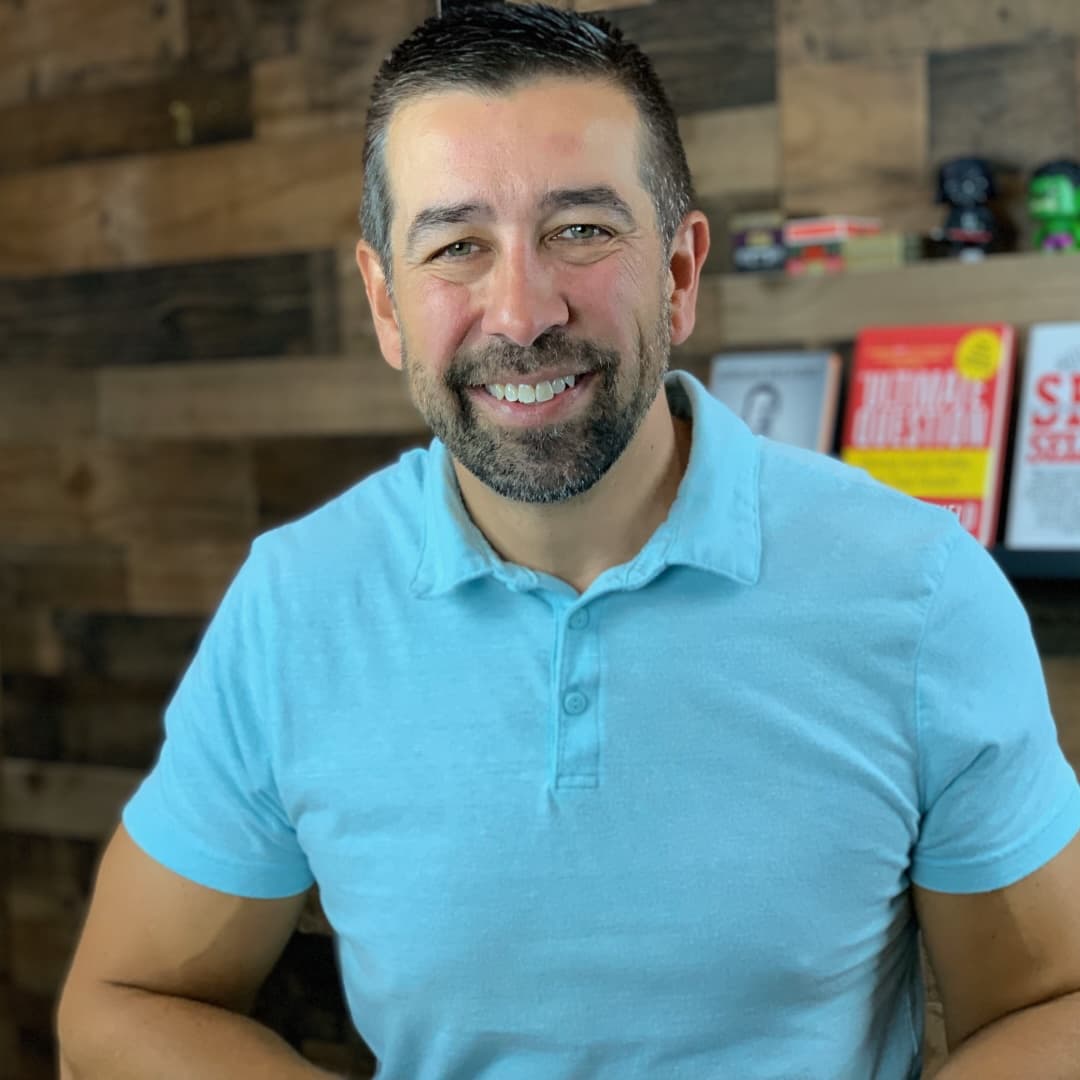
Most insurance lead messaging fails because it serves the agency, not the prospect. Bill Rice rewrites voicemails, emails, and texts around what the prospect was feeling when they submitted the form, then runs them across phone, email, and text in a sequence built to surface real conversations.
TL;DR
Most insurance lead messaging fails because it serves the agency, not the prospect. Bill Rice shows how to rewrite voicemails, emails, and texts around what the prospect was feeling when they submitted the form, then run those across a multi-channel sequence built to produce real conversations.
Why does most insurance lead messaging fail to get a response?
Bill starts this part of the conversation with a direct observation: most of the messaging insurance agencies use in their follow-up sequences is designed for the agency's convenience, not the prospect's psychology.
What does that look like? It looks like follow-up emails that lead with the agency name, the agent's credentials, and a request to call. It looks like voicemails that explain who you are and ask for a callback without giving the prospect a reason to call. It looks like text messages that say "I'd love to connect about your insurance needs", language that triggers every sales-alert instinct in the prospect's brain.
None of this messaging is designed from the prospect's perspective. It doesn't address what they're actually worried about. It doesn't create curiosity or urgency. It doesn't differentiate the agency from the four other agencies following up with the same prospect at the same time.
The alternative is messaging designed around what the prospect is experiencing. They submitted a form because something triggered it, a life event, a rate increase, a coverage concern, a home purchase. Your messaging should acknowledge that trigger and speak directly to what they were probably feeling when they submitted. "If you just got your renewal and the number surprised you, I'd like to walk you through why that happened and what your actual options are." That's different from "Hi, I'm Bill from Main Street Insurance."
How should a multi-channel follow-up sequence be structured?
Bill's framework for follow-up sequences operates across three channels: phone, email, and text. Each channel has different response characteristics, different appropriate use cases, and different optimal timing.
Phone is the highest-engagement channel when you reach someone and the lowest-response channel on the first few attempts. Voicemails are generally not returned, which means your voicemail content needs to do two things simultaneously: leave enough of a hook that the prospect might actually call back, and seed enough context that when you call again, they have some memory of why you're relevant.
A voicemail worth leaving gives the prospect something: a fact about their situation, a question worth thinking about, or a genuine piece of value. "Based on what you submitted, the biggest gap I see in a lot of policies like yours is in the liability coverage, it's worth a five-minute conversation to confirm yours isn't one of them." That's a voicemail with a reason for the callback.
Email has the lowest response rate but the highest documentation value. A well-crafted email in a follow-up sequence can establish credibility, provide social proof, address common objections, and keep the agency top of mind across a two-to-three week nurture period. Bill recommends thinking of the email sequence not as a series of asks but as a series of offers: each email gives the prospect something useful before asking for anything.
Text has the highest open rate of any digital channel, but it also has the lowest tolerance for being used incorrectly. A text that reads like marketing will be immediately dismissed or, worse, reported as spam. Texts that work in follow-up are short, direct, and personal-feeling. "Quick question, did you get a chance to look at the info I sent over? Happy to walk through it whenever works for you." That text gets responses because it doesn't feel like it came from a campaign.
Where is the hidden revenue inside your pipeline audit?
One of the most valuable exercises Bill recommends for any agency that's been running lead-based acquisition is a pipeline audit focused specifically on the dead leads, the ones that never converted and were eventually marked as lost.
Go back into your CRM and look at the leads that are marked lost or unresponsive from the past six months. For a sample of those leads, answer these questions: How many contact attempts did they receive? Over what time period? Through what channels? What was the last message they received?
In most agencies, this audit reveals that a substantial percentage of "dead" leads received fewer than three contact attempts, were only contacted via phone, and were abandoned within the first week. That's not a dead lead, that's an un-worked lead. A proper reactivation campaign to these prospects, using email and text with new messaging, typically converts at meaningful rates and at near-zero acquisition cost.
What does the actual conversion conversation sound like?
All of this pipeline work, the speed, the persistence, the multi-channel sequences, exists to produce one outcome: a real conversation with a prospect who is genuinely engaged. That conversation is still where the sale happens. Technology and systems get you to the conversation. What you do in the conversation determines whether it produces revenue.
Bill's advice for the conversion conversation is simple: shut up and listen first. The agents who talk too much in the first two minutes of a lead call, explaining who they are, what their agency offers, why they're different, lose the prospect's attention before they've established any relevance to the prospect's specific situation. The agents who start with genuine questions and listen carefully to the answers have a completely different conversion dynamic.
How do you fix your follow-up messaging this week?
Audit your current follow-up messaging. Pull the last five emails, voicemails, and texts you or your team sent to new leads. Read them as if you are the prospect, receiving them from a stranger. Do they give you a reason to respond? Do they speak to what you were probably thinking when you submitted the form? Or do they ask you to do something for the agency's benefit without offering anything in return first?
Rewrite the weakest two or three pieces in your sequence with the prospect's psychology in mind. Test them against your current versions. Measure response rates. The difference is usually significant and usually immediate.
What is the bottom line on Bill Rice's messaging and pipeline approach?
Bill Rice's approach to lead generation is built on a foundational insight: the prospect is a person with a specific problem and a specific psychology, not a form submission to be processed. Every element of your lead generation system, the source, the speed, the persistence, the messaging, the conversion conversation, should be designed around serving that person. The agencies that build their systems with that orientation consistently outperform the ones treating their pipeline like a volume game.
Catch the full conversation:
This is Part 2 of a 2-part series with Bill Rice.
About Bill Rice: Founder of Kaleidico, a digital marketing agency specializing in lead generation for financial services and insurance. Bill has spent decades building high-performance acquisition pipelines for some of the most competitive industries on the internet., LinkedIn | Kaleidico | Website
Level up your agency:
Listen to The Insurance Dudes Podcast
Get more strategies like this on our podcast. Available on all platforms.
Related Episodes

Martina Brugnoni's Advanced Marketing Strategies (Part 2)
Bill Rice on Building Pipelines That Actually Work (Part 1)
Krista Mashore's Marketing Lessons for Agents (Part 1)

Bryan Dulaney's Funnel Formula for Insurance Agents
Preston Schmidli's Digital Marketing Playbook (Part 3)
