David Duford on Content Systems for Final Expense (Part 2)
Craig and Jason are licensed P&C agency owners, co-authors of Million-Dollar Agency, creators of the trademarked Telefunnel, hosts of The Insurance Dudes podcast, and speakers.
Written and reviewed under our editorial process. Found an error? See our corrections policy.
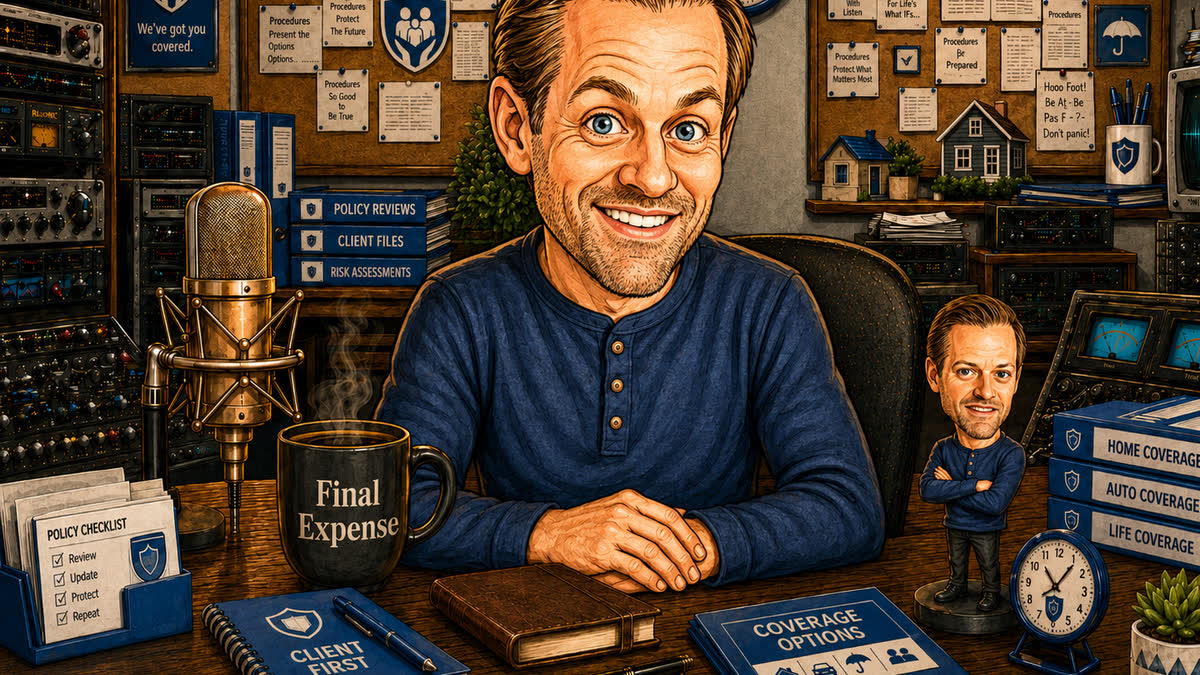
Run YouTube on a fixed schedule with topics pulled from audience questions, recruit agents who already consumed the content, and develop them with mentor-led field reps. Master fundamentals, not new tactics. The content-to-organization flywheel takes years and compounds.
Execution beats theory. Produce YouTube content on a fixed schedule with topics driven by audience questions, recruit agents who already absorbed the content, and develop them with mentor-led field experience. Master the fundamentals (carrier knowledge, lead management, sales skill) rather than chasing new tactics. That is how the content-to-organization flywheel actually turns.
What content system does David Duford actually run?
David is unusually systematic about his content production, and he talks about the system candidly. The core platform is YouTube because of the search and discoverability properties, agents searching for information about specific carriers, scripts, or sales techniques find the content through search, which produces organic, high-intent discovery that no paid channel can fully replicate.
The content is not produced on inspiration. It's produced on a schedule, with topics chosen based on the questions the audience is actually asking, from comments, direct messages, and the patterns of what search traffic is driving to existing content. This feedback loop between audience questions and content topics is how the channel stays useful rather than drifting toward what's interesting to create rather than what's valuable to consume.
The production quality is intentionally functional rather than studio-level. David's view is that the final expense audience, agents who are looking for practical help, doesn't need cinematic production. They need clear, direct information delivered by someone who actually knows the subject. Over-producing the content can actually undermine trust by creating a perception of polish over substance.
The consistency is the most important variable. The channel has been producing content on a dependable schedule for years. That reliability is itself a signal, it tells the audience that the source is serious and committed, not someone testing a content strategy and likely to disappear. The compounding effect of years of consistent content is that the archive keeps generating views and subscribers continuously, and the audience has enough material to develop a genuine sense of who David is and what he stands for before they ever make contact.
How do you develop agents inside a final expense organization?
The tribe isn't just an audience for content, it's the feeder for David's agent organization. Agents who have consumed the content, understand the philosophy, and have decided they want to work within that framework are very different candidates than agents who respond to a generic recruiting ad. They arrive already aligned with the approach, already familiar with the culture, already committed enough to have invested time in understanding what they're joining.
That context makes the development process more efficient. David doesn't need to spend early training time convincing new agents that the approach is worth believing in, that work was done by the content before they arrived. The early training time can go toward the specific skills and knowledge they need to be productive: carrier knowledge, product specifics, lead management, and the sales techniques that work in the final expense client demographic.
The development model within the organization is mentor-intensive rather than classroom-intensive. New agents are expected to be in the field quickly, but they're not working alone, they have access to experienced agents and to David himself for specific questions. The feedback loop from real field experience to specific coaching is what develops skill faster than any training program can replicate.
Is final expense a quick-money play or a career market?
One theme David returns to in Part 2 is the long game mentality that he believes is necessary for sustainable success in final expense. The market rewards agents who are consistent, who show up every week, work their leads systematically, manage their client relationships over the long term, and don't spend all their energy chasing the next hot lead source.
This runs counter to a lot of what gets promoted in independent insurance marketing, where the emphasis is often on new products, new tactics, and new systems. David's view is that the basics of final expense, work ethic, lead quality, sales skill, carrier knowledge, don't change enough year to year to justify constantly reinventing the approach. The agents who succeed consistently are the ones who are very good at the fundamentals rather than perpetually optimizing their tactics.
For agents who are newer to final expense or considering it, David's advice from Part 2 is a useful filter: are you looking for a quick-money strategy or a career market? The quick-money orientation produces agents who burn through leads, struggle with retention, and move from opportunity to opportunity without building anything. The career orientation produces agents who develop deep expertise, build genuine client relationships, and create a compounding referral base over years. Same market, completely different outcomes depending on which orientation you bring.
What does the content-to-organization flywheel actually look like?
The full picture of what David has built, and what he describes in Part 2, is a flywheel where the content produces the audience, the audience produces the tribe, the tribe produces agent recruits, the agents produce organization revenue, and the organization experience produces more content. Each element feeds the next, and the system strengthens with time rather than requiring constant external input.
That flywheel took years to build and required genuine investment in each element before the compounding effects became visible. The lesson for agents and agency owners watching from the outside is not that everyone needs to build David Duford's specific model, but that the underlying principle, building genuine value for a specific audience over a long period, is exportable to virtually any insurance context.
Catch the full conversation:
Listen to The Insurance Dudes Podcast
Get more strategies like this on our podcast. Available on all platforms.
Related Episodes
David Duford on Building a Tribe Around Your Brand (Part 1)
David Duford's Final Expense Selling Secrets That Work
What the Grateful Dead Teach Agents About Client Loyalty

Justin Brock on Building an Agency at Scale (Part 1)

Perry Olson: Turning Keywords Into Content That Ranks
