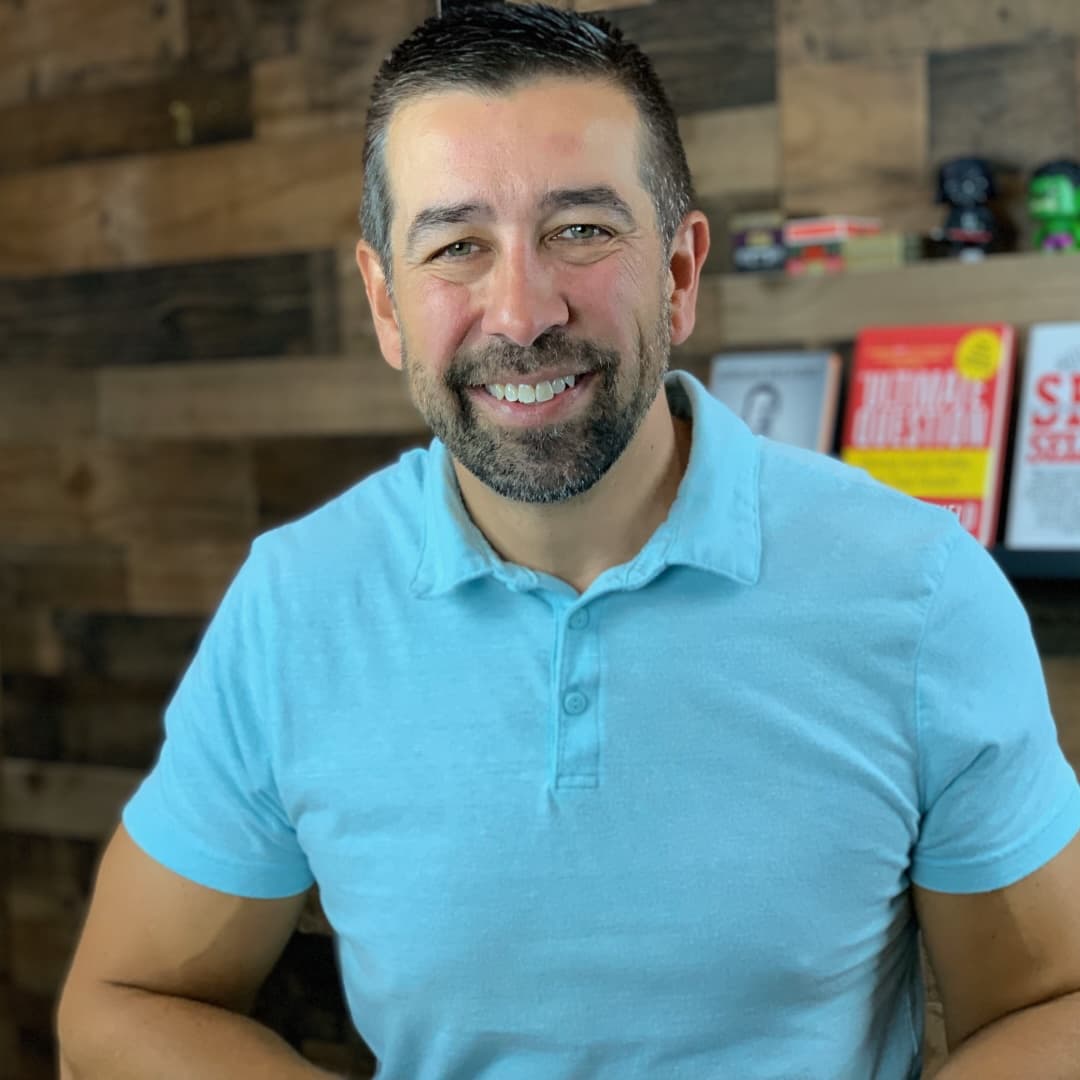
Perry Olson: From Keywords to Content Strategy (Part 2)
Craig and Jason are licensed P&C agency owners, co-authors of Million-Dollar Agency, creators of the trademarked Telefunnel, hosts of The Insurance Dudes podcast, and speakers.
Written and reviewed under our editorial process. Found an error? See our corrections policy.

Turn keywords into ranking content by building location-plus-coverage service pages with real depth, question-based blog posts that capture early researchers, and comparison content for active shoppers. Batch quarterly, attach a clear quote CTA, and the library compounds.
Execute the marketing sanctuary strategy by turning each researched keyword into one of three asset types: a location-plus-coverage service page (800 to 1,500 words, local specifics, clear CTA), a question-based blog post that captures early researchers, or a comparison piece that shapes decision criteria. Batch the raw material quarterly and publish on a weekly cadence.
Why doesn't my agency's content rank in Google?
Insurance agency websites share a common problem: they're designed to look credible but not to rank. They describe the agency's services in broad terms, use language the agency is comfortable with rather than language prospects actually use when they search, and produce no meaningful stream of new content that signals to search engines that the site is actively maintained and authoritative.
The pages that rank on the first page for competitive local insurance searches typically share specific characteristics: they're detailed and specific about the topic they cover, they use the exact language of the search queries they're targeting, they answer the actual questions behind the search intent, and they demonstrate expertise that a general "we offer all types of insurance" page cannot.
Building content that ranks requires accepting that you're writing primarily for a specific audience (people who found you through a specific search query) rather than for a general audience (everyone who might possibly need insurance). Narrower focus produces better ranking, better qualified traffic, and better conversion, because the person who found your page by searching "SR-22 insurance for DUI in Phoenix" and landed on a page specifically about that topic in Phoenix is a dramatically better lead than a generic website visitor.
What content types actually win for insurance agencies?
Location + coverage pages are the foundation. A dedicated page for each significant coverage type you offer, incorporating local geographic qualifiers, is the core of local SEO for insurance agencies. "Homeowners insurance in [city]" with a genuinely useful, detailed page, not just a paragraph with the city name inserted, is how agencies earn first-page visibility for their most commercially valuable searches.
These pages should include: what this type of coverage does and doesn't cover, factors that affect pricing in your specific market, what makes your agency's approach distinctive, and a clear call to action. Length matters, thin pages with 200 words don't signal depth or authority. 800-1,500 words on a specific coverage topic is more competitive.
Question-based blog content captures early-stage searchers. "How much homeowners insurance do I need?" "Does auto insurance cover a rental car?" "What is an umbrella policy and do I need one?" These searches represent people who are educating themselves before they make decisions. The agency that answers these questions clearly and thoroughly earns trust and top-of-mind awareness before the competitive quoting conversation begins.
This content also accumulates over time. A blog that has published 50 genuinely useful articles about insurance questions relevant to your market is a significant organic traffic asset, one that continues generating visits and leads without additional advertising spend.
Comparison and decision-support content addresses the moment when prospects are actively evaluating options. "Independent agent vs. captive agent," "what to look for in a homeowners insurance quote," "how to compare auto insurance rates", these searches indicate higher purchase intent and the content that ranks for them has an opportunity to shape the prospect's decision criteria in ways that favor an agency with your attributes.
How does a busy agency owner actually produce this content?
Consistently creating quality content is the primary obstacle for most agencies. The owner doesn't have time to write, the team doesn't have the expertise, and outsourcing it to generic content writers produces content that is factually correct but lacks the local specificity and genuine expertise that makes insurance content actually useful.
Perry's practical approach: the agency owner provides the expert knowledge in short voice recordings or conversations, answering specific questions about a coverage topic, discussing what they see in their local market, explaining the most common mistakes clients make about a particular coverage type. A writer turns that material into polished content. The result combines the owner's genuine expertise with the production quality that an owner who is also running an agency full-time can't maintain alone.
Content batching also helps. Rather than trying to publish consistently by creating one piece at a time, block a half-day quarterly to record or draft the raw material for eight to twelve pieces. Then publish them one or two per week over the following months. The result looks like consistent publishing, because it is, without requiring the agency owner to context-switch into content mode every week.
How do I turn ranking content into actual quote requests?
Content that ranks but doesn't convert is an incomplete investment. Every piece of content on your site should have a clear next step, an invitation to continue the conversation.
The most effective conversion architecture in insurance SEO: a prominent, easy-to-use quote or consultation request form that works on mobile (where a majority of searches now occur), a phone number that's clickable on mobile, and a genuine value proposition in the call-to-action that explains what the prospect gets by reaching out (a no-obligation review of their current coverage, a comparison quote, a specific consultation on the coverage topic the page addresses).
Agencies that implement good content and good conversion architecture consistently report meaningfully lower cost-per-acquisition from organic search than from paid channels, because the prospects self-select into the conversion based on a specific information need, and that self-selection produces higher intent and higher close rates.
Which page should I build first this month?
If you did the keyword research from Part 1, pick the three highest-value keyword targets for your market. Assign one to a dedicated page or blog post on your website this month. Write it with genuine depth and specific local relevance. Measure where it ranks in 60 days. The first piece of optimized content is the beginning of a compounding asset.
How do you execute the marketing sanctuary content strategy?
The marketing sanctuary is built content piece by content piece. Perry Olson's framework is not a one-time campaign, it's a long-term investment in visibility that pays compounding dividends. The agency that starts building it today has an advantage over the one that starts next year, which has an advantage over the one that never starts. Start.
Catch the full conversation:
This is Part 2 of a 2-part conversation with Perry Olson.
Level up your agency:
Listen to The Insurance Dudes Podcast
Get more strategies like this on our podcast. Available on all platforms.
Related Episodes
Perry Olson: Turning Keywords Into Content That Ranks

Perry Olson on SEO Keywords for Insurance Agents That Rank
Your Content Makes You Relevant: Marketing for Agents

Bryan Dulaney's Funnel Formula for Insurance Agents
Preston Schmidli's Digital Marketing Playbook (Part 3)