David Duford on Building a Tribe Around Your Brand (Part 1)
Craig and Jason are licensed P&C agency owners, co-authors of Million-Dollar Agency, creators of the trademarked Telefunnel, hosts of The Insurance Dudes podcast, and speakers.
Written and reviewed under our editorial process. Found an error? See our corrections policy.
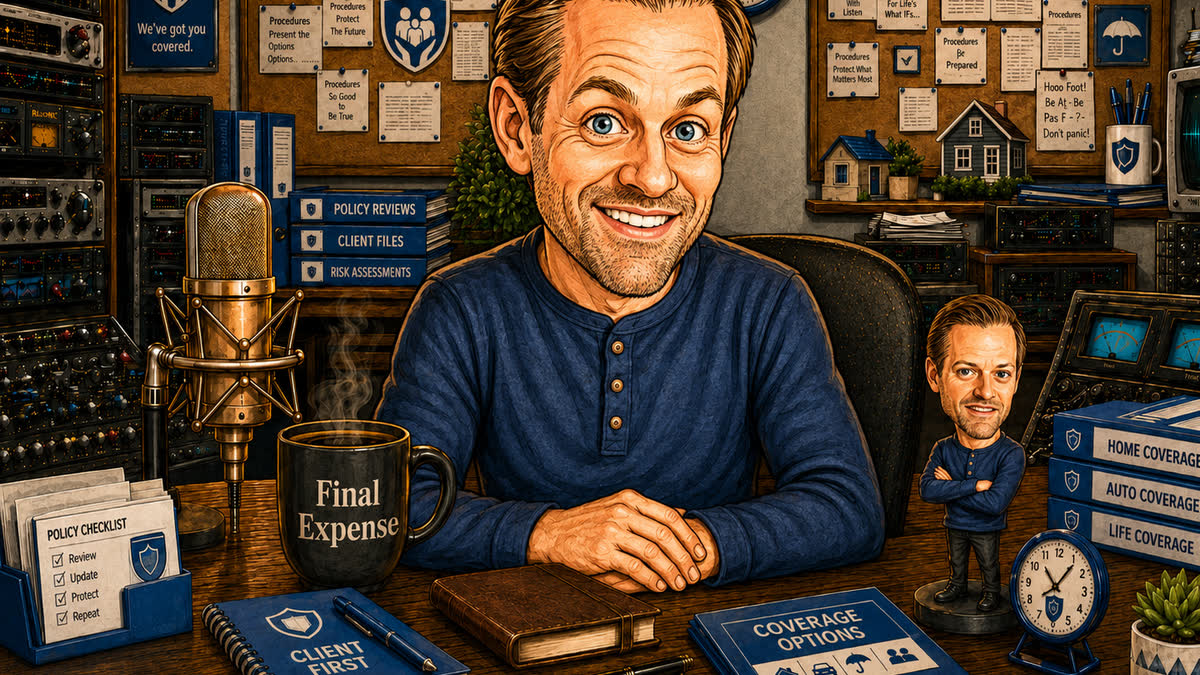
Final expense rewards multi-source lead strategy and deep underwriting knowledge across carriers. A tribe (not a following) compounds because consistency, genuine usefulness, and authenticity build trust that converts agents and clients at rates an audience never will.
TL;DR
Build a tribe, not a following. The final expense market punishes single-source lead strategies and rewards agents who know underwriting across multiple carriers. The community that converts agents into your downline (and clients into referrals) grows out of three things: consistency, genuine usefulness, and authenticity over years, not months.
What does the final expense market actually look like right now?
Final expense life insurance is one of those niches that looks simple from the outside and reveals its complexity once you're inside it. The product is straightforward, smaller whole life policies, typically in the $5,000 to $25,000 range, designed to cover end-of-life costs. The clients are typically seniors on fixed incomes who don't qualify for or can't afford larger coverage.
What makes final expense interesting as a market is the sales dynamic. The clients are often underinsured or uninsured for burial costs, and the product genuinely solves a real problem for them. But the sales environment is competitive, the client population requires specific communication skills, and the distribution model, which relies heavily on direct mail leads and door-knocking in many organizations, has been under pressure as lead quality has varied and costs have risen.
David's read on the market heading into 2022 is pragmatic. Lead quality is a variable you have to manage actively rather than assuming a particular source will remain productive indefinitely. The agents and agencies that build sustainable final expense books are the ones who develop multi-source lead strategies and who invest in skills that help them work lower-quality leads more effectively, rather than depending on a consistently great lead source that may not remain consistently great.
The underwriting environment is also something David follows closely. Carriers in the final expense space have varying underwriting standards, and the landscape shifts periodically as carriers adjust their appetite. Agents who understand the underwriting options across multiple carriers are better equipped to find coverage for clients that a less informed agent would turn away, which directly affects close rates and client satisfaction.
What does tribe building actually mean for an insurance brand?
David has built one of the more recognizable brands in the independent insurance marketing space over the past several years. His content, primarily YouTube, has created a community of agents who follow his work, seek his input on carriers and sales strategies, and in many cases join his downline organization. That community is what he means by "tribe."
The tribe isn't just an audience in the broadcast sense, people who watch or read and then move on. It's a community with a shared identity, shared values around how to approach the insurance business, and a sense of mutual recognition. Members of the tribe know they're part of something, and they have a relationship with the content and with David that is qualitatively different from a transactional information exchange.
That distinction matters enormously for business outcomes. An audience converts to customers at rates that reflect whatever the immediate offer is. A tribe converts at rates that reflect trust that has accumulated over time through consistent, valuable interaction. For David, that means agents who are serious about the final expense market and who have been following his content for months or years are converting to his organization not just because of what he offers but because of who he is in their professional world.
How is a tribe different from a following, and which one pays?
The practical difference between a following and a tribe shows up in the depth of engagement. A following is measured in views and subscribers. A tribe is measured in comments, in direct messages, in the spontaneous referrals that happen when tribe members tell colleagues about the content, in the retention rate of people who stay engaged over months and years.
David's recipe for tribe building, as he describes it, has three ingredients. First, consistency, showing up with content on a reliable schedule over a long period. Tribes form around reliable presences. An account that posts intensively for two months and then goes quiet doesn't build community because it's not dependable.
Second, genuine usefulness, providing information that actually helps the audience solve real problems rather than information designed primarily to generate leads or sales. David is direct about this: the content that builds his tribe is the content that helps agents make better decisions about carriers, scripts, lead sources, and business structure, the same content a competitor might not want to share because it empowers agents to be selective.
Third, authenticity, being honest about what works and what doesn't, including being honest about failures and adjustments. Tribe members can tell when they're being given a polished sales presentation versus when they're getting genuine perspective. The genuine stuff builds trust; the polished stuff builds skepticism.
Part 2 goes deeper into the tactical execution of content-based tribe building and the specific mechanics of how David's organization functions as a training and development platform.
Catch the full conversation:
Listen to The Insurance Dudes Podcast
Get more strategies like this on our podcast. Available on all platforms.
Related Episodes
David Duford on Content Systems for Final Expense (Part 2)
David Duford's Final Expense Selling Secrets That Work
What the Grateful Dead Teach Agents About Client Loyalty

Justin Brock on Building an Agency at Scale (Part 1)

Your Content Makes You Relevant: Marketing for Agents