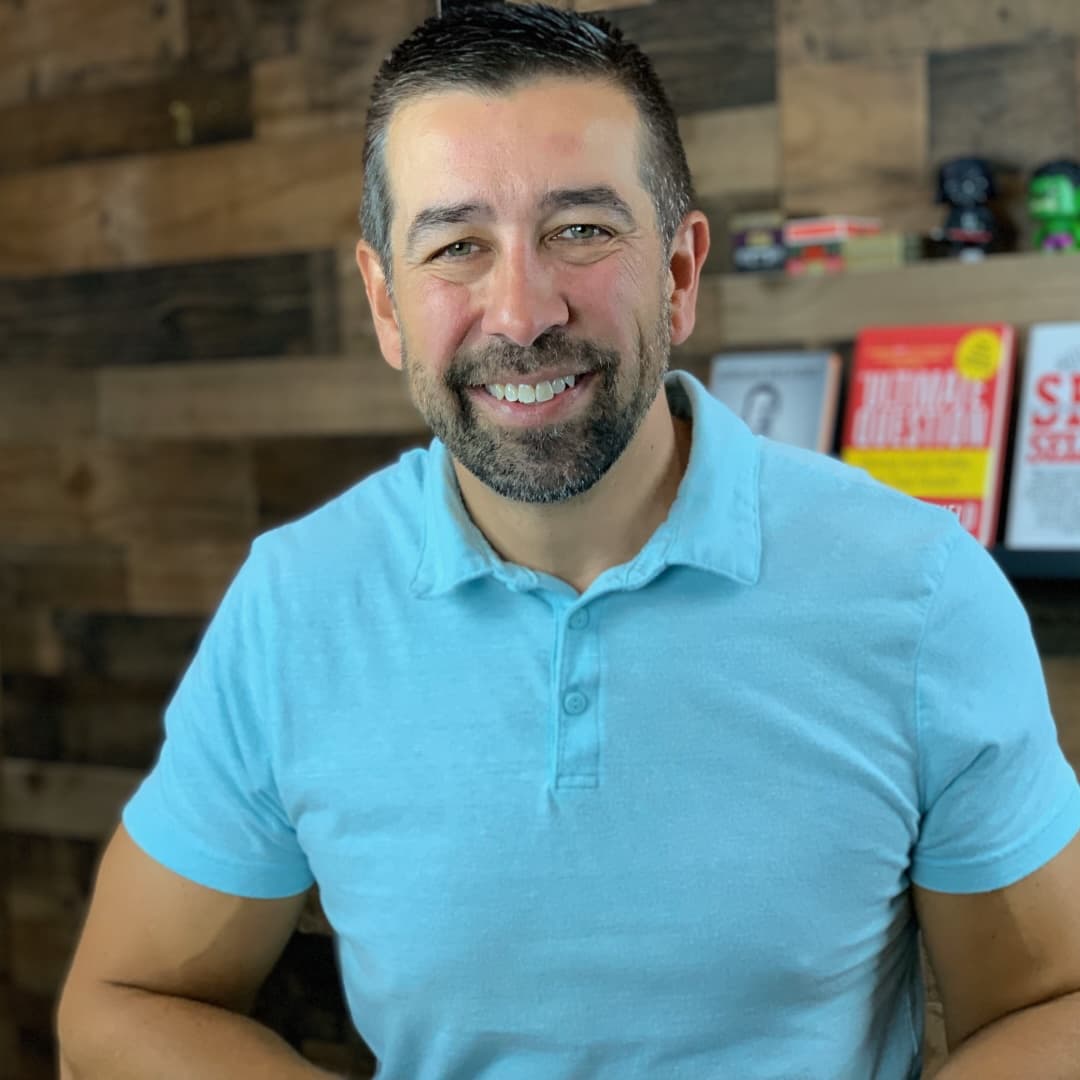
Perry Olson on SEO Keywords for Insurance Agents That Rank
Craig and Jason are licensed P&C agency owners, co-authors of Million-Dollar Agency, creators of the trademarked Telefunnel, hosts of The Insurance Dudes podcast, and speakers.
Written and reviewed under our editorial process. Found an error? See our corrections policy.

Build a marketing sanctuary by targeting three keyword tiers: local intent phrases (city plus coverage), problem-based questions prospects type, and long-tail variations. SEO compounds. Paid stops the moment you stop spending. Most local insurance markets are still uncontested.
Build a marketing sanctuary by attacking three keyword tiers: local intent phrases (city plus coverage line), problem-based questions prospects actually type ("what does renters insurance cover"), and long-tail variations that compound traffic. SEO investment compounds. Paid search stops the day you stop paying. Most local insurance markets are still wide open.
Does SEO actually still matter for insurance agencies?
The argument against investing in SEO usually goes like this: paid search gets you there immediately, SEO takes too long, and by the time you rank, the algorithm will have changed anyway. This argument sounds practical and is largely wrong.
The agencies that have invested in SEO over the past three to five years now generate inbound leads at a cost-per-acquisition that is dramatically lower than anything achievable through paid advertising. That's because SEO, unlike paid search, compounds. The content you create today continues to generate traffic and leads in twelve months, in three years, long after the investment that produced it has been amortized. Paid advertising produces traffic exactly proportional to the spend, the moment you stop paying, the traffic stops. Organic search traffic from well-optimized content keeps arriving whether you're paying for it or not.
For insurance agencies specifically, the local SEO opportunity is significant and underexploited. Most independent and captive agencies are competing in a geographic market where the number of agencies investing seriously in organic search is small. The agency that ranks on the first page for "auto insurance [city name]" or "homeowners insurance [zip code]" has a visibility advantage that pays dividends for years.
What is a marketing sanctuary and how is it different from my current site?
Perry's framing of "marketing sanctuary" is deliberate. A sanctuary is a place of safety and belonging, somewhere the right people find themselves at exactly the right moment. In digital marketing terms, a marketing sanctuary is a digital presence designed to attract the specific type of client your agency serves best, at the moment when they're ready to make a decision.
Most agency websites are the opposite of this. They're designed to look credible rather than to rank. They say things like "we offer a wide range of insurance products for all your personal and commercial needs", language that is so broad it means nothing to a search engine or to a prospect who has just typed in a specific query. A marketing sanctuary speaks specifically to specific people. It uses the language they use when they're searching. It answers the questions they're actually asking. It makes clear, immediately, that they've found what they were looking for.
Building that requires keyword research, and not the kind where you guess at what people might be searching for.
Which keywords should an insurance agent actually target?
Keyword research for an insurance agency is the process of identifying the specific terms and phrases that people in your market type into search engines when they're looking for coverage. The goal is to find the intersection of three things: high search volume (enough people are searching to make it worth targeting), commercial intent (the people searching are ready to buy or at least seriously considering it), and manageable competition (you have a realistic chance of ranking for this term without spending years on it).
Local intent keywords are the place to start. "Auto insurance quotes [city]," "home insurance agent near me," "SR-22 insurance [state]", these are searches with obvious commercial intent and a geographic qualifier that limits your competition to agencies in the same market. The person typing this is actively shopping. They're not doing research for a school project. They want to buy insurance and they want to buy it from someone local.
Problem-based keywords often have lower competition. "What does renters insurance cover," "do I need umbrella insurance," "how much car insurance do I need", these are question-based searches that attract people earlier in the decision process. They're easier to rank for, and the agency that answers them clearly and helpfully earns trust before the competitive quoting conversation starts. This is the content marketing layer of SEO, and it's where the marketing sanctuary concept becomes most visible.
Long-tail keywords multiply the surface area. Rather than fighting for a high-volume head term like "auto insurance" (where you're competing with national carriers and aggregators), a smart SEO strategy targets dozens of more specific phrases that collectively attract significant traffic. "Best auto insurance for new drivers in [city]," "insurance for rental property owners [state]," "cheapest homeowners insurance for older homes", each of these is narrower, but they're also far more rankable and attract higher-intent visitors.
What does Part 2 cover?
Part 1 establishes the strategic foundation: why SEO matters for insurance agencies, the marketing sanctuary concept, and the keyword research framework. Part 2 goes into content creation, specifically, how to turn keyword research into website pages and blog content that actually ranks and converts. If keyword research is the compass, content creation is the actual travel.
What's the one search I should run right now?
Before Part 2, do one thing: search Google for the three most natural phrases someone in your market would use to find an agency like yours. See who is ranking. If your agency is not on the first page, that visibility gap is costing you leads every day. The scale of that gap is the business case for building the sanctuary.
How do you build a marketing sanctuary with SEO for insurance agents?
The marketing sanctuary isn't built overnight, but every day you're not building it is another day the agency across town, or the one that launched last year and actually invested in SEO, is capturing the clients who were searching for you. Perry Olson's framework starts with getting the keyword strategy right. Part 2 shows you what to do with it.
Catch the full conversation:
This is Part 1 of a 2-part conversation with Perry Olson.
Level up your agency:
Listen to The Insurance Dudes Podcast
Get more strategies like this on our podcast. Available on all platforms.
Related Episodes

Perry Olson: Turning Keywords Into Content That Ranks
Perry Olson: From Keywords to Content Strategy (Part 2)

Bryan Dulaney's Funnel Formula for Insurance Agents
Bill Rice on Building Pipelines That Actually Work (Part 1)
Krista Mashore's Full Marketing Playbook for Agents (Part 2)
