Jorge Carbonell on Managing Remote Insurance Teams (Part 2)
Craig and Jason are licensed P&C agency owners, co-authors of Million-Dollar Agency, creators of the trademarked Telefunnel, hosts of The Insurance Dudes podcast, and speakers.
Written and reviewed under our editorial process. Found an error? See our corrections policy.
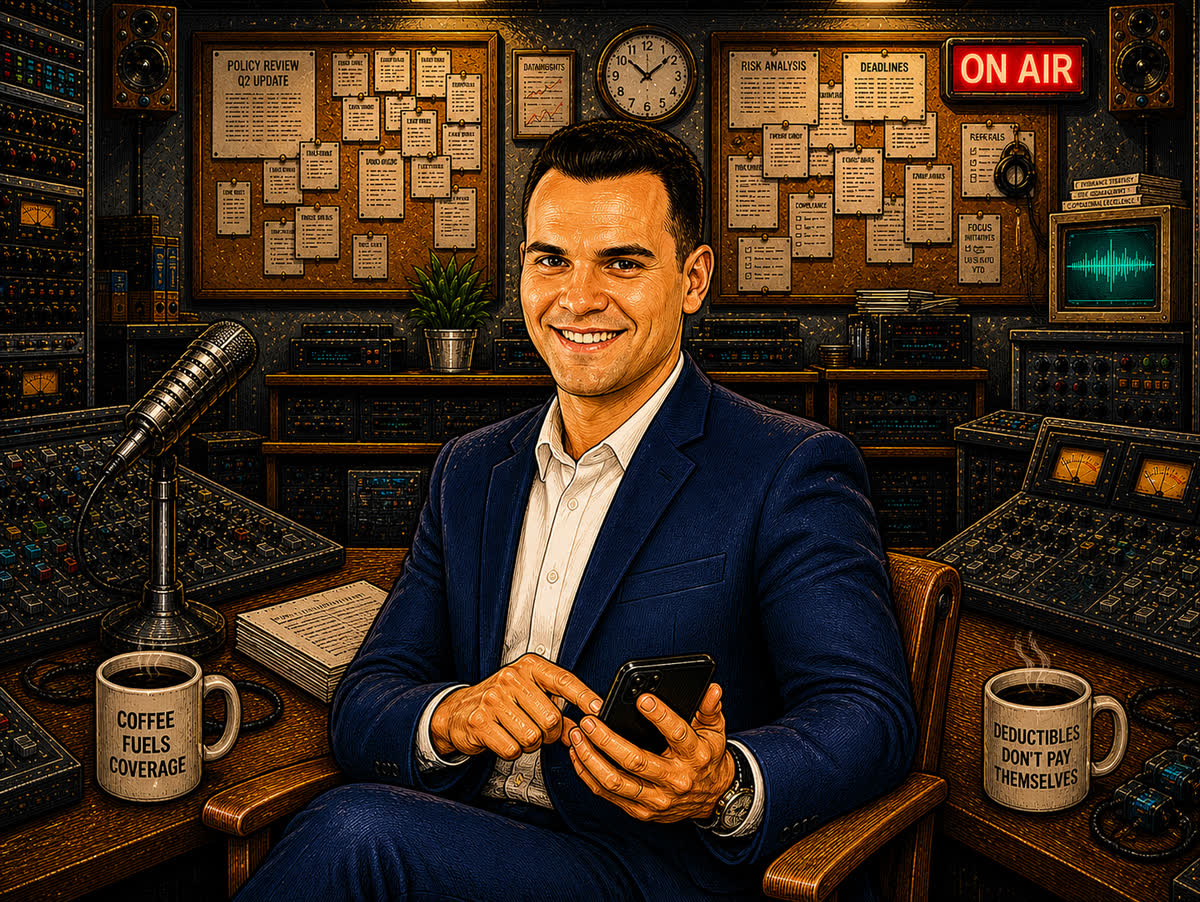
Manage a remote insurance team by replacing implicit office accountability with explicit systems: hire only candidates who can articulate a personal productivity system, require daily CRM metric logging, run cameras-on team meetings, and schedule quarterly in-person gatherings.
Manage a remote insurance team by replacing implicit office accountability with explicit systems. Hire only candidates who can describe their own daily productivity structure, require daily CRM activity logging, run every meeting cameras-on, and schedule quarterly in-person gatherings. Jorge Carbonell learned this the hard way and rebuilt the playbook.
Remote work in insurance went from a pandemic accommodation to a permanent operational reality for many agencies. The agents who adapted their leadership style to manage distributed teams effectively gained access to a much wider talent pool and often lower overhead costs. The ones who tried to run remote teams with the same management approach they used in the office struggled, and many are still struggling.
(Haven't read Part 1? Start with the hiring and culture foundations first.)
Why does in-office management fail when teams go remote?
Jorge opens this part of the conversation with unusual candor: he didn't get remote team management right the first time. His initial approach to remote work was essentially the in-office approach with video calls. He scheduled weekly check-ins, maintained the same general expectations, and assumed that producers who performed well in person would perform equally well at home.
That assumption didn't hold for everyone. Some producers thrived in the autonomy of remote work. Others, without the ambient structure of an office environment, struggled to maintain the daily activity that drove their in-office results. The challenge wasn't performance. It was the absence of the invisible accountability that physical proximity provides.
What Jorge found is that remote work requires more explicit structure, not less. The accountability that an office environment provides through observation and social pressure has to be replaced with systems: clear daily activity metrics, regular brief check-ins, and a culture where producers report their own numbers proactively rather than waiting to be asked. The transition from implicit accountability to explicit accountability is the core management challenge of the remote agency.
Craig and Jason both shared their own experiences with this dynamic, including the specific moments where they realized their remote team needed something different from what they'd been providing. The common thread: remote producers don't need more surveillance. They need more clarity about expectations, about what success looks like daily, and about how their work connects to the team's shared outcomes.
What systems actually make remote insurance teams work?
Self-accountability has to be the job requirement, not the aspiration. When hiring for remote positions, Jorge explicitly tests for self-direction and autonomous accountability in the interview process. He asks candidates to describe how they structure their own work day without external direction. The candidates who have a clear, habitual answer (like "I review my numbers the night before, set my top three priorities, and do my hardest task before checking email") are the ones who will succeed without an office environment providing structure. Candidates who can't articulate a personal productivity system are high-risk for remote roles.
Daily metrics visibility is non-negotiable for remote teams. Jorge requires remote producers to log their daily activity metrics in the CRM by end of each day. Not for surveillance, but for pattern recognition. When a strong producer's numbers dip unexpectedly, Jorge can have a coaching conversation before a bad week becomes a bad month. When the data exists and is reviewed regularly, problems are caught early and resolved before they compound.
Culture fit for remote work means self-motivation as a core value. In an office, a motivated manager can partially compensate for a less-motivated producer through proximity, energy, and real-time coaching. In a remote environment, that compensation mechanism doesn't exist. Producers who need external motivation to maintain activity levels will consistently underperform remote expectations, regardless of their in-office track record.
Video-on is a non-negotiable team norm. Jorge's remote teams operate with cameras on for every team meeting. This isn't about surveillance. It's about the human connection that remote work otherwise lacks. The social element of a team is a significant driver of performance and morale. Video presence, even imperfectly, maintains more of that social fabric than audio-only calls. This norm needs to be set in onboarding, not added as an expectation after the fact.
Remote doesn't mean isolated. Jorge builds regular in-person team gatherings (quarterly at minimum) that serve a different purpose than the weekly operational meetings. These gatherings focus on relationship, recognition, and culture reinforcement. The remote team that never physically convenes gradually loses the sense of shared mission that makes culture real. The investment in bringing people together periodically pays back in retention and morale.
How do I install remote accountability and in-person culture this quarter?
If you have remote producers, review the daily activity reporting process this week. Is each producer logging their calls, contacts, and outcomes daily? Can you review a producer's week in two minutes by looking at their CRM data? If not, you have an accountability gap that's making it impossible to coach proactively. Build the reporting habit before you need to diagnose a performance problem.
Evaluate your remote hiring criteria against Jorge's self-accountability standard. In your next interview for a remote role, ask candidates to walk you through exactly how they structure their ideal work day and how they manage their own energy and focus over a full week. The specificity and practicality of their answer is highly predictive of remote performance.
Plan one in-person team gathering in the next 90 days if you haven't had one recently. It doesn't need to be expensive: a half-day working session, shared lunch, and intentional time for relationship-building goes a long way. The return on that investment in team cohesion and culture will show up in your metrics over the following quarter.
Why do agencies that get remote right win on talent and efficiency?
Remote agency teams work when the management approach is designed for remote work specifically, not when in-office management practices are transplanted into a virtual environment. Jorge Carbonell's experience-tested framework gives you a clear path: hire for self-accountability, build explicit metrics visibility, maintain culture through intentional connection, and gather in person with regularity. The agencies doing this right are winning access to talent and efficiency that their competitors can't match.
Catch the full conversation:
Level up your agency:
Listen to The Insurance Dudes Podcast
Get more strategies like this on our podcast. Available on all platforms.
Related Episodes

Adam Pisani's 19 Years: Why Fire in the Belly Still Matters
Why Founding Membership in Agent Elite Matters Now
Bill Snow on Insurance Agency M&A Deal Structure (Part 2)
Should You Buy or Sell? M&A Pro Bill Snow Weighs In
Chad Kish on Sustaining Premium Velocity Long Term (Part 2)
