Vlad Cherchenko on the One Call Close: Stop Chasing Leads
Craig and Jason are licensed P&C agency owners, co-authors of Million-Dollar Agency, creators of the trademarked Telefunnel, hosts of The Insurance Dudes podcast, and speakers.
Written and reviewed under our editorial process. Found an error? See our corrections policy.
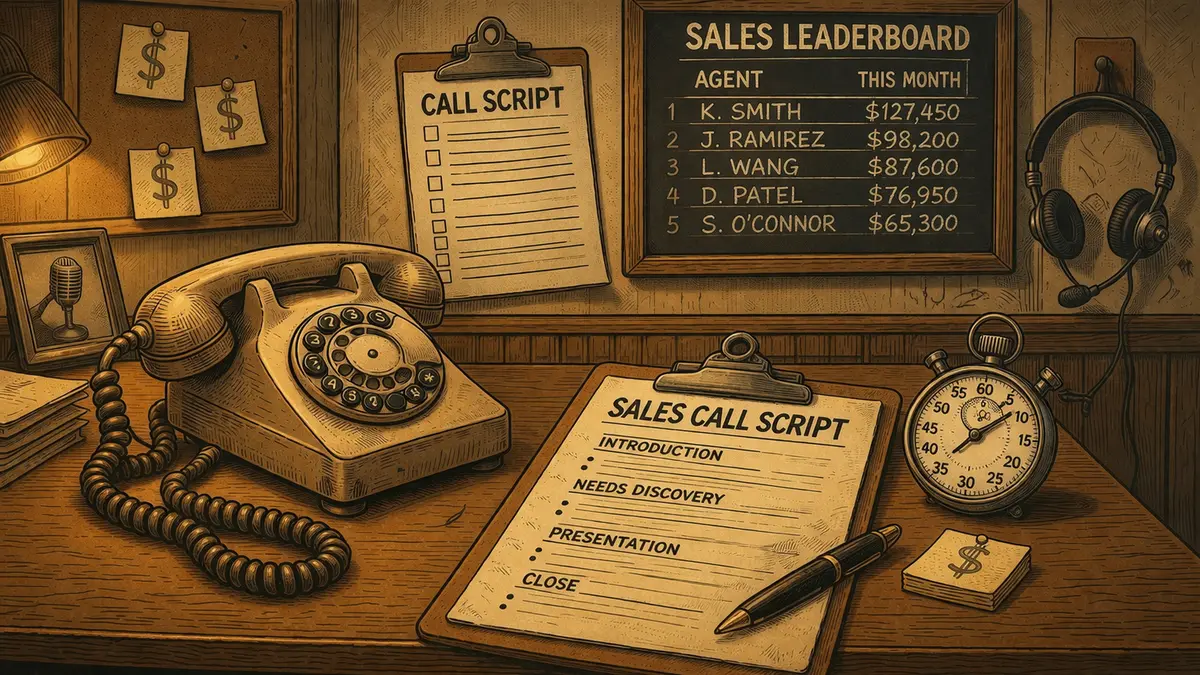
Vlad Cherchenko's One Call Close builds value through discovery questions, trust through precise reflection, and real urgency from the prospect's actual coverage gaps. Spend forty percent or more of the call listening, and the presentation gets short because the prospect already wrote the case.
Vlad Cherchenko closes on the first call by running discovery as the pitch, building trust by reflecting answers back precisely, and surfacing real urgency from the prospect's existing coverage gaps. Forty percent or more of the call is questions. The presentation that follows is short because the case is already made.
Who is Vlad Cherchenko, and why trust the method?
Vlad is an insurance agent who built a high-volume operation on the foundation of the One Call Close. He didn't inherit a book of business or get handed a territory. He built it call by call, with a methodology that runs counter to most of what gets taught in insurance sales training.
The conventional wisdom says follow up aggressively. Call back. Send emails. Stay top of mind until the prospect is ready. Vlad's experience says that most of those callbacks are false hope dressed up as persistence. The prospect who says "call me back next week" is usually a prospect who said no politely. The agent who calls back next week is hoping the situation changed. It usually didn't.
One Call Close flips the assumption. Instead of designing a process that assumes prospects need multiple touches to decide, it designs a conversation that creates the conditions for a decision right now. Not pressure. Conditions. There's a difference, and understanding that difference is the whole game.
Why do prospects say yes on the first call?
Prospects don't say yes on the first call because they're impulsive. They say yes when three things are true simultaneously: they understand the value of what they're buying, they trust the person selling it, and they feel like now is the right time to act. The conventional multi-call process is designed to build those three things gradually across multiple interactions. Vlad's method builds all three in a single conversation.
Value is built through discovery, not presentation. The agent who leads with a quote is giving the prospect a number without context. The agent who asks the right questions first, about their current coverage, their concerns, what's happened in the past, creates a framework where the quote is the answer to a problem the prospect has just articulated. That's a different conversation. The prospect isn't evaluating a product. They're choosing a solution to their own stated problem.
Trust is built through competence and honesty. On a first call, you have limited time to establish credibility. Vlad does it by demonstrating that he knows more about the prospect's situation than the prospect expected him to know. Not through research, through listening. When you reflect back what someone has told you with precision, they feel understood. Feeling understood is the foundation of trust.
Urgency is real when the reason is real. Manufactured urgency, the fake deadline, the "this offer expires today" close, erodes trust the moment a prospect sees through it. Real urgency comes from the prospect's own situation. If their current policy has a gap that could cost them significantly at claim time, the urgency to fix that isn't invented. It's a legitimate consequence of inaction. Vlad finds the real urgency in every conversation by asking the questions that surface it.
How is the One Call conversation structured?
The One Call Close isn't improvised. It's a structured conversation with a beginning, middle, and end, and every element serves the goal of creating a decision in real time.
The opening establishes tone. Vlad doesn't call and immediately start qualifying. He establishes from the first sentence that this is going to be a different kind of insurance conversation. The prospect's guard goes up by default when they know they're talking to someone who wants to sell them something. Lowering that guard early is the job of the first thirty seconds.
The discovery section is longer than most agents are comfortable with. Asking questions takes time and it can feel like you're delaying the pitch. But the questions are the pitch. Every answer a prospect gives tells you something about where the real value lives for them. Skip this section and you're guessing. Stay in it and you're building a case the prospect wrote themselves.
The presentation section is short because the discovery made it short. You're not presenting a product. You're presenting a solution to the specific problems the prospect just described. When the presentation is tailored to the conversation that just happened, objections shrink, because the objections were mostly about misalignment between the product and the need, and the discovery already eliminated that misalignment.
How do you audit your own ratio this week?
Before the sealing playbook below, here's the first homework: record your next ten calls. Not to critique your tone or your scripts, to track how much time you spend in discovery versus presentation. If you're spending less than forty percent of the call asking questions and listening, your close rate has a structural ceiling. You can fix your script, your rate, and your follow-up sequence, but until the ratio changes, the ceiling holds.
The agents who implement One Call Close successfully aren't necessarily better salespeople. They're more disciplined listeners. That's the skill that unlocks everything else.
What is the bottom line on the foundation?
Vlad Cherchenko doesn't chase. He builds conversations that create decisions. The foundation is the psychology, the framework, the mindset shift that makes One Call Close possible. What follows is where it gets surgical.
Treat "let me think about it" as information, not rejection. Ask what specifically they want to think about, bring the spouse on the call live, confirm the value with a yes-or-no question, then ask directly "Are you ready to get this started today?" and sit in the silence. That's how Vlad Cherchenko closes on call one.
What does "let me think about it" actually mean?
The most important reframe in Vlad's entire system is this: "let me think about it" is not a rejection. It's information. What it usually means is one of three things, the prospect hasn't fully understood the value, they have an unspoken concern they haven't voiced yet, or they're looking for permission to say yes. In all three cases, the right move is not to back off. It's to lean in gently and find out which one you're dealing with.
The agent who hears "I need to think about it" and says "no problem, I'll call you Thursday" has surrendered the close without diagnosing the actual obstacle. Vlad's response is a question: "I hear you, what specifically do you want to think about?" That question isn't pushy. It's respectful. It says: I take your concern seriously enough to address it right now instead of making you wait until Thursday to bring it up again.
Most of the time, the prospect answers. And the answer tells Vlad exactly what he needs to address to get to a yes.
How do you handle the most common stalls?
"I want to shop around." This one feels threatening but it's actually a value problem. The prospect doesn't yet believe the deal in front of them is as good as it gets. Vlad's response acknowledges the impulse and then redirects: "That makes complete sense. What would another quote need to show you that I haven't shown you yet?" This either surfaces the real concern, usually a specific coverage element or price sensitivity, or it prompts the prospect to articulate why they're already getting a solid offer. Either way, the conversation moves forward.
"I need to talk to my spouse." The classic stall. And sometimes it's legitimate. Vlad handles it by bringing the spouse into the conversation right now. "Absolutely, is your spouse available for a quick three-minute call right now so you can both get the same information at the same time?" This closes the gap between the decision-maker and the influencer before it becomes a door for the deal to disappear through.
"I need to review my current policy first." This is often avoidance dressed up as due diligence. Vlad asks what they're looking for in that review. If there's a specific concern about their current coverage, he addresses it directly. If it's general hesitation, the discovery phase didn't go deep enough, and Vlad knows how to reopen it.
How do you ask for the commitment?
Closing on the first call requires a commitment conversation that most agents skip because it's uncomfortable. It goes something like this: "Based on everything we've talked about today, does this coverage solve the problem you described at the beginning of our call?" That question forces a yes or no to the value proposition, not to the purchase. If the answer is yes, the path to the close is clear. If the answer is no, Vlad has a chance to fix the gap before ending the call.
This approach also gives the agent real information about their own process. If a prospect says "yes, this solves my problem, but I still want to wait," the remaining obstacle isn't the coverage or the price. It's inertia, and inertia is handled differently than a genuine concern about value or fit.
What the close actually sounds like: Vlad doesn't use a tricky closing technique. He doesn't ask "if I could show you X, would you be ready to move forward?" He asks directly: "Are you ready to get this started today?" Clean. Simple. No manipulation. The prospect who said yes to the value question and doesn't have an unresolved concern will usually say yes to this one too.
Why should you sit in silence after asking for the close?
Most agents are afraid of silence. When a prospect goes quiet after the close question, the agent jumps in to fill the space with more talk. More features. More benefits. More reasons. Vlad waits. Silence after a close question is the prospect making a decision. The moment you interrupt that process with more content, you've taken the decision off the table and replaced it with more information to evaluate. Sit with the silence. Let the close work.
How does designing for a one-call close change your entire sales process?
The One Call Close isn't just a sales technique. It's an operational philosophy. If you design your process around the assumption that every prospect should be closed today, you will build different habits than if you design it around follow-up sequences and callback loops. You'll ask better discovery questions. You'll present more precisely. You'll address objections earlier. Even when you don't close on the first call, your process will be sharper for having been designed that way.
Audit your last thirty conversations. How many of them had a genuine close attempt, a direct ask for the business, before the call ended? If the number is below fifty percent, your close rate has room to grow that has nothing to do with pricing or product. You're leaving decisions unmade that were available.
How do you actually master the one call close in insurance sales?
Vlad Cherchenko doesn't build callbacks into his pipeline because he builds decisions into his conversations. The One Call Close is not about pressure. It's about completing the job that the first call started. The foundation came first. This conversation finishes the structure. Now go build it in your agency.
Catch the full conversation:
About Vlad Cherchenko: Vlad Cherchenko is an insurance sales professional and trainer known for his One Call Close methodology. He helps agents stop chasing prospects and start building conversations that create buying decisions in a single interaction., LinkedIn | Website
Level up your agency:
Listen to The Insurance Dudes Podcast
Get more strategies like this on our podcast. Available on all platforms.
Related Episodes

Hard-Core Closing Strategies From Real Estate That Work
3 Tips for Internet Leads, Round 2: A Framework That Works
3 Tips for Working Internet Leads: The Recast That Hits
Leads and Voicemails: The Yes vs No Debate for Agents
TeleFunnels: How Phone Funnel Systems Are Changing Sales