Sell Coverage With Claim Stories, Not Policy Limits
Craig and Jason are licensed P&C agency owners, co-authors of Million-Dollar Agency, creators of the trademarked Telefunnel, hosts of The Insurance Dudes podcast, and speakers.
Written and reviewed under our editorial process. Found an error? See our corrections policy.
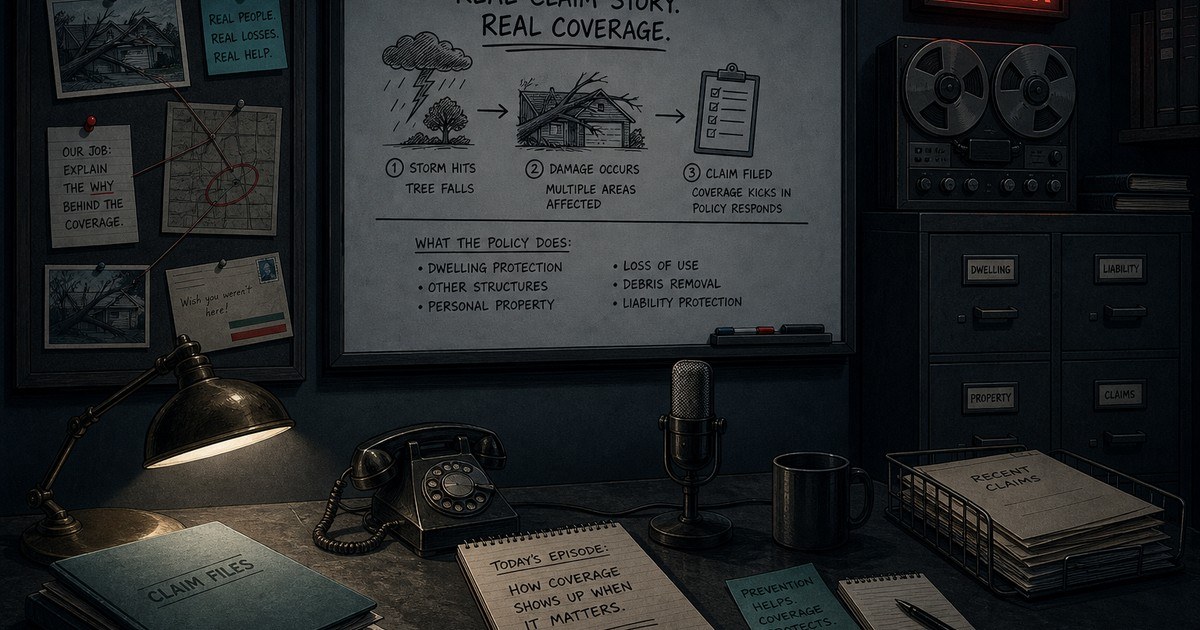
Customers do not buy fifty, one-hundred, or three-hundred. They buy the story of what happens to their family when a wreck goes wrong. Drop the limit digits and sell the claim instead. Translate each coverage into a realistic story with a dollar consequence, and the price becomes the small cost of protecting the people who count on you.
TL;DR
Your producers keep losing deals because they quote limits instead of consequences. A client who hears one-hundred, three-hundred, and fifty hears nothing worth protecting. The fix is a story: turn every coverage into a real claim with a dollar impact that lands on them. When the price becomes the small cost of looking after their family, the close takes care of itself.
When a producer reads a quote, the client is already decided. They bought coverage because a story they believed made the price small compared to the loss. Your producers need a repeatable way to build that story for every coverage line, and it starts with dropping the numbers.
Key Takeaways on selling coverage with claim stories?
- A customer purchases the story of a feared consequence, not the digits of a liability or deductible limit.
- Translating one-hundred, three-hundred, fifty into a localized wreck story makes the cost of better coverage feel small and urgent.
- The Work, Family, Fun data a producer already collects is the raw material for stories that feel personal instead of scripted.
- Story selling does not require more closing skill, it requires a claim narrative for each coverage and the discipline to use it.
- The silent close works only after the story lands, because the story has already made the sale before the price is named.
Why do coverage limits mean nothing to a buyer?
A coverage limit is an abstraction. A buyer hears one-hundred, three-hundred, and fifty and files it under random numbers the way they file a bank routing number. They do not feel protected, and they do not feel at risk. That gap is exactly where a sale dies.
Academic research on how consumers understand their coverage shows the comprehension gap is real and wide. Families reliably understand a policy with one or two simple parameters, and they reliably get confused the moment a policy carries several interacting provisions (National Institutes of Health, 2014). Your auto policy is the multi-parameter case. The buyer is not lazy, it is simply beyond what the human mind holds onto without a story to hang the numbers on.
The producer who keeps reading limits is asking the client to do the translation work alone. The producer who tells a story does the work for them. That is the entire difference between a bind and a callback that never comes.
How do you turn a limit into a claim story?
The method is what insurance sales trainers have long called what-it-is and how-it-works, and it is simpler than it sounds. Never explain a coverage by its limit. Explain it by what it is, what it is for, and the specific moment it saves a family from a bill that would upend them.
Start with the feared event. Then the consequence. Then the fix. A liability story sounds like this: you glance down at a text, you rear-end a newer truck, the other driver misses a month of work and sues for two hundred thousand in medical and lost wages. Then you ask the client what happens to the difference between the payout and their one-hundred-thousand limit, because now the difference is their house, their savings, and their paycheck.
The number was abstract. The story is concrete, and the memory of it survives the meeting.
"A limit is a number, and a claim is a story. The number gets compared to the next agency's quote tomorrow, and the story gets told to their spouse when they get home tonight." - Craig Pretzinger, Agency Owner, The Insurance Dudes
Why does a localized story land harder than a generic script?
Generic stories are background noise. A story set on the client's actual commute, their actual freeway, or with their actual kids in the back seat lands like a description of their own Tuesday. That is the point of the Work, Family, Fun data your producers already gather when they take a quote.
A producer who knows the client drives to a job across town every morning does not tell a story about some anonymous driver. They tell the story about a six-thirty rush-hour merge on the exact road the client takes. The family details, the new teenage driver, the boat in the driveway, all of it becomes the raw material for stories that feel specific because they are.
This is not folklore, it is a documented sales principle. Harvard Business Review frames the winning pitch as a story that makes an emotional connection and shows the customer their own situation, rather than a list of features (Harvard Business Review, 2024). Your producers are not selling against a better price, they are selling against a competitor who hands the client nothing to feel.
Why is insurance a story about trust before it is a story about price?
A policy is a promise to pay a claim that has not happened yet. The client cannot test that promise before they buy it, so they are really deciding whether they trust the person selling it. That trust is the product, and a story is how trust gets built in a single conversation.
The industry already knows trust is the differentiator. Deloitte's insurance outlook points to a market that has to rebuild goodwill after premium hikes and coverage pullback, which means the distributor who rebuilds the consumer relationship and walks people through their protection is the one earning the margin (Deloitte, 2025). Reagan Consulting's long-running best-practices study finds the same pattern, that top-performing agencies separate roles and build systems instead of letting one producer carry every step (Reagan Consulting, 2025).
What this means for your shop is direct. The producer who explains a limit sounds like a vendor. The producer who tells the story of what happens to a family without enough coverage sounds like the one person in the room looking out for them. That trust is what turns a quote into a long-term customer, and PropertyCasualty360's coverage of customer satisfaction shows steady service wins clients over a single cheap quote (PropertyCasualty360, 2024).
How do you train story selling without it sounding rehearsed?
A story that sounds scripted fails for the same reason a limit does, it triggers the defensive reflex that makes a client stop listening. The way to avoid it is to stop memorizing scripts and start building a claim story for each coverage your shop actually sells.
Give each producer three stories to own. A liability story, an uninsured motorist story, and a deductible story. Let them rewrite the story in their own words until it sounds like something they would actually say, then practice it once a morning the same way you already drill objections. The tool is a story, not a script.
Connect the story back to the data they already have. The closer should be pulling from the same Work, Family, Fun notes that feed a cross-sell, because a story built from real client details is impossible to fake and impossible to confuse with a telemarketer's pitch. This is the same discipline as the strict role segmentation that keeps closers closing and the lead economics that make each quoted household count.
How do you close after the story lands?
The story does the heavy lifting, but the close is what collects the card. Once the client has pictured the lawsuit or the totaled truck, do not reopen the decision with a permission question. Name the monthly number, state the next step, and stop talking.
The sequence is the story, then the price as the fix, then the silent pause. Present the coverage as the small monthly cost of the story never reaching the family. A forty-dollar gap between the limit they have and the limit that actually protects them stops looking like a negotiation and starts looking like the cheapest bill they will ever pay.
This is the same silent close that turns a built presentation into a bound policy, and it only works after the story has done its job. Skip the story and the silence feels like pressure. Land the story first and the silence feels like the only reasonable next step.
What is the bottom line on selling coverage with claim stories?
Customers buy consequences, not digits. Every producer on your floor can read a limit, and almost none of them can make a client feel what the limit protects them from. The agencies that win are the ones that train the story instead of the number.
Make it concrete this week. Pick your three highest-frequency coverages, write one localized claim story for each, and drill them until they sound like your producers talking to a neighbor. The quote becomes a story, the story becomes trust, and the trust becomes a policy the client does not shop next year.
Sources cited in this analysis?
- National Institutes of Health: Consumers' Knowledge about their Insurance Coverage (2014)
- Harvard Business Review: A Great Sales Pitch Hinges on the Right Story (2024)
- Reagan Consulting: Best Practices Study (2025)
- Deloitte: 2025 Global Insurance Outlook (2025)
- PropertyCasualty360: Top P&C Insurers for Customer Satisfaction (2024)
Listen to The Insurance Dudes Podcast
Get more strategies like this on our podcast. Available on all platforms.
Related Episodes
Why You're Not Closing Insurance Sales (Not Your Script)
Top Gun: The Need for Speed to Lead in Insurance Sales

What Athletes Know About Building an Agency (Part 1)
The Objection Isn't the Problem: Overcoming Sales Resistance
2 Must-Dos Right Now: Quick Wins for Your Agency Growth
