Top Gun: The Need for Speed to Lead in Insurance Sales
Craig and Jason are licensed P&C agency owners, co-authors of Million-Dollar Agency, creators of the trademarked Telefunnel, hosts of The Insurance Dudes podcast, and speakers.
Written and reviewed under our editorial process. Found an error? See our corrections policy.
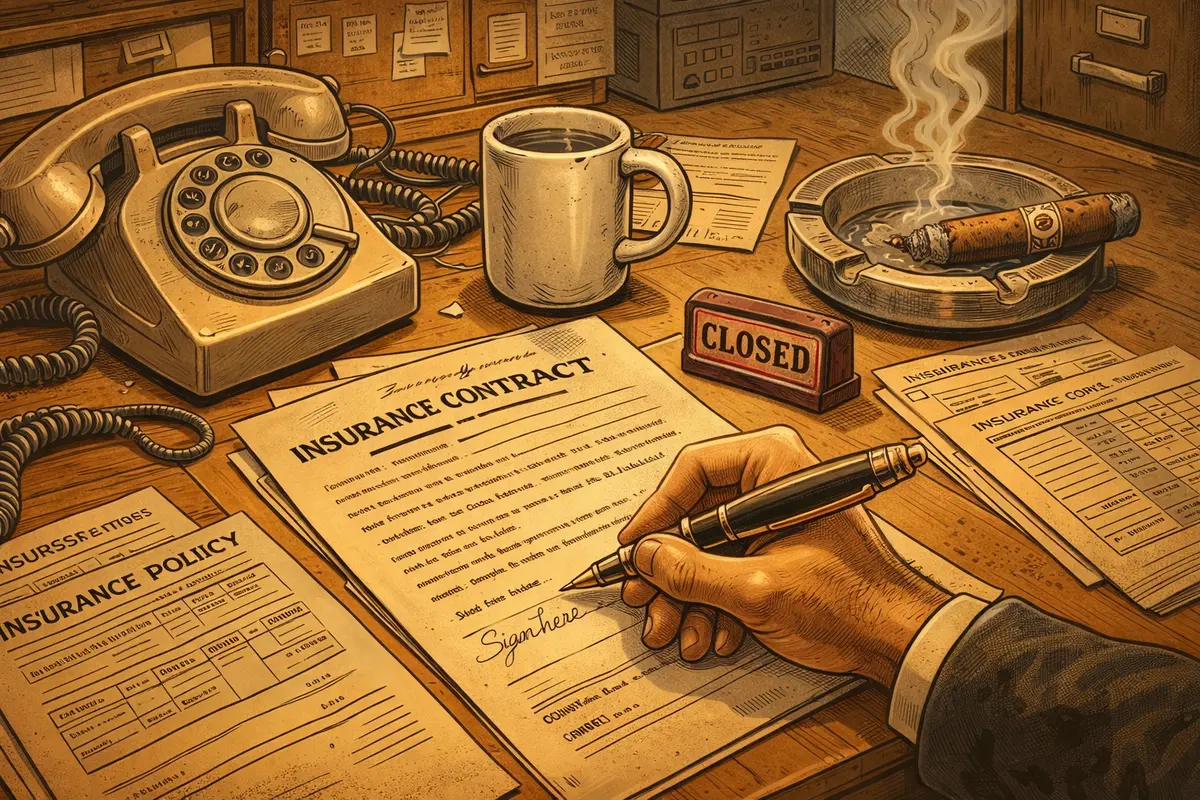
Contact inbound leads within five minutes, deliver the quote before the call ends, and bind in the moment with payment infrastructure already ready. Speed to lead, speed to quote, and speed to close compound into a conversion advantage no marketing budget can buy back.
Speed is the single most decisive variable in modern P&C sales. Contact inbound leads inside five minutes, deliver the quote before the call ends, and bind in the moment instead of "following up tomorrow." Speed to lead, speed to quote, and speed to close compound into conversion advantages no ad budget can buy back.
Why is speed suddenly the deciding factor in P&C sales?
Let's go back about fifteen years, when most insurance prospects did most of their shopping by calling agents they'd been referred to or driving past their offices. In that environment, speed mattered less. The prospect had limited options and relatively high friction in the comparison process. You could take a day to call back, send a quote by mail, and expect a reasonable close rate.
That environment no longer exists. Today's insurance prospect submits a quote request, and in the same moment they hit submit, they are being contacted by multiple competing agencies, some of whom have automated systems that initiate contact within sixty seconds. By the time you call back four hours later, or worse, the next morning, that prospect has already talked to two or three competitors. They may have already bound a policy. The comparison window closed without you.
The research on this is not ambiguous. Studies of lead conversion in financial services consistently show that response time is the most powerful predictor of contact rate, and contact rate is the most powerful predictor of conversion. The first agent to reach a prospect on a warm lead converts at rates that are orders of magnitude higher than the fifth agent to call. This is not a marginal edge. It's a chasm.
How fast do I need to contact an inbound lead to win it?
Jason's central argument in this episode is deceptively simple: if you are not contacting inbound leads within five minutes of receiving them, you are voluntarily giving business to your competition. The five-minute window isn't an arbitrary standard, it's where the data points. A prospect contacted within five minutes of submitting a form is dramatically more likely to be reached, more likely to engage in a genuine conversation, and more likely to bind than a prospect contacted at any later point.
Most agencies violate the five-minute rule not because they don't care about speed but because their systems aren't built for it. A lead comes in. It goes into a shared inbox. Someone checks the inbox when they have a moment. They assign the lead to a producer. The producer finishes what they're doing, then makes the call. By the time the dial happens, twenty minutes to an hour has passed. The prospect has moved on.
The fix is not motivational, it's operational. It requires a lead routing system that pings the right producer immediately, ideally with an automatic outreach trigger (a text or email) that fires in the seconds between lead submission and the first human contact attempt. The technology for this is not expensive or complicated. What's expensive is the business you're losing while your lead management process runs at human speed in a system that moves at automation speed.
Can I really deliver a quote before the first call ends?
Speed to lead gets you the conversation. Speed to quote determines whether you stay in it. An agent who can provide a complete quote in a single call, while the prospect is engaged, curious, and hasn't yet been quoted by a faster-moving competitor, is operating in a fundamentally different conversion environment than an agent who says "I'll have that to you by tomorrow."
Jason doesn't pretend this is easy. Complex commercial coverage, non-standard risks, and multi-line packages legitimately require processing time. But for personal lines, the volume business most P&C agencies run, the standard should be a quote delivered before the call ends. This requires knowing your markets deeply enough to match risks quickly, having your carrier appetite internalized rather than running through a checklist on every call, and building a quoting workflow that doesn't require three systems and two handoffs to complete.
The agencies that have invested in rater tools, carrier knowledge, and streamlined quoting workflows are not just faster. They're more profitable, because they're converting more of the leads they're already paying for rather than paying for more leads to make up for the ones they're losing to friction.
How long is the close window on a P&C personal-lines prospect?
The close window in insurance is not seven days. It's not even three days. For most personal lines prospects, the close window is the length of the phone call you're on right now, and the hours immediately following it before enthusiasm fades and inertia sets in.
Jason makes the case for same-call commitment strategy, asking for the business before the call ends, having the payment infrastructure ready to receive it, and removing every possible obstacle between "yes" and "bound policy." That means not requiring the prospect to call back to finalize, not sending an email with a link they have to remember to click, and not using "I'll follow up tomorrow to confirm" as a closer.
The follow-up is for the leads who didn't close on the first call, not the ones who were ready to go and just needed a smooth path to yes. When you make it easy to bind in the moment, a meaningful percentage of the people who would have "thought about it" and then gone dark will instead write you a check because the path of least resistance went in your direction.
Which speed should I fix in my agency first?
Audit your current response time on inbound leads. Not what you think it is, what it actually is. Pull the data from your CRM or ask your team to track it for one week. The number you find is probably worse than you expect, and it's costing you more than you realize.
Then pick one of three speeds to fix first. If your contact rate on inbound leads is below 50%, speed to lead is your constraint. If your contact rate is strong but your quote conversion is low, speed to quote is where you're losing. If you're quoting well but the close rate is soft and the follow-up cycle is long, speed to close is the lever. Fix one. Measure the result. Fix the next one.
The compounding effect of improving all three speeds, leads contacted faster, quotes delivered in-call, business bound before the window closes, is a conversion rate improvement that costs you nothing to implement and returns significantly more value than any increase in your lead budget would deliver.
Why does the faster agent win more business than the smarter one?
Maverick's lesson from Top Gun applies directly to the insurance sales floor: in a high-speed competitive environment, hesitation is the most dangerous thing you can do. The agents who are winning the modern insurance sales game are not necessarily smarter, better trained, or more knowledgeable than their competition. They're faster. And in a market where multiple agents are competing for the same prospects in the same moment, the agent who gets there first wins a disproportionate share of the business. Feel the need. Build the speed.
Catch the full conversation:
About Jason Feltman: Co-host of The Insurance Dudes podcast, independent insurance agency owner, and advocate for building agencies that generate freedom, not just revenue.
Level up your agency:
Listen to The Insurance Dudes Podcast
Get more strategies like this on our podcast. Available on all platforms.
Related Episodes

Jason Levine Goes Deeper on the Insurance Nerd Life (Part 2)
Lyneil Mitchell on Performance Systems for Agencies (Part 2)
Why Process Beats Sales Goals for Insurance Agency Growth

Ben Barrientos on Scaling Agency Growth By the Minute
The Insurance Agent's Guide to A/B Testing That Matters
