Phil Geldart on Why Insurance Training Fails Right Now
Craig and Jason are licensed P&C agency owners, co-authors of Million-Dollar Agency, creators of the trademarked Telefunnel, hosts of The Insurance Dudes podcast, and speakers.
Written and reviewed under our editorial process. Found an error? See our corrections policy.
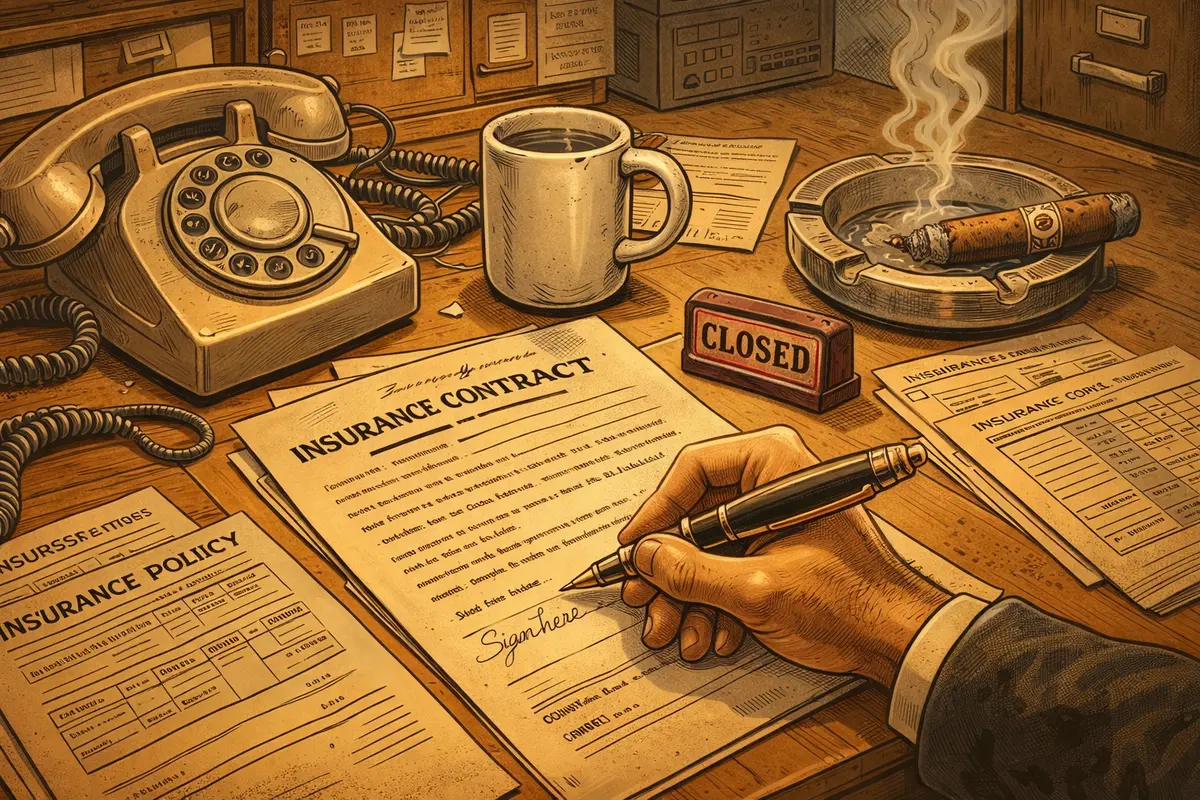
Insurance training fails because telling producers things doesn't change behavior. Phil Geldart's experiential approach builds skill through designed simulations, full-commitment role-play, and structured debriefs that anchor the lesson in the body, not just the head.
Insurance training fails because telling producers what to do does not change behavior. Phil Geldart's experiential approach builds skill differently: design immersive simulations where the producer feels the lesson, run full-commitment role-play with unscripted objections, and anchor every experience with a structured debrief that turns the moment into a reference point producers carry into real calls.
Why does traditional insurance training fail to change behavior?
Phil Geldart built his career around a simple but radical premise: adults don't change their behavior because they heard a good presentation. They change it because they experienced something that made the old behavior feel insufficient. His methodology, refined over decades of working with organizations across industries, is built around designing those experiences deliberately, creating scenarios where the learner discovers the insight themselves rather than being told it.
In insurance, this distinction is enormous. You can tell a new producer that empathy builds trust, that discovery questions open conversations, and that premature objection-handling kills deals. You can tell them this in a video, in a module, in a role-play script. And they'll nod and take notes and then get on the phone and do exactly what they were doing before, because knowledge and behavior are different things. Knowledge lives in the head. Behavior lives in the body, in the neural pathways built by repetition and feedback.
Phil's approach is to design learning experiences where the producer lives the principle, not just learns it. That might be a structured negotiation game where the learner discovers that listening more and talking less produces better outcomes, not because someone told them, but because they felt it. It might be a simulation where they experience what it's like to be on the receiving end of a hard sell, and that experience reframes how they approach their own conversations with clients.
The insight that drives the entire framework is deceptively simple: the experience teaches the lesson, and the debrief anchors it. Without intentional debrief, explicit reflection on what just happened and why, the learning doesn't fully transfer. With it, the experience becomes a reference point that the learner carries into every subsequent real-world situation.
For insurance agencies, this means that the investment in training needs to shift from content delivery to experience design. The question isn't "what does my team need to know?", it's "what does my team need to experience to change how they behave?" Those are different design challenges with very different solutions.
How do I build experiential learning into my agency's daily rhythm?
Traditional training events are episodic, a two-day workshop in January, a product certification in March, a conference in the fall. Phil argues that real skill development is continuous, woven into the daily rhythm of the agency rather than bolted on as a periodic event. The most effective learning cultures don't have separate training programs, they have managers who treat every real-world situation as a teaching opportunity.
That requires a shift in how managers see their role. In most agencies, the manager's job is primarily operational: monitor the numbers, handle escalations, run the pipeline review. In a learning-culture agency, the manager also functions as a coach, which means they need to be skilled at asking questions rather than giving answers, at creating reflection rather than dispensing solutions. That's a fundamentally different skill set, and most managers haven't been trained in it.
Games and structured simulations work in insurance because they create psychological safety around failure. In real client calls, failure has real consequences, a lost sale, a damaged relationship, a missed premium. In a simulation, failure is data. The producer who freezes when a prospect says "I already have coverage through my bank" can experience that moment, fail, debrief, and try again, in a controlled environment where the failure costs nothing. That deliberate repetition in safety is what builds the reflex that performs under pressure.
Role-play is the most underutilized and most commonly done wrong tool in insurance sales development. The standard version, manager plays prospect, producer plays agent, they run through a canned scenario, rarely produces behavioral change because neither participant fully commits to the reality of the exercise. Phil's approach demands full immersion: realistic scenarios, unfamiliar objections, unpredictable conversation paths, and a debrief that focuses not on whether the producer "won" the role-play but on what they noticed, what they felt, and what they'd do differently.
What's the one experiential exercise I should run this week?
This week, pick one skill that your team is consistently weak on, whether it's handling the "I need to think about it" objection, opening a cold conversation, or transitioning from rapport to need discovery, and design an experience around it rather than a lesson. Instead of teaching the skill in a meeting, build a five-minute simulation where producers experience the challenge firsthand, then debrief together. The reflection conversation after the experience will produce more usable insight than any script you could hand them.
For agency owners and managers, consider the ratio of your time spent on operational management versus coaching and development. If you're spending 90% of your week on operations and 10% on people development, you've built a system that makes you indispensable rather than a team that gets better without you. Shifting even 15% of your time toward deliberate development conversations changes the trajectory of your team's growth significantly over a year.
Part 2 of the Phil Geldart conversation goes deeper into the leadership dimension, specifically, how managers need to develop their own coaching capacity to create the kind of culture where experiential learning can actually take root.
Why does most insurance training fail, and what works instead?
The insurance industry trains people by telling them things. Phil Geldart's framework builds people by making them feel things, in controlled, designed experiences that change behavior at the level where it matters. Agencies that adopt this approach don't just have better-trained producers. They have a culture of continuous development that compounds over time and becomes a genuine competitive advantage in retention and performance.
Catch the full conversation:
Level up your agency:
Phil Geldart is a leadership and organizational development expert who has spent decades building experiential learning systems for complex organizations across multiple industries.
Listen to The Insurance Dudes Podcast
Get more strategies like this on our podcast. Available on all platforms.
Related Episodes
Phil Geldart on Building a Coaching Culture for Leaders

Antonia Bowring's ADHD Productivity Systems for Producers

Why Your Agency Needs a Manual Before Your Next Hire
4 Knowledge Pillars Every Insurance Agent Needs to Know
The Obstacle Is the Way: Stoic Philosophy for Agents
