Nathan Glass on Smarter Hiring and Partnership Decisions
Craig and Jason are licensed P&C agency owners, co-authors of Million-Dollar Agency, creators of the trademarked Telefunnel, hosts of The Insurance Dudes podcast, and speakers.
Written and reviewed under our editorial process. Found an error? See our corrections policy.

Read attribution patterns in how candidates describe past jobs, study what they value outside work, test their planning capacity, trust early value-mismatch signals, and walk away before commitment locks you in. Casual conversation is more diagnostic than any structured interview.
TL;DR
The best hiring and partnership signals show up in ordinary conversation, not formal interviews. Watch how someone attributes past failures, what they value outside work, and whether they can plan past a destination. Trust early value-mismatch signals and walk away before the relationship is load-bearing, while the exit cost is still low.
Nathan Glass, founder of Utopia Risk, picks the right people by reading ordinary conversations, not interviews. Listen for attribution patterns in how someone describes past jobs, study what they value outside work, test their capacity to plan, trust early value-mismatch signals, and walk away before you are committed. The signals are always there. Most owners are not trained to notice them.
How did Nathan Glass build Utopia Risk's people-decision framework?
Nathan's transition from stable employment to founding Utopia Risk wasn't a leap of impulsive entrepreneurialism, it was a deliberate move shaped by an accumulating understanding of what he wanted his professional life to look like and what he wasn't willing to accept. That deliberateness carries through into how he thinks about every significant business decision he makes today.
The experience of leaving predictability behind forces a particular kind of clarity. When you're an independent operator, there's no institutional cushion between you and the consequences of your decisions about people. A bad hire at a large company is an HR problem. At a small agency, it's a survival problem. Nathan internalized that reality early and built his decision-making frameworks around it.
What he discovered is that most of the information you need to make a good decision about someone is already available before the formal evaluation begins. People reveal themselves consistently, in how they talk about their past jobs, how they treat people who can't help them, how they respond when a plan falls through, how they think about their life outside of work. The challenge isn't that the signals aren't there. The challenge is that most business owners aren't trained to notice them.
Utopia Risk is built on Nathan's accumulated wisdom about identifying the right people and structuring relationships correctly from the start. That foundation has shaped everything from his hiring criteria to his partnership vetting process to how he builds his team and handles early-stage client relationships.
What do everyday conversations reveal that interviews miss?
Nathan's framework for evaluating people is built around the insight that ordinary conversations are more diagnostic than structured interviews, precisely because people aren't performing for them.
The way someone talks about their past reveals how they'll talk about you. When a candidate describes every previous employer negatively, or a potential partner explains why their last three ventures didn't work out by focusing exclusively on others' failures, you're getting a preview. Nathan pays attention to attribution patterns: does this person take ownership of outcomes, or do outcomes always happen to them?
What someone values outside of work predicts how they'll behave under pressure. Nathan explores people's lives beyond the professional resume deliberately. The person who coaches their kid's soccer team, maintains long-term friendships, and has consistent personal habits is demonstrating the same capacities that make someone reliable professionally. Not as a formula, one data point proves nothing, but as a pattern that either reinforces or undercuts the professional presentation.
Red flags in planning reveal capacity for execution. Nathan looks for how people approach complex plans. Someone who can only articulate the destination but not the steps between here and there is someone who will struggle when the unexpected happens. The capacity to plan, to think through sequences, dependencies, and contingencies, is a core competency for anyone you're going to rely on significantly.
Misaligned values create friction that compounds over time. A partnership that feels slightly off in the first month doesn't usually get better, it gets worse. Nathan trusts his read on values alignment early, and when he senses a mismatch, he'd rather address it or exit before the relationship is load-bearing. The cost of a difficult conversation early is always lower than the cost of a structural failure later.
Stepping back before you're committed is a skill, not a failure. Perhaps Nathan's most counterintuitive insight is that the willingness to walk away early, from a hire, a partnership, or a client relationship, is a sign of business maturity, not indecision. The sunk cost of time already invested is always smaller than the ongoing cost of a relationship that's wrong for the business.
How do you apply Nathan's read on people to your agency?
The most immediate application of Nathan's framework is in your hiring process. Before your next producer interview, build in a pre-interview stage, a casual conversation over coffee, a phone call that isn't framed as an evaluation. Ask about their career narrative. Listen for how they describe transitions, conflicts, and outcomes. You'll learn more in that unguarded conversation than in three hours of structured interviews.
For partnerships, whether with vendors, referral sources, or collaborators, apply Nathan's red flag checklist before you're in deep. How do they talk about their current clients? How do they handle the moment you ask a hard question about their process or pricing? Do they give you straight answers, or do you feel managed? Those early micro-moments are diagnostic.
On the client side, Nathan's model suggests that you have the right to be selective. An intake conversation that reveals a client who's difficult to satisfy, prone to blame, or unclear about their own needs is a conversation that can save you from a relationship that costs more than it earns. Not every prospect is the right client for your agency.
What is the bottom line on choosing the right people?
Nathan Glass built Utopia Risk on a foundation of intentional decisions about people, not just talent, but character, values, and fit. The insight that matters most is also the simplest: people tell you who they are constantly, in conversations that aren't formal evaluations. The agency owners who build the best teams and the most durable partnerships are the ones who've learned to listen.
Catch the full conversation:
Level up your agency:
Listen to The Insurance Dudes Podcast
Get more strategies like this on our podcast. Available on all platforms.
Related Episodes
Stop Hiring Out of Desperation: The 5-Step Hiring Fix
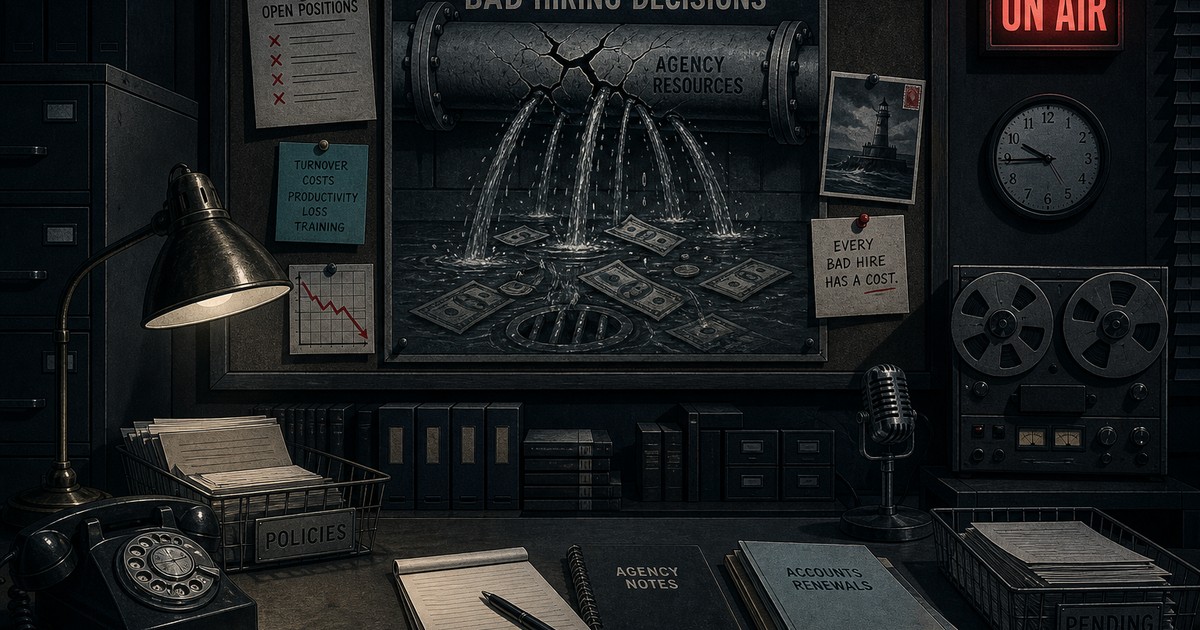
What a Bad Producer Hire Actually Costs Your P&C Agency
BJ Hill: From Basketball Coach to $18 Million Agency
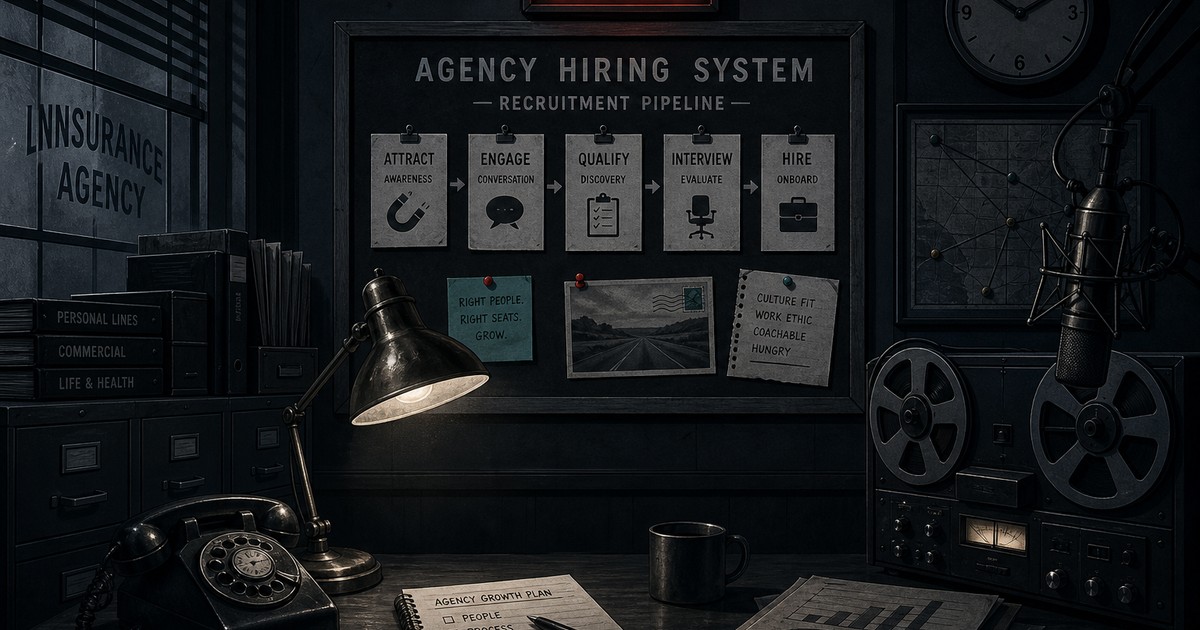
Stop Hiring Bad Fits: The 5-Step Insurance Agency Hiring Fix
Why Hiring Is the Number One Challenge for Agency Owners
