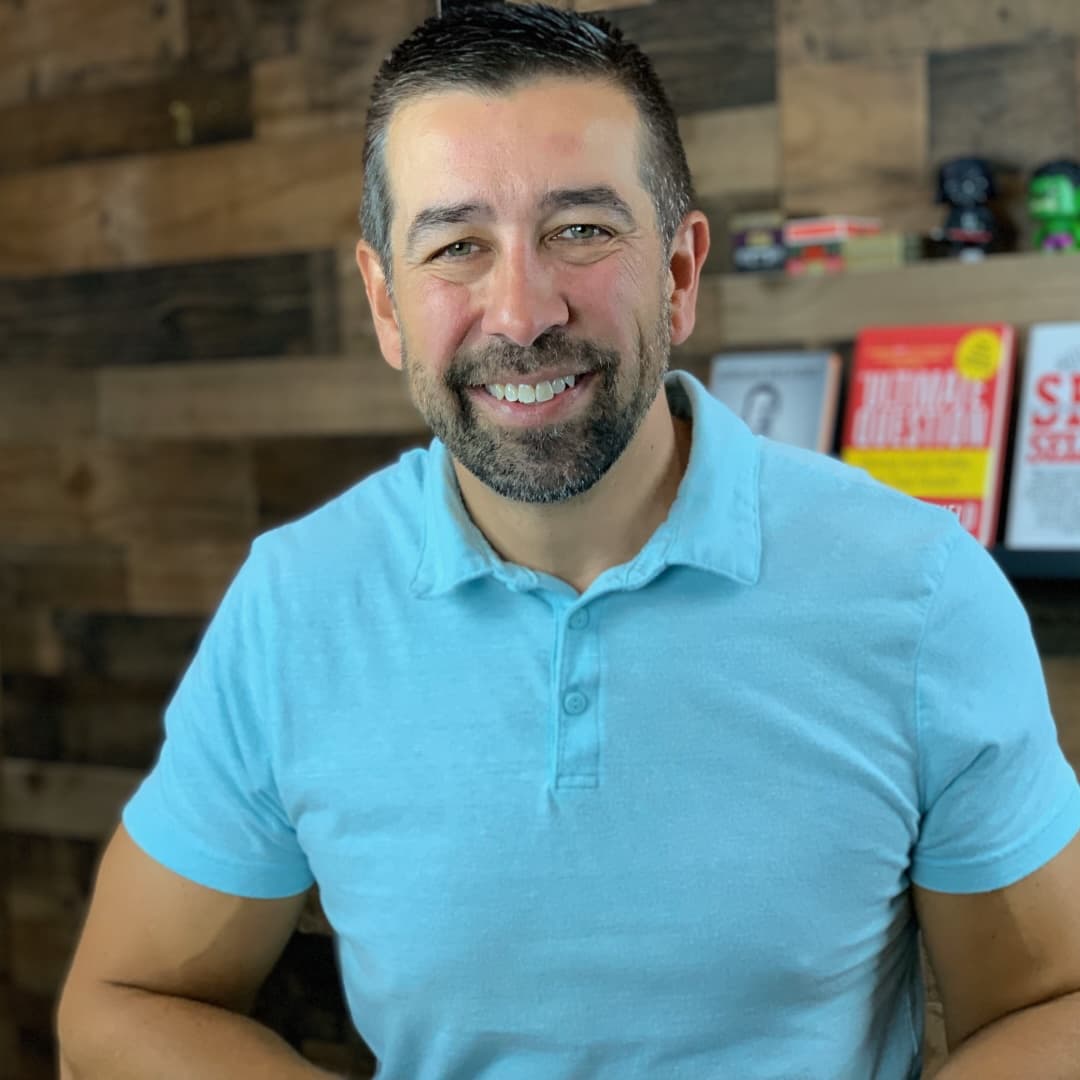
Greg Offner's Disruptive Tactics for Agents (Part 2)
Craig and Jason are licensed P&C agency owners, co-authors of Million-Dollar Agency, creators of the trademarked Telefunnel, hosts of The Insurance Dudes podcast, and speakers.
Written and reviewed under our editorial process. Found an error? See our corrections policy.

Four disruptive tactics insurance agents can run this month: the proactive vulnerability call (no pitch), the honest coverage gap conversation, the wellbeing-framed referral ask, and the annual story-update meeting. Pick one, run it for 30 days, then add the next.
Greg Offner's playbook gives insurance agents four disruptive tactics to run starting this week: the proactive vulnerability call (genuine check-in with no pitch), the honest coverage gap conversation early in the relationship, the referral ask framed around the client's network and wellbeing, and the annual story-update meeting that is explicitly not about renewal. Pick one, run it for 30 days, measure relationship depth and information gathered, then add the next.
Why do most sales tactics fail when an agent tries them?
Most agents who are looking to improve their performance are looking for better tactics. A better opening line. A better objection response. A better follow-up sequence. Tactics feel actionable and concrete, which is why they are the default request in almost every sales training context.
The problem is that tactics divorced from strategy are random. They might work in one situation and fail in another, and you have no model for understanding why. You are guessing, and each guess is independent of the last one. Over time, tactical improvisation without strategic clarity produces an agency that is hard to replicate, impossible to delegate, and dependent on the specific agent pulling it off through sheer force of personality.
Greg's framework reverses the order. Define the strategic position, who you serve, what you uniquely offer them, how your relationship is differentiated from the transactional default, and then build tactics that express that position. When tactics are in service of a clear strategy, they are consistent, they can be taught, and they compound over time.
The strategy Greg advocates for insurance agents is not complicated to state: become the most trusted resource in your clients' lives for decisions that touch risk, protection, and financial security. That is a broader mandate than "sell policies," and it produces a different set of tactics.
Which four disruptive tactics can I run this month?
Tactic one: The proactive vulnerability call.
Most agents make contact with clients reactively, when there is a renewal, a claim, or a problem. The disruptive move is to make contact proactively with a message that has nothing to do with a transaction. The proactive vulnerability call is a brief outreach, phone, email, video message, that says: "I was thinking about you. I know you have [specific situation]. I wanted to check in and make sure you're okay." No pitch. No ask. Just genuine attention.
That call does two things. It reinforces that the relationship exists outside of transactions. And it surfaces information, about life changes, about concerns, about situations that might warrant a coverage review, that you would never get if you only called at renewal time.
Tactic two: The honest coverage gap conversation.
Most agents avoid telling clients what their policy does not cover. The instinct is to protect the sale by not surfacing objections. The disruptive move is the opposite: early in the relationship, have a direct conversation about the limits of the coverage. Not in a way designed to upsell immediately, in a way designed to make sure the client genuinely understands what they have and what they do not.
Clients who understand their coverage gaps are more likely to fill them. But more importantly, clients who experience an agent being honest with them about what is not covered, voluntarily, without being asked, develop a level of trust that is nearly impossible to earn any other way.
Tactic three: The referral conversation that is not a referral conversation.
The standard referral ask is awkward because it is transparently transactional. "Do you know anyone else who might benefit from our services?" That sentence ends conversations rather than starting them.
Greg's disruptive version frames the referral ask around the client's network and wellbeing, not around the agent's pipeline. "I've been thinking, are there people in your life who you're aware of who don't have the right coverage in place? Because the gaps I see most often genuinely hurt people when something goes wrong, and I'd rather they were protected." That conversation positions the agent as someone who cares about outcomes, not someone who needs more leads. The referrals follow.
Tactic four: The annual story update.
Once a year, Greg advocates for an extended client conversation that is explicitly not about renewal. It is a conversation about what has changed in the client's story over the last twelve months, new job, new home, new family member, sold a car, started a business, retirement getting closer. The coverage review is the output of that conversation, not the purpose of it.
Clients who experience this conversation year after year do not think of you as their insurance agent. They think of you as the person who pays attention to what is happening in their life and makes sure their protection is keeping up. That positioning is not replaceable by a cheaper quote.
What strategic choice makes all four tactics work?
Every tactic above is an expression of a single strategic choice: to be genuinely invested in the client's wellbeing rather than in the transaction. That choice sounds obvious. Almost nobody makes it operationally.
Most agencies are operationally organized around policies, written, renewed, retained. The disruptive agencies Greg describes are operationally organized around clients, known, served, protected over time. The metrics are different, the touchpoints are different, the staff training is different, and the outcomes are dramatically different.
The agents who make this shift describe a consistent experience: initial friction as they reconfigure their time and priorities, followed by a compounding of referrals, retention, and per-client revenue that eventually makes their practice nearly self-sustaining.
Which tactic should I start with this week?
Pick one of the four tactics and run it for thirty days. Not all four, one. The proactive vulnerability call is the highest-leverage starting point for most agents because it has no cost, can be started today, and creates immediate evidence about which clients are genuinely engaged.
Pull a list of ten clients you have not spoken to in over ninety days. Call each one with no agenda other than genuine check-in. Track what you learn. At the end of thirty days, assess what those conversations produced, not just in revenue but in relationship depth and information gathered.
The strategy underneath the tactics is what gets you out of the commodity trap. The tactics are the daily execution of that strategy. Both matter. In the order Greg describes.
What's the final takeaway on the Offner playbook?
Greg Offner's two-part conversation with the Insurance Dudes is one of the more substantive explorations of what actually separates great agents from average ones. Part 2 takes the philosophy and turns it into a specific playbook. The agents who take both sessions seriously and implement even one tactic consistently will find that the disruption Greg is describing is not theoretical, it is extremely practical. Go listen to the full episode and pick your first tactic.
Catch the full conversation:
This is Part 2 of a 2-part series with Greg Offner.
About Greg Offner: Dueling pianist, keynote speaker, and business consultant who helps professionals apply performance principles to client relationships and sales., LinkedIn | Website
Level up your agency:
Listen to The Insurance Dudes Podcast
Get more strategies like this on our podcast. Available on all platforms.
Related Episodes
Greg Offner's Disruptive Approach to Insurance (Part 1)

Is Insurance Dead? How Agents Can Survive Industry Change

Trey Lewellen: What Agents Can Learn From a Funnel King

Jorge Carbonell on What's Actually Working in Leads (Part 1)
Jorge Carbonell Completes the Digital Lead Playbook (Part 2)