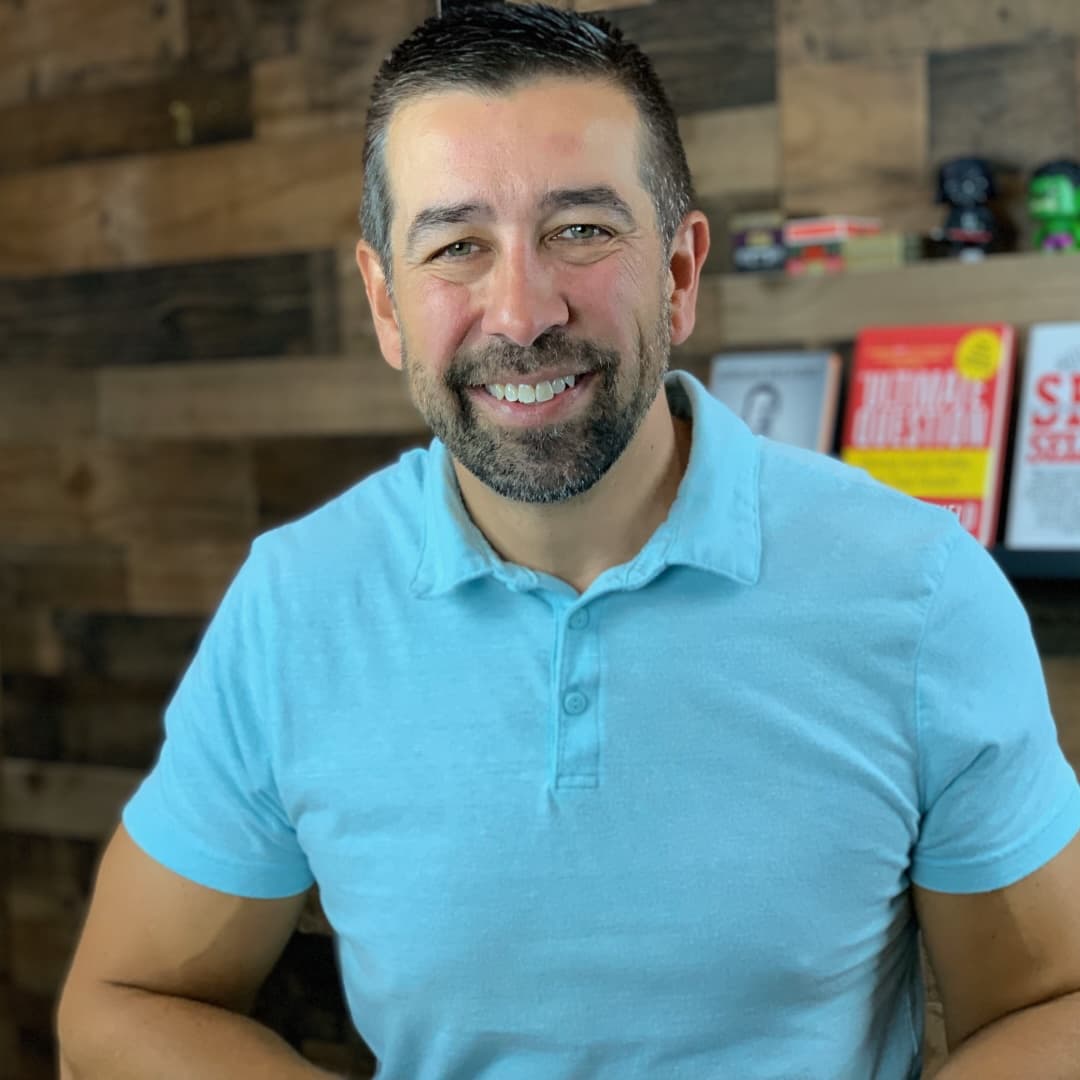
Greg Offner's Disruptive Approach to Insurance (Part 1)
Craig and Jason are licensed P&C agency owners, co-authors of Million-Dollar Agency, creators of the trademarked Telefunnel, hosts of The Insurance Dudes podcast, and speakers.
Written and reviewed under our editorial process. Found an error? See our corrections policy.

Greg Offner's disruption framework for insurance agents: stop running a script (presenting) and start running a real-time conversation (performing). Lead acquisition, onboarding, and retention with the client's actual worry, not the product. Connection precedes transaction.
Greg Offner's disruptive premise for insurance agents: stop presenting from a script and start performing in real-time dialogue. Lead every client conversation (acquisition, onboarding, renewal) with the person's actual worry instead of the product. Master your coverage and scenarios deeply enough to set the script down. Connection precedes transaction, every time.
What does a dueling pianist teach insurance agents about selling?
Before getting into the frameworks, the background matters, because the background is the framework.
A dueling piano show is a pure improvisational performance environment. There is no set list. There are two pianists competing for the same audience's attention. The audience calls out requests, sometimes contradictory ones. The room's energy shifts constantly. You do not get to say "I need a minute to think about this", you respond in real time or you lose the room.
What Greg realized as he transitioned from performing to consulting is that most professional service environments, and insurance agencies specifically, are running the opposite of that model. They have scripted conversations, predetermined responses, and a mode of engagement that treats every client as a standard transaction rather than a real-time relationship. That gap between the scripted approach and the responsive approach is where the disruption happens.
The agents who can read the room, who can genuinely hear what a client is telling them beneath the stated question, who can pivot in real time to address the actual need rather than the rehearsed answer, consistently outperform their scripted counterparts. Not because they are "better salespeople" in the conventional sense, but because they are better listeners and more adaptable communicators.
What does "disruption" actually mean in a P&C agency?
The word disruption gets used carelessly in business. In this context, Greg is specific about what he means: disruption is not chaos. It is the deliberate replacement of an industry's default assumption with a better one.
The default assumption in insurance sales is that the transaction is fundamentally about the product. The agent presents coverage options, the client selects one, a policy is written. The relationship is defined by the policy.
Greg's disruptive premise is that the transaction is fundamentally about the person. The coverage is the vehicle. The actual deliverable is peace of mind, security, the knowledge that when something goes wrong, which it will, there is a system in place that makes the aftermath manageable. Agents who lead with that understanding rather than the product understanding create an entirely different client experience.
That distinction matters at every stage of the client relationship.
In acquisition: Instead of leading with a quote comparison, the disruptive agent leads with questions that surface what the client is actually worried about. What keeps you up at night about your home? What would it mean for your family if your car were totaled tomorrow? Those questions create a conversation about protection, not about price.
In onboarding: Instead of handing over a policy document and moving on, the disruptive agent walks through what the policy actually does in plain language, and more importantly, what it would not cover and why that matters. That conversation builds the kind of trust that makes clients stay for years.
In retention: Instead of an annual renewal reminder, the disruptive agent makes contact that is genuinely useful, a coverage review prompted by life changes, an explanation of a market shift that affects the client's specific situation. Every touchpoint reinforces that the relationship is about their wellbeing, not just their renewal.
What's the difference between presenting and performing in a sales call?
Greg's most useful framework from this session is what he calls performing vs. presenting. Most agents are presenters, they have material prepared and they deliver it. The best agents are performers, they are in dialogue with the room and the material serves the conversation rather than driving it.
This is not about being less prepared. It is about being prepared differently. A performer knows their material so thoroughly that they can release the script and respond to what is actually in front of them. That requires more preparation, not less, but the preparation is structured around mastery rather than recitation.
For insurance agents, this translates into knowing your products and coverage scenarios well enough that you do not need to read from a script or a comparison chart during a client conversation. When you reach that level of mastery, the conversation can be about the client instead of the product. And when the conversation is about the client, you close more, you retain more, and you generate more referrals, because clients feel served rather than processed.
The secret that Greg sings from the stage is the same one that applies in the agency: connection precedes transaction. Every time.
What's the first move to apply this in my agency?
The practical starting point from Part 1 of Greg's conversation is an audit of your client interaction scripts.
Pull up the last five conversations you had with prospective clients, in your memory if not on paper. Were those conversations genuinely exploratory, or were you moving through a predetermined sequence? Did you ask questions you did not already know the answer to, or were the questions serving a script?
If you are operating primarily from a script, the assignment is not to throw the script away. It is to master the material in the script well enough that you can set the script down and have a real conversation. The script is training wheels. Mastery means you no longer need them.
The second practical move is to identify one touchpoint in your current client communication process that could be made more genuinely useful. Not more frequent, more useful. What is one piece of information you have, or one proactive conversation you could initiate, that would make your clients' lives materially better? Do that one thing this week.
What's the takeaway before Part 2?
Greg Offner came in with a performer's sensibility and a consultant's precision and delivered a first session that reframes how the best agents think about what they are actually doing in a client relationship. Part 2 goes deeper on the specific tactics. But the foundation, connection precedes transaction, performance over presentation, disruption as the replacement of a bad default with a better one, is worth sitting with before the next conversation.
Catch the full conversation:
This is Part 1 of a 2-part series with Greg Offner.
About Greg Offner: Dueling pianist, keynote speaker, and business consultant who helps professionals apply performance principles to client relationships and sales., LinkedIn | Website
Level up your agency:
Listen to The Insurance Dudes Podcast
Get more strategies like this on our podcast. Available on all platforms.
Related Episodes
Greg Offner's Disruptive Tactics for Agents (Part 2)

Is Insurance Dead? How Agents Can Survive Industry Change

Trey Lewellen: What Agents Can Learn From a Funnel King
Jorge Carbonell on What's Actually Working in Leads (Part 1)
Jorge Carbonell Completes the Digital Lead Playbook (Part 2)