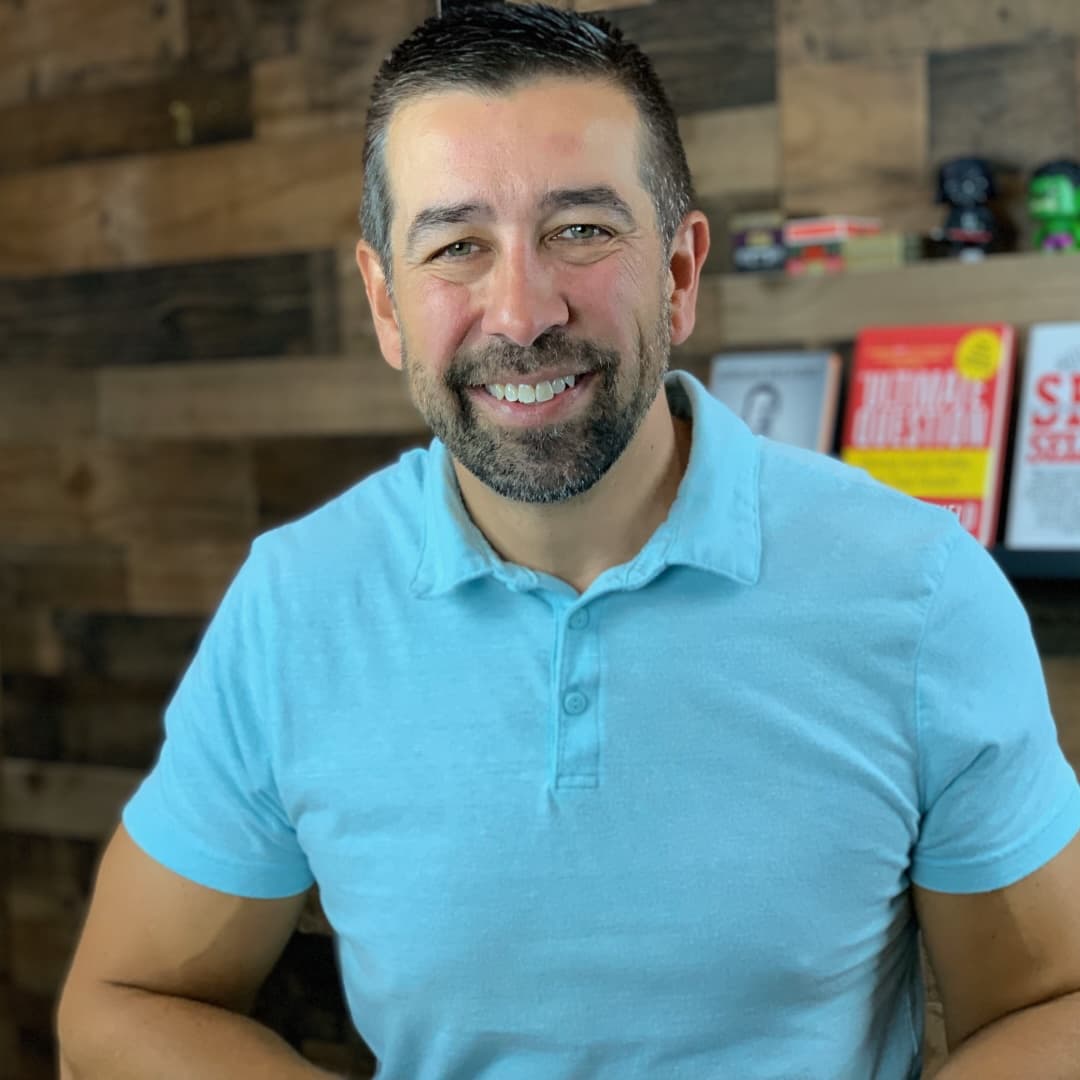
How Nicholas Sakha Uses Video to Sell Insurance Fast
Craig and Jason are licensed P&C agency owners, co-authors of Million-Dollar Agency, creators of the trademarked Telefunnel, hosts of The Insurance Dudes podcast, and speakers.
Written and reviewed under our editorial process. Found an error? See our corrections policy.

Use a smartphone to record daily 45-second hook-value-CTA videos answering real client questions. Video builds trust faster than any other medium because prospects evaluate a person, not a claim. Nicholas Sakha's phone-camera content compounds into a 24/7 lead engine.
Nicholas Sakha sells insurance with phone-camera video by running a daily hook-value-CTA structure that answers questions clients actually ask. Video builds trust faster than any other medium because prospects evaluate a person, not a claim. Every clip he posts keeps working for months, turning his feed into a 24/7 warm-lead engine in Las Vegas.
What does Nicholas Sakha's video machine actually look like?
Nicholas isn't working with a production crew or a marketing agency. He's working with a smartphone, natural lighting, and an understanding of what makes people stop scrolling. His videos are raw, energetic, and authentically him, and that's exactly why they work. In a feed full of polished corporate content that screams "advertisement," Nicholas's videos feel like getting advice from a friend who happens to know everything about insurance.
The key insight Nicholas operates on is that social media video isn't about production value. It's about attention value. A perfectly shot, professionally edited video that nobody watches is worth exactly zero. A slightly shaky, phone-recorded video that captures attention in the first two seconds and delivers genuine value for the next 45 seconds is worth every lead it generates.
Nicholas structures his content around a simple formula: hook, value, call to action. The hook grabs attention immediately, usually a provocative statement, a surprising fact, or a direct challenge to something his audience believes. The value section delivers something useful: an insurance tip, a coverage explanation, a common mistake to avoid. The call to action is simple and low-pressure: follow for more, drop a comment, DM for a quote.
What makes this work for Nicholas specifically is his personality. He's high-energy, confident, and unafraid to be polarizing. In the Las Vegas market, a city built on personality, that approach resonates. But the underlying framework works for any personality type. Quiet, analytical agents can create thoughtful explainer videos. Funny agents can create entertainment-first content. The personality is the variable; the structure is the constant.
Why does video outperform every other insurance marketing channel?
Nicholas's results point to a broader truth about insurance marketing: video creates trust faster than any other medium. There's a simple reason for this. When a prospect reads your ad copy, they're evaluating a claim. When they watch you on video, they're evaluating a person. And human beings are neurologically wired to form trust judgments based on faces, voices, and body language, signals that only video provides.
This has specific implications for the insurance sales cycle. The biggest friction point in insurance sales isn't price, it's trust. Prospects don't know if you're going to take care of them when they have a claim. They don't know if you're knowledgeable. They don't know if you're honest. Video answers all three questions before the first phone call ever happens.
Nicholas reports that prospects who come through his video content behave fundamentally differently than cold leads. They already feel like they know him. They reference specific videos. They ask informed questions. They close at dramatically higher rates because the trust-building that normally happens over multiple touchpoints has already occurred in their social media feed.
The compounding effect is significant too. Every video Nicholas posts continues working indefinitely. A video he recorded six months ago still generates profile visits, follows, and DMs today. Compare that to a cold call, which produces one interaction that disappears the moment you hang up. Over time, a library of video content becomes a passive lead generation engine that runs 24 hours a day with zero marginal cost.
How do you get started with video as an insurance agent?
Nicholas breaks down his approach into steps that any agent can follow, regardless of technical skill or comfort level on camera.
Step 1: Start ugly. Your first 20 videos will be bad. Accept this. The only way to develop on-camera presence is through volume. Record a video every day for 30 days and post it. Don't overthink it. Don't edit obsessively. Just record, post, and iterate based on what the data tells you.
Step 2: Answer real questions. The easiest content to create is answers to questions your clients already ask you every day. What does full coverage actually mean? Do I need an umbrella policy? What happens if someone hits my parked car? Every question a client has asked you is a video waiting to be made. Nicholas keeps a running list on his phone and pulls from it whenever he's ready to record.
Step 3: Show your face and your personality. Don't hide behind slide decks, text overlays, or stock footage. The entire point of video is human connection. Your face, your voice, your mannerisms, that's the content. Everything else is packaging. Nicholas doesn't use scripts. He knows his material and talks to the camera like he's talking to a friend at a barbecue. That authenticity is irreplaceable.
Step 4: Optimize the first two seconds. Social media is a war for attention, and you have about two seconds to win it. Nicholas starts every video with something that creates an information gap: a question, a bold claim, or a pattern interrupt. "You're overpaying for car insurance and you don't even know it" is a better opening than "Hey guys, today I want to talk about auto insurance rates." Front-load the intrigue.
Step 5: Post consistently and engage. The algorithm rewards consistency. Nicholas posts daily and spends time in the comments responding to every interaction. The comments section is where relationships form and where casual viewers become leads. Agents who post and ghost, who never respond to comments or DMs, are leaving the most valuable part of social media on the table.
How do you run a 30-videos-in-30-days challenge?
You don't need Nicholas's natural charisma to make video work. You need three things: a smartphone, a list of topics your clients care about, and the willingness to be uncomfortable for 30 days while you find your on-camera voice.
Start this week. Record one video answering a frequently asked insurance question. Post it to your personal social media profiles (not just your business page, personal profiles get more organic reach). Track the engagement. Then do it again tomorrow.
Set a 30-day goal: 30 videos in 30 days. By day 30, you'll have a content library, a measurably larger social media following, and the beginnings of a video-first lead generation channel. More importantly, you'll have overcome the single biggest obstacle to video marketing: the discomfort of getting started.
What is the bottom line on video selling for insurance agents?
Nicholas Sakha proves that video selling isn't a trend, it's the future of how insurance agents build trust and generate business. His Las Vegas operation runs on a phone camera and authentic energy, and it outperforms marketing strategies that cost ten times as much. The agents who start creating video today will dominate their local markets within a year. The agents who don't will spend the next decade wondering where their prospects went.
Catch the full conversation:
About Nicholas Sakha: Insurance agent based in Las Vegas, Nevada. Known for exceptional video marketing skills and social media selling strategies that generate warm inbound leads at scale., LinkedIn | Website
Level up your agency:
Listen to The Insurance Dudes Podcast
Get more strategies like this on our podcast. Available on all platforms.
Related Episodes

Todd Hartley's Video Marketing Playbook for Agents
Krista Mashore's Marketing Lessons for Agents (Part 1)
Krista Mashore's Full Marketing Playbook for Agents (Part 2)
Michael Hunter: Stop and Learn Before You Post on Social
Your Content Makes You Relevant: Marketing for Agents