Inspect What You Expect: Quality Control and E&O Prevention
Craig and Jason are licensed P&C agency owners, co-authors of Million-Dollar Agency, creators of the trademarked Telefunnel, hosts of The Insurance Dudes podcast, and speakers.
Written and reviewed under our editorial process. Found an error? See our corrections policy.

Prevent E&O claims with four agency QC practices: structured application review before binding, policy review against the quote at delivery, structured renewal audits with real client questions, and documentation discipline so every coverage discussion lives in the CRM.
Quality control and E&O prevention for insurance agency owners is built on four inspection habits: scheduled random file reviews (not just after a complaint), written checklists for every recurring transaction, mandatory coverage adequacy review at every renewal, and a written note on every coverage conversation. Documentation you don't have is documentation you can't defend. The 15-minute review that nobody built is the difference between catching a coverage gap and paying for one.
Why is the word "protect" the most important part of this principle?
Most versions of the "inspect what you expect" principle stop at the first two words. This episode adds the third: protect. You inspect what you expect in order to protect, your clients, your agency, your license, and your financial stability. The protection framing matters because it changes the motivation from administrative compliance to genuine professional responsibility.
Insurance agencies get E&O claims not primarily because agents are careless or dishonest. They get them because quality control processes were weak, inconsistent, or absent, and an error that would have been caught by inspection made it through to a binding or renewal. The agent thought the coverage was there. The client thought the coverage was there. At claim time, both of them found out it wasn't.
The emotional and financial cost of that discovery is significant for everyone involved. The E&O claim, the deductible, the carrier audit, the potential license issues, the client relationship, all of it flows from a gap that quality control is specifically designed to prevent.
What does quality control actually look like inside an agency?
Agency quality control isn't a single thing, it's a set of practices that together reduce the probability of errors reaching the client. The most important components:
Application review before binding. Every application should be reviewed by someone other than the person who took it before coverage is bound. Not a cursory glance, a structured review against a checklist that covers coverage adequacy, application accuracy, required disclosures, and carrier requirements. This sounds slow. In practice, once the checklist exists and the process is trained, it takes minutes per application and catches errors that would otherwise cost hours and thousands of dollars later.
Policy review at delivery. When a policy issues, it should be reviewed against what was applied for and what was disclosed to the client. Carrier systems make errors. Underwriting decisions produce different coverage than what was applied for. A policy that issues doesn't mean the client has the coverage they need or the coverage they were quoted. Someone needs to verify that before the policy is delivered.
Renewal audits. Renewals are the highest-volume source of E&O claims because they're the most routine, and routine breeds inattention. A client's situation changes (new construction, new vehicles, life changes, business changes) without the agency being informed. If your renewal process is purely administrative, process the renewal, mail the dec page, you are accumulating risk invisibly in your book. A structured renewal touchpoint that asks the right questions annually catches the coverage gaps before they become claims.
Documentation standards. The classic E&O defense is documentation. When a claim is contested, the question is always: can you show what was discussed, what was offered, what was declined in writing, and when? Agencies that have consistent documentation practices, everything in the CRM, every coverage discussion summarized in writing, are in a fundamentally different legal and ethical position than agencies that rely on memory and good intentions.
How do I run QC at scale when I can't personally inspect every file?
Here's the tension that this episode addresses directly: as a growing agency, you cannot personally inspect every application, every policy, every renewal. The agency owner who tries to do this personally becomes the bottleneck, and creates the conditions where quality control only happens when they're available, which means it stops happening when they're not.
The solution isn't to stop inspecting. It's to build inspection into the process in a way that doesn't require the owner's direct involvement in every instance. This means training staff on what to inspect, building the checklists that make inspection consistent, sampling completed work to verify that the inspection is happening and catching what it should, and reviewing the items that exceed a defined complexity threshold personally.
This is the management layer of quality control. You're not doing all the inspections, you're designing and maintaining the inspection system. The distinction matters enormously at scale.
What mindset separates great E&O prevention from box-checking?
There's a mindset shift that separates the agency owners who are genuinely good at E&O prevention from those who just have a binder somewhere labeled "compliance." The genuinely good ones think about E&O not as a regulatory obligation but as a client service obligation. They ask: if this client filed a claim tomorrow, would they be fully covered? If the answer to that question ever makes them uncertain, they treat that uncertainty as an action item, not a statistical comfort.
This mindset produces different behavior than compliance-as-box-checking. It asks the extra question on the renewal call. It takes the five minutes to verify the policy issued as quoted. It sends the coverage summary email that creates a paper trail. These aren't heroic acts, they're small habits that compound into a client base that trusts you completely and an agency that isn't flying blind on its own risk.
What's my first move to build agency QC this quarter?
Start with documentation. If your CRM doesn't have a record of what coverage was discussed, offered, and accepted or declined in every client interaction, that's the first gap to close. Build the habit across your team: if it's not in the system, it didn't happen.
Then build one checklist, just one, for the transaction type in your agency that has the highest volume. Application review, renewal processing, policy delivery, whichever creates the most coverage touchpoints. Run that checklist consistently for ninety days. Then add the next one.
What's the bottom line on inspect-what-you-expect-to-protect?
Inspect what you expect to protect. The inspection isn't busywork, it's the professional obligation that stands between your clients and an unpleasant surprise at claim time. The agencies that do this well carry less E&O risk, retain clients better, and sleep more soundly. That's not a coincidence.
Catch the full conversation:
Level up your agency:
Listen to The Insurance Dudes Podcast
Get more strategies like this on our podcast. Available on all platforms.
Related Episodes
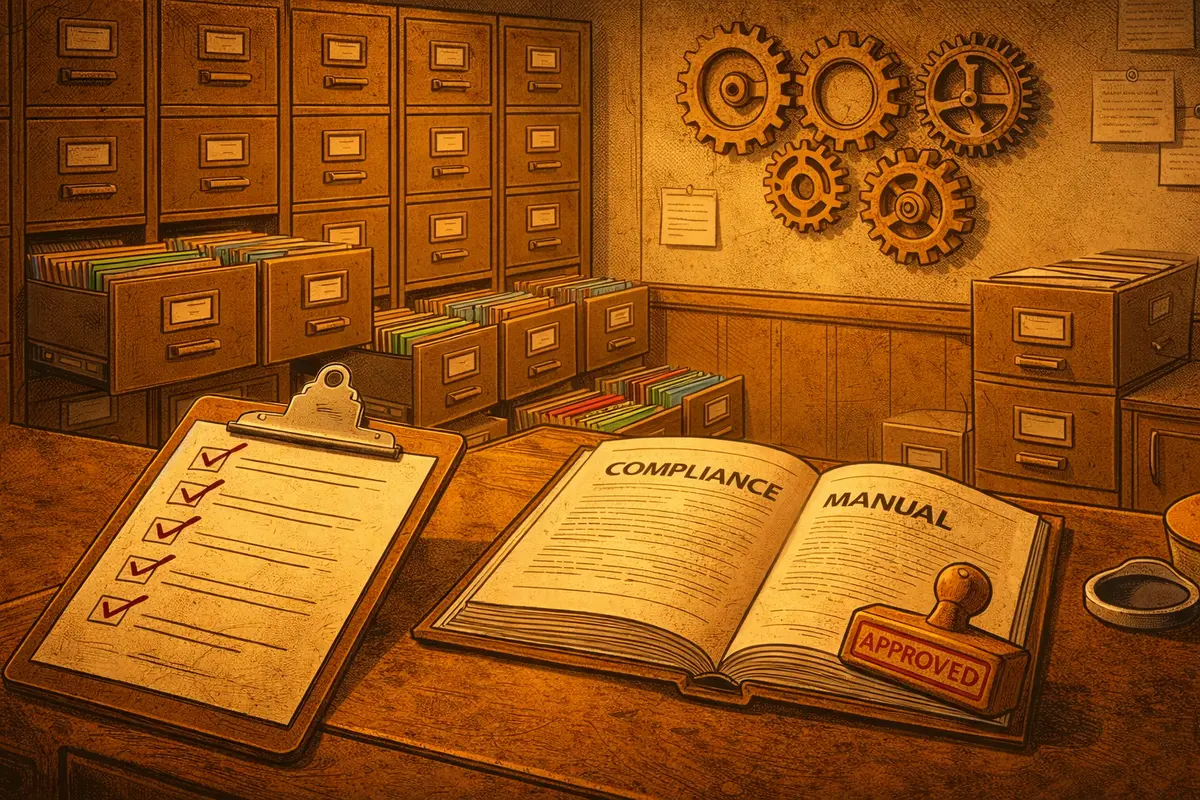
Inspect What You Expect: QC and E&O Prevention for Agencies

Legal Protection for Insurance Agents: What Not to Ignore
One AI Dialer Clause Can Cost You $500 Per TCPA Call

Stay Clean or Ship Out: Compliance Science for Agents

Galen Hair: What a Litigator Wants Agents to Know (Part 1)
