Inspect What You Expect: QC and E&O Prevention for Agencies
Craig and Jason are licensed P&C agency owners, co-authors of Million-Dollar Agency, creators of the trademarked Telefunnel, hosts of The Insurance Dudes podcast, and speakers.
Written and reviewed under our editorial process. Found an error? See our corrections policy.
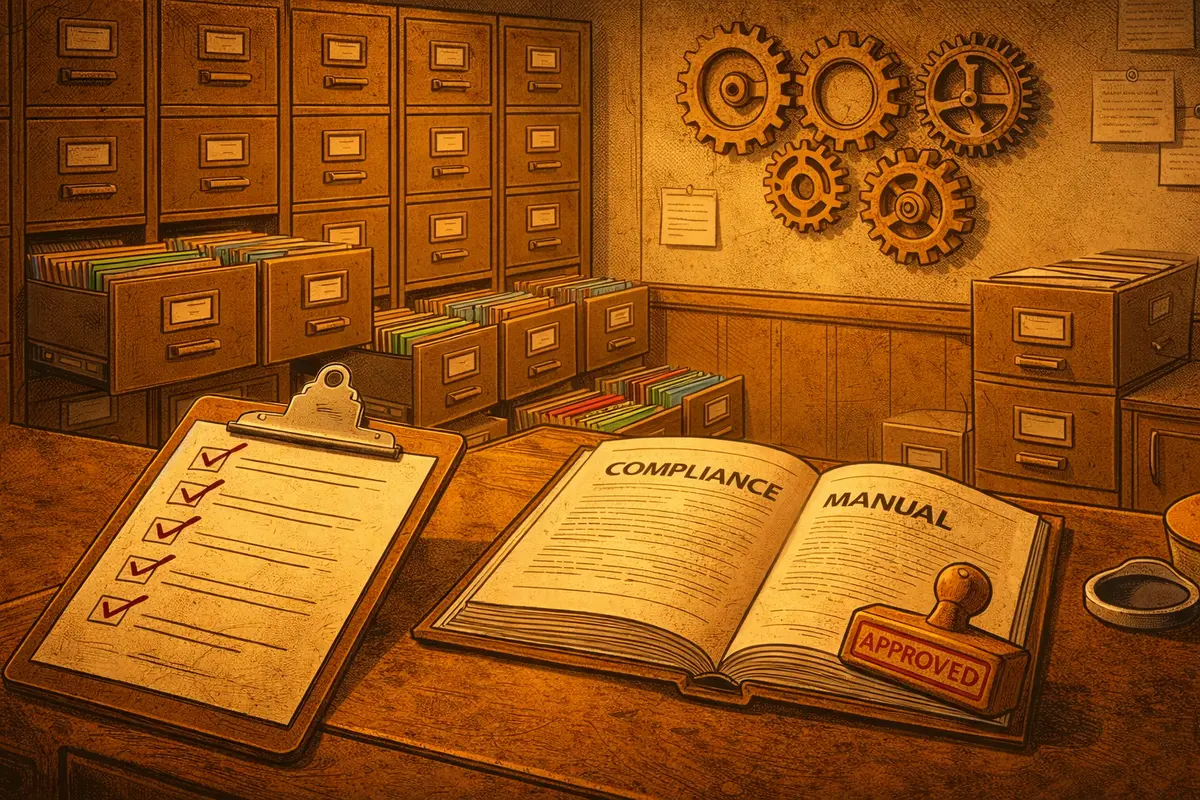
Prevent E&O claims by building four QC habits into daily operations: random file reviews on a regular schedule, written checklists for new business, change, renewal, and claims work, mandatory coverage adequacy review at renewal, and file notes on every coverage conversation.
Prevent E&O claims and protect your agency by inspecting what you expect with four operating habits: run random file reviews on a scheduled cadence (not only after a problem), use written checklists for every common transaction (new business, change, renewal, claims), enforce a coverage adequacy review at every renewal (not just a premium comparison), and write a file note on every coverage conversation. Documentation you don't have is documentation you can't defend.
What types of E&O claims actually hit insurance agencies?
E&O claims in retail insurance agencies follow predictable patterns. Coverage gaps, clients who didn't have the coverage they thought they had, account for a large portion of claims, and they're almost always traceable to communication failures: the agent who didn't ask the right questions, the team member who processed a change without reviewing the resulting coverage, the renewal that went out without a coverage adequacy review.
Documentation failures are the second major category. The agency that cannot produce documentation of a coverage conversation, a client's declination of recommended coverage, or the advice given at renewal is in a difficult position when a claim dispute arises. The standard is not just doing things right, it's having evidence that you did them right.
Process failures, coverage changes processed incorrectly, policies bound without proper verification, endorsements that weren't confirmed, round out the picture. These are the errors that happen when the operational process doesn't include adequate checkpoints.
How do I build QC into my agency's daily operations?
Quality control in an insurance agency is not an audit function that operates quarterly. It's a continuous operational process built into how work gets done every day.
File review protocols. A random sample of client files should be reviewed on a regular schedule, not just when there's a problem, but routinely. The review should check for documentation completeness, coverage adequacy relative to the client's profile, declination letters where coverage was offered and declined, and accuracy of policy details in the agency management system.
Process checklists. Every category of common transaction, new business binding, policy change, renewal, claims assistance, should have a written checklist that defines what needs to happen and in what order. Checklists are not training wheels for new team members, they're professional standards that protect against the errors that happen when experienced people rush or get interrupted.
New business review. Every new policy should go through a coverage review before binding confirmation is sent to the client. This review should ask: does this coverage adequately protect the client given what we know about their situation? Are there exposures that should be covered that aren't? Has the client been informed of any significant exclusions or limitations?
Renewal quality control. Renewals are a primary exposure point. The client's situation may have changed in ways that affect their coverage needs. The renewal review should include a coverage adequacy check, not just a premium comparison.
Why is documentation my best defense against an E&O dispute?
In an E&O dispute, what you can document is what you can defend. What you can't document is what you can't defend, regardless of what actually happened. This is a harsh reality that most agencies don't fully internalize until they experience a claim.
The documentation standard that protects agencies is higher than most currently maintain. Every coverage conversation should produce a file note, not an elaborate entry, but a specific record of what was discussed, what was recommended, and what the client decided. Every client declination of recommended coverage should be documented and, where appropriate, confirmed in writing to the client.
The agency management system is the documentation infrastructure. It only works if the team uses it consistently and correctly, which requires clear expectations, ongoing training, and inspection. The agency owner who reviews file notes regularly, and follows up when documentation is sparse or absent, is building a culture where documentation is taken seriously. The one who doesn't sends the opposite message.
How do I turn QC findings into a feedback loop that prevents errors?
Quality control is most valuable when it produces a feedback loop that actually changes behavior. Reviewing files and finding errors is useful. Reviewing files, finding the error pattern, identifying its root cause, and changing the training or process to eliminate the root cause, that's the full cycle.
The most common error root causes are: inadequate training on the correct process, unclear standards about what's expected, time pressure that leads to shortcuts, and team members who have developed workarounds that bypass the intended process. Each of these requires a different intervention. Training gaps need training. Unclear standards need explicit documentation. Time pressure needs workflow adjustment. Workarounds need process redesign.
What's my first QC fix this month?
Audit your current QC infrastructure: Do you have file review on a regular schedule? Do you have written checklists for common transaction types? Is your documentation standard explicit and inspected? Pick the one area with the biggest gap and build a specific process to close it this month.
What's the bottom-line on inspecting what I expect?
Inspect what you expect. The gap between what you assume is happening and what is actually happening in your agency's daily operations is a risk exposure. Close the gap with structured QC, clear documentation standards, and a feedback loop that actually produces change. Your clients, your team, and your E&O insurer will all benefit.
Catch this episode:
Level up your agency:
Listen to The Insurance Dudes Podcast
Get more strategies like this on our podcast. Available on all platforms.
Related Episodes

Inspect What You Expect: Quality Control and E&O Prevention

Protect Your Assets: Proactive Legal Advice for Agencies

Galen Hair: What a Litigator Wants Agents to Know (Part 1)
Galen Hair on Documentation Standards That Protect You
One AI Dialer Clause Can Cost You $500 Per TCPA Call