Cami Baker: From Community Presence to Client Pipeline
Craig and Jason are licensed P&C agency owners, co-authors of Million-Dollar Agency, creators of the trademarked Telefunnel, hosts of The Insurance Dudes podcast, and speakers.
Written and reviewed under our editorial process. Found an error? See our corrections policy.
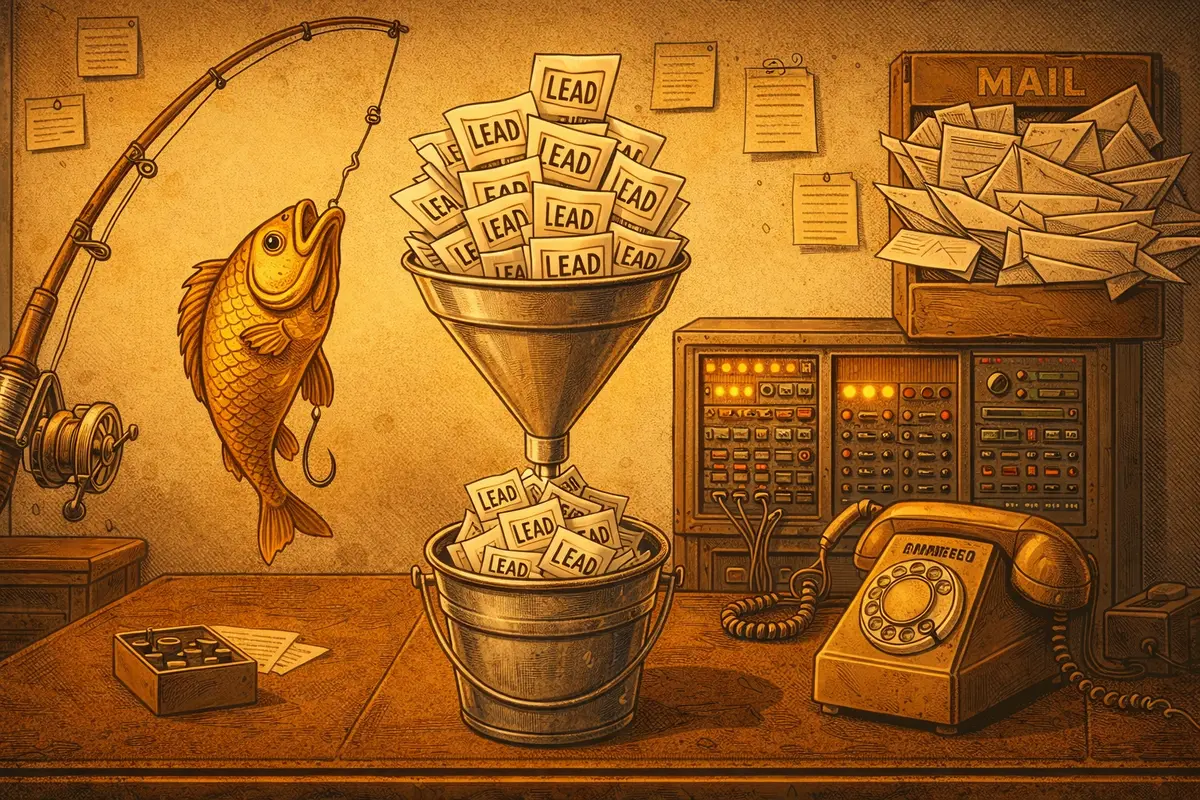
Community involvement converts to a referral pipeline on a 3-to-5-year horizon, not a quarterly one. Track every meaningful contact in a CRM, follow up within 48 hours, let the professional relationship emerge organically, and ask every new referral how they actually heard about you.
Run community involvement on a three-to-five-year horizon, not a quarterly one. Track every meaningful contact in a CRM, follow up inside 48 hours, let the professional angle emerge organically, and ask every new referral how they actually heard about you. That's the system that turns community presence into a pipeline.
How long does community involvement take to pay off?
The biggest barrier to community-based business development is time horizon. In a world where paid digital advertising can generate leads within days of launching a campaign, the six-to-eighteen-month investment required before community involvement produces meaningful referral activity feels agonizing. Agents who are under pressure to grow quarter-over-quarter are often unable to sustain the investment without seeing faster return.
Cami's framing on this is direct: community involvement is not a quarter-over-quarter strategy. It is a three-to-five-year strategy. The agents who have built the deepest, most productive community networks didn't get there in one year. They got there by consistently showing up, consistently adding value, and consistently deepening relationships over an extended period.
The practical implication is that community involvement should be part of a diversified growth strategy, not the whole thing. Run it in parallel with whatever channels are generating near-term business. Don't expect it to carry the quarter. Do expect it to produce an increasingly durable source of high-quality business over a two-to-five-year period, and make peace with the fact that it requires real ongoing investment before that return materializes.
How do you follow up on community contacts without losing them?
One place where community-based networking most commonly breaks down is follow-up. You meet someone meaningful at a committee meeting or a volunteer event, have a genuinely good conversation, and then... nothing happens. Six months later you see them again, reintroduce yourself awkwardly, and the opportunity that was developing resets.
The fix is a simple CRM habit that Cami calls the community contact record. Every person you meet through community involvement who seems relevant, as a potential client, potential referral source, or potential deeper community collaborator, gets a basic record: name, organization, what you talked about, what follow-up you committed to. The follow-up becomes a scheduled task rather than something you're counting on memory to surface at the right moment.
This doesn't require sophisticated software. A simple spreadsheet or a note in your existing CRM works fine. The discipline is in actually creating the record and executing the follow-up within a day or two of the meeting, while the conversation is still fresh. The difference between agents who generate consistent referrals from community involvement and those who don't often comes down to this single practice.
When do you bring up your business in a community context?
Cami addresses a question that agents often have and are reluctant to ask: when do you actually bring up what you do professionally? How do you move from community collaborator to professional contact without it feeling like you've been farming the relationship for leads all along?
The answer is simpler than people expect. You don't hide what you do professionally, you just don't lead with it. When someone asks what you do, you answer. When you learn something professionally relevant to someone in your community network, you share it. When someone mentions a situation where your expertise could be genuinely useful, you offer help in a low-pressure way.
What you don't do is structure every community interaction as a sales conversation. The person sitting next to you on the charity gala planning committee is not a prospect in that context, they're a colleague. The professional relationship develops organically when there's a genuine fit, or it doesn't. Trying to force it accelerates nothing and damages the community relationship.
Cami's experience is that the agents who take this organic approach consistently end up with more business from community relationships than agents who try to be strategic about when to introduce the professional angle. The organic approach works because it allows the trust to develop fully before the professional relationship is introduced, and high trust converts to clients at rates that explicit sales efforts can't match.
How do you measure community-driven referrals?
One challenge with community-based business development is that the causality is often invisible. A client who joins your agency because their neighbor mentioned you at a school fundraiser, where you've been a consistent volunteer for three years, shows up in your book as a referral. The community involvement that made that referral possible doesn't appear in any attribution model.
Cami recommends a simple practice: when onboarding any referral client, ask one genuine question about how they heard of you. Not a survey, just a conversation. "I'm always curious how clients find their way to us, how did you hear about us?" The answers often reveal community connections that would otherwise be invisible. Over time, this data builds a picture of the referral ecology around your agency that helps you understand which community investments are producing results.
This isn't a rigorous analytics framework. It's a qualitative practice of staying curious about where relationships come from. That curiosity, sustained over years, produces insight into what's working that no dashboard can replicate.
Why is the long game the only durable advantage in this business?
Cami closes with a reminder that applies beyond community involvement: the most durable competitive advantages in professional services are built over years, not quarters. The agent who has deep roots in their community, genuine relationships across multiple organizations, and a reputation for showing up and adding value is operating from a position that a competitor with a bigger ad budget can't easily displace.
Digital marketing can be matched or outspent. A genuine community presence, built over years through consistent contribution, is genuinely hard to replicate. It's one of the few things in this business that actually compounds.
Catch the full conversation:
Listen to The Insurance Dudes Podcast
Get more strategies like this on our podcast. Available on all platforms.
Related Episodes
Cami Baker on Non-Profit Work for Insurance Agents (Part 1)
What a Top Digital Marketing Firm Knows That Agents Don't

Martina Brugnoni's Marketing Mastery Principles (Part 1)
Jared Bellmund on Automating Quotes and Building Networks
Stop Making To-Do Lists: Start Making WHO Lists Instead