Why Waiting for a Vacancy Is Your Costliest Hiring Mistake
Craig and Jason are licensed P&C agency owners, co-authors of Million-Dollar Agency, creators of the trademarked Telefunnel, hosts of The Insurance Dudes podcast, and speakers.
Written and reviewed under our editorial process. Found an error? See our corrections policy.

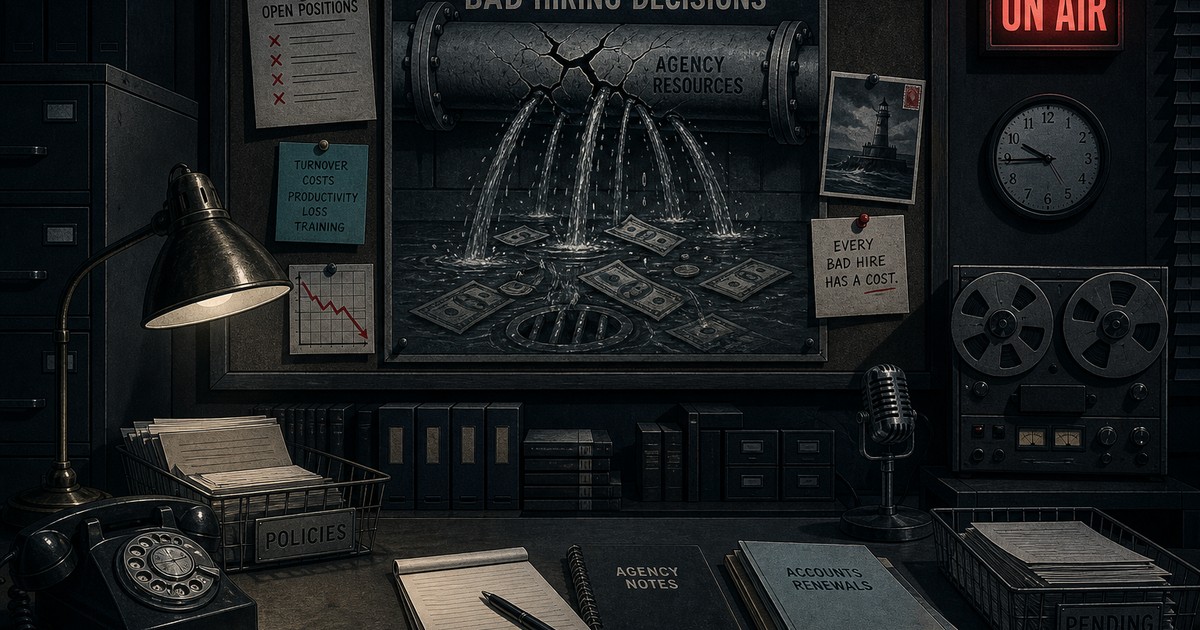
Waiting for a vacancy is the most expensive hiring mistake an insurance agency makes. Build a continuous pipeline through proactive recruiting, warm candidate relationships, team referrals, structured internships, and a written ideal-candidate profile.
Waiting for a vacancy is the most expensive hiring mistake an insurance agency makes because vacancy plus urgency equals bad judgment. Build a continuous talent pipeline instead: recruit at carrier conferences and community events year-round, keep warm relationships with two or three potential candidates at all times, lean on team referrals, run a structured internship, and write your ideal candidate profile before you ever post a role.
Why is reactive hiring the most expensive choice I can make?
Craig and Jason open with an analogy that reframes the entire conversation. Imagine if you only started looking for vacation options the day you needed to leave. No pre-planning, no comparison shopping, just frantic searching for something available on short notice. Every traveler knows that's the worst possible time to be in the market, prices are highest, options are most limited, and the choices you make under that pressure are reliably worse than the choices you'd make with time and alternatives.
Yet that's exactly how most agency owners manage their hiring. A producer gives notice or performance hits a point where action is necessary, and suddenly the owner is frantically searching for anyone who might work. The job posting goes up in panic, the interviews happen under time pressure, and the "this person will be fine" rationalization replaces the "this person is clearly excellent" evidence-based judgment.
The source article Craig and Jason analyze. Amy C's five hiring strategies, provides a framework for thinking about this differently, and their commentary on each point is grounded in direct agency experience. Their analysis is honest about which strategies work better in practice than they sound in theory, and where the common advice falls short for insurance specifically.
What are the five strategies for hiring before I'm desperate?
The first strategy is continuous recruiting, always being in the market, whether or not you have an open seat. This doesn't mean posting jobs continuously or interviewing unnecessarily. It means maintaining awareness of the talent in your market, staying connected to people who might be excellent candidates in the future, and treating every professional interaction as a potential talent assessment. The goal is to always have two or three people in mind who could join your team if the right opportunity arose.
Craig is specific about where this recruiting happens: community events, carrier conferences, referral partner networks, and current team member connections. The best candidates often aren't actively looking, they're performing well in their current role and would only consider a change for something clearly better. Finding them requires presence in places where they naturally appear, not just job boards where desperate people congregate.
The second strategy is building relationships with candidates before you need them. When Craig or Jason meet someone impressive, whether they're in insurance or in a completely different field, they make a note, stay connected on LinkedIn, and occasionally check in with genuine interest rather than immediate recruitment intent. When a seat does open, that network of warm relationships dramatically improves the quality of the candidate pool.
The third strategy is leveraging your current team as a recruitment channel. Producers who love working for you know other people who would love working for you, but they'll only refer those people if they're confident their friends will have a good experience. This means that your referral hiring strategy is ultimately dependent on your retention and culture quality. The strongest recruiting organizations are the ones where existing employees are genuinely proud of where they work.
The fourth strategy is structured internship or shadowing programs. These are underutilized in insurance agencies despite being excellent talent pipelines. A student or career-changer who spends time in your agency before applying for a role has already demonstrated initiative, given you a performance preview, and had their expectations set appropriately. The conversion rate from intern to excellent hire dramatically exceeds the conversion rate from cold application.
The fifth strategy is being honest about what you're actually looking for before you start looking. Most job postings describe the role rather than the person, which attracts applicants who fit the job description rather than candidates who fit the culture and have the potential to excel. Before posting, spend thirty minutes writing down the specific qualities, values, and behaviors that define your best current producer. Then write your posting around that description.
What four-hour block should I run this week to build a pipeline?
This week, block four hours for proactive talent development. Use two of those hours to reach out to five people in your network who you've been impressed by, with no hiring agenda, just genuine connection and visibility maintenance. Use one hour to talk to your top two producers about who they know who might be a great fit for your team at some point. Use the last hour to refine your ideal candidate profile for your next hire, regardless of when that hire might happen.
If you have any relationship with a local college's business or finance program, explore the possibility of a structured internship. Even a part-time, unpaid exposure program can produce excellent candidates and costs you primarily in the structured mentorship investment, which is worthwhile for your current team's development regardless of whether any given intern converts to a hire.
Finally, commit to the mindset shift: you are always hiring. Not always interviewing, not always onboarding, but always aware of your market, always building relationships, and always developing your employer brand so that the right people want to come to you before you have to go looking for them.
Why is waiting for a vacancy the most expensive hiring mistake an agency makes?
The agencies that hire best aren't the ones with the most sophisticated interview processes or the most competitive compensation packages. They're the ones that are never caught desperate, because they've built a continuous, relationship-based talent pipeline that means every hiring decision is made from a position of genuine options. Stop waiting for vacancies to start recruiting, and the quality of your team will compound over years in ways that reactive hiring never allows.
Catch the full conversation:
Level up your agency:
Listen to The Insurance Dudes Podcast
Get more strategies like this on our podcast. Available on all platforms.
Related Episodes
Stop Hiring Out of Desperation: The 5-Step Hiring Fix
7 Sales Mistakes Costing Your Insurance Agency Real Revenue
What a Bad Producer Hire Actually Costs Your P&C Agency
BJ Hill: From Basketball Coach to $18 Million Agency
How to Structure Your P&C Insurance Team So Everyone Wins
