Michelle O'Connor: 25 Years of Insurance Sales Systems
Craig and Jason are licensed P&C agency owners, co-authors of Million-Dollar Agency, creators of the trademarked Telefunnel, hosts of The Insurance Dudes podcast, and speakers.
Written and reviewed under our editorial process. Found an error? See our corrections policy.

After 25 years in insurance: follow up at least five times after first contact (most revenue lives there), document your sales process so the team can run without you, use AI to handle repetitive non-judgment tasks, and design systems flexible enough to survive disruptions.
After 25 years in insurance: follow up at least five times after first contact (most revenue is in the follow-up), document the sales process so your team can execute without you, use AI to handle repetitive non-judgment work, and design systems flexible enough to survive market disruptions.
How Did Michelle O'Connor Build a Career on Process and Presence?
Michelle's longevity in insurance isn't accidental, it's the product of a consistent philosophy about how the business should run. From her earliest years in the industry, she gravitated toward systems: ways of ensuring that the right things happened at the right times without depending entirely on individual energy or memory.
That systems orientation shaped everything from her follow-up discipline to her approach to team management. Michelle understood early that a great month followed by a terrible month isn't a business, it's a cycle of anxiety. What she built instead was a process-driven operation that produced steady results because the key behaviors were embedded in systems, not dependent on daily motivation.
The team management dimension of Michelle's experience is equally substantive. Over 25 years, she's managed people through good markets and bad, through rapid growth and painful contractions. What she's learned about keeping teams performing, about the balance between structure and autonomy, accountability and trust, reflects decades of iteration on what actually works versus what sounds good in a management book.
The technology evolution Michelle has witnessed and adapted to is itself a remarkable story. She entered the industry when CRM systems were primitive, digital marketing was embryonic, and AI was science fiction. Now those tools are central to how competitive agencies operate. Michelle's perspective on technology is shaped by having seen what works and what doesn't from the vantage point of someone who's been in the room long enough to watch cycles complete.
What Principles Hold Up Across 25 Years in Insurance?
Michelle's insights synthesize decades of practice into principles that are both timeless and immediately actionable.
Follow-up is where most of the revenue lives. Michelle is emphatic: the majority of insurance revenue that's available in any given market isn't won by whoever makes the best pitch, it's won by whoever follows up most consistently. Prospects who don't close in the first conversation are usually still in the market. The agencies that stay present through the buyer's decision process, through structured, systematic follow-up, win the business that scattered agencies leave behind.
Sales process consistency is more valuable than individual sales talent. A team of consistently good producers following a defined process will outperform a team of occasional stars operating from intuition. Michelle's sales process philosophy centers on making the repeatable parts of selling truly repeatable, so that the agent's energy can go into the parts that require genuine human judgment and connection.
Technology should amplify human capacity, not substitute for it. Michelle uses AI and automation deliberately: to handle scheduling, trigger follow-up sequences, organize client data, and surface insights that would take hours to develop manually. What she doesn't use technology for is the relationship-building work that determines whether a client stays for one policy or for life. The best technology users in insurance are agents who've thought carefully about which tasks should be systematized and which should stay human.
Structure creates freedom, not constraint. This is the counterintuitive insight that most agency owners discover only after building a team. When your processes are undefined, you end up managing by exception, constantly intervening because there's no shared understanding of how things should work. When your processes are clear, your team can operate independently within them, and you can focus on the strategic decisions that actually require you.
Flexibility is a feature of good systems, not an absence of them. Michelle has managed through enough disruptions to know that rigid systems break when circumstances change. The best operational frameworks are designed with adaptability built in, clear on the outcomes they're driving, flexible on the specific methods used to get there.
What Three Actions Should You Take in Your Agency Today?
Michelle's 25-year perspective points to a few high-leverage actions for agency owners at any stage of growth.
Audit your follow-up system first. How many times does your agency make contact with a prospect who doesn't close on the first conversation? If the answer is less than five, you're leaving significant revenue on the table. Build a follow-up sequence that triggers automatically after initial contact, a series of emails, texts, or calls that keeps your agency present across the prospect's decision timeline.
Map your sales process explicitly. Write down, step by step, what should happen from first contact to closed policy. Share that document with your team. Ask them whether the map matches the territory, whether the documented process is what actually happens. The gaps between the documented process and actual practice are your training curriculum.
Identify one AI or automation tool to implement this quarter. Don't try to automate everything at once, that's how you end up with a complicated system nobody uses. Pick the single most repetitive task that consumes agent time without requiring human judgment, and automate it. Then evaluate the results before adding the next layer.
What systems did Michelle O'Connor build in 25 years of insurance sales?
Michelle O'Connor's 25 years in insurance distill into a clear message: the fundamentals of great client relationships haven't changed, but the tools available to maintain them at scale keep improving. The agencies that thrive are the ones that build robust systems for the mechanical parts of the business so their people can bring full attention to the human parts. That balance, between process and presence, is the sustainable competitive advantage in a commoditized market.
Catch the full conversation:
Level up your agency:
Listen to The Insurance Dudes Podcast
Get more strategies like this on our podcast. Available on all platforms.
Related Episodes
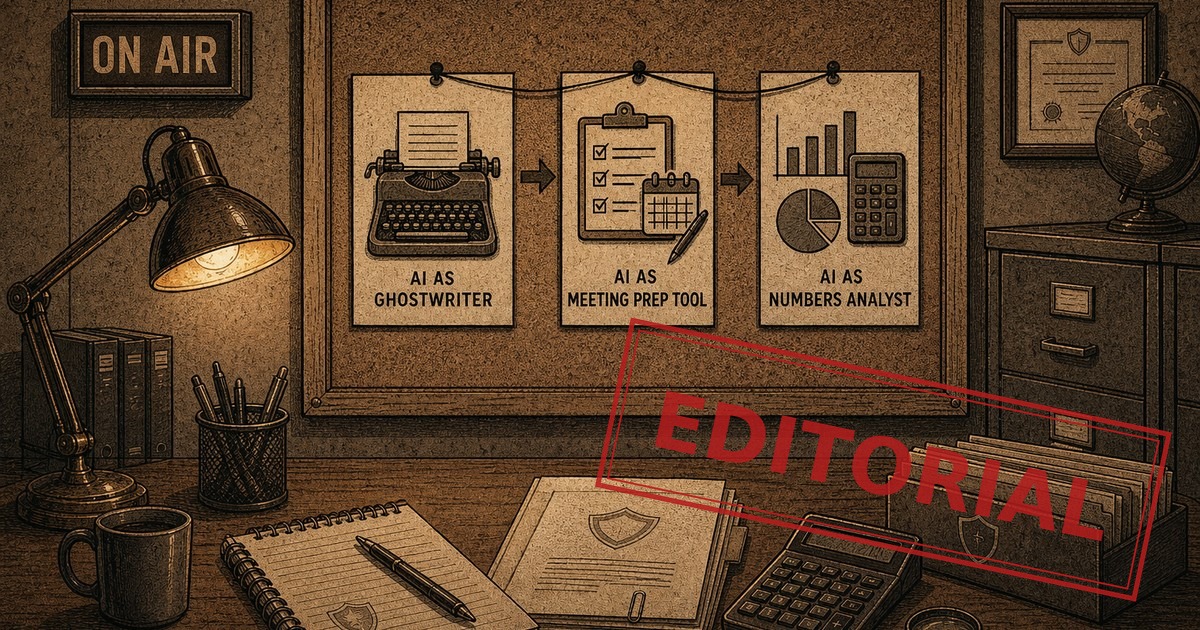
3 Quick AI Wins Captive Agents Can Use With Zero Risk
Dan Faggella: How AI Will Transform Insurance Agencies
Jared Bellmund on Automating Quotes and Building Networks
Kelly Donahue's Framework for a Future-Ready Agency Culture

Legal Protection for Insurance Agents: What Not to Ignore