Eric Kinneman's Mortgage-Insurance Referral System (Part 2)
Craig and Jason are licensed P&C agency owners, co-authors of Million-Dollar Agency, creators of the trademarked Telefunnel, hosts of The Insurance Dudes podcast, and speakers.
Written and reviewed under our editorial process. Found an error? See our corrections policy.

Build a mortgage-insurance partnership that produces consistent homeowner referrals by sending business both ways. Open with intelligence not pitch, demonstrate value before any referral lands, run a weekly feedback loop, push reciprocal referrals from your book, and exploit 30-day onboarding, escrow changes, and lender-placed prevention.
Build a mortgage-insurance partnership that produces consistent homeowner referrals by running the business as a two-way flow. Open with intelligence not pitch, demonstrate value before any referral lands, run a weekly feedback loop, refer your existing buyers to the loan officer, then expand with 30-day onboarding reviews, escrow-change re-engagement, and lender-placed prevention plays.
What does a real mortgage-insurance partnership require?
The word partnership gets thrown around a lot in professional relationship contexts. Eric is precise about what it means in the mortgage-insurance context. A true partnership is one where both parties actively look for opportunities to help the other, communicate proactively rather than reactively, and hold themselves accountable to the quality and speed of the value they deliver.
In practice, this means the insurance agent is not waiting for the loan officer to send clients. The insurance agent is also thinking about how they can send business to the loan officer, homebuyers who aren't yet working with a lender, clients who are refinancing and need a current market rate, prospects who express interest in purchasing property. The referral flow goes both directions, and the agent who generates referrals to their mortgage partner is many times more likely to receive referrals from them.
Eric's observation here is worth sitting with: most insurance agents approach loan officers as a lead source. The agents who build genuinely productive partnerships approach loan officers as professional colleagues whose success they're invested in. That distinction in orientation, from extraction to mutual value, is what separates the agencies with deep, durable mortgage referral networks from the ones who keep starting over with new loan officers because the relationships never stick.
How do I structure a mortgage partnership that actually works?
Eric walks through the anatomy of a productive mortgage-insurance partnership in concrete terms.
The introduction conversation. When you approach a loan officer to build a relationship, the first conversation should be an intelligence-gathering session, not a pitch. Ask them about their business. What types of loans do they specialize in? What are their biggest frustrations in the homebuying process? Where does insurance most commonly cause friction in their transactions? Listen. Take notes. Then, and only then, explain specifically how you address those friction points. The agents who do this land in a different category in the loan officer's mind from the very first conversation.
The value demonstration. After the introduction conversation, the most effective next step is to demonstrate your capabilities before the loan officer has sent you a single client. Offer to review their standard communication to buyers about insurance requirements. Point out anything that might cause confusion or create unrealistic expectations. Show them a sample binder and walk through what each element means to a lender's underwriter. This kind of proactive expertise-sharing does more to build confidence than any amount of claiming to be fast and reliable.
The feedback loop. Once referrals start flowing, the partnership needs a consistent feedback mechanism. Eric recommends a brief weekly or bi-weekly check-in, it can be as short as five minutes, where the insurance agent updates the loan officer on any active files and solicits feedback on recent transactions. Did everything go smoothly? Was there anything that created friction? This communication discipline signals that you take the relationship seriously and gives you early warning when something isn't working before it becomes a reason for the loan officer to route clients elsewhere.
The reciprocal referral system. For the partnership to be genuinely mutual, the insurance agent needs a systematic way to identify and refer potential clients to their mortgage partner. The most reliable source of these referrals is the existing book of business. Clients who call about homeowners policies on a new purchase are obvious. But Eric points to a less obvious and often overlooked category: existing clients who mention they're considering buying a different home, upgrading, or purchasing a vacation property. These conversations happen constantly in the normal course of client service. An agent with a strong mortgage partner refers those clients immediately. An agent without one leaves those clients to find their own lender, and often ends up losing the insurance relationship in the process when the buyer's realtor steers them to a preferred agent.
What advanced cross-sell moves work through this channel?
The homeowners policy is the foundation of the mortgage-insurance relationship, but Eric's advanced-layer guidance is about what comes after the binding.
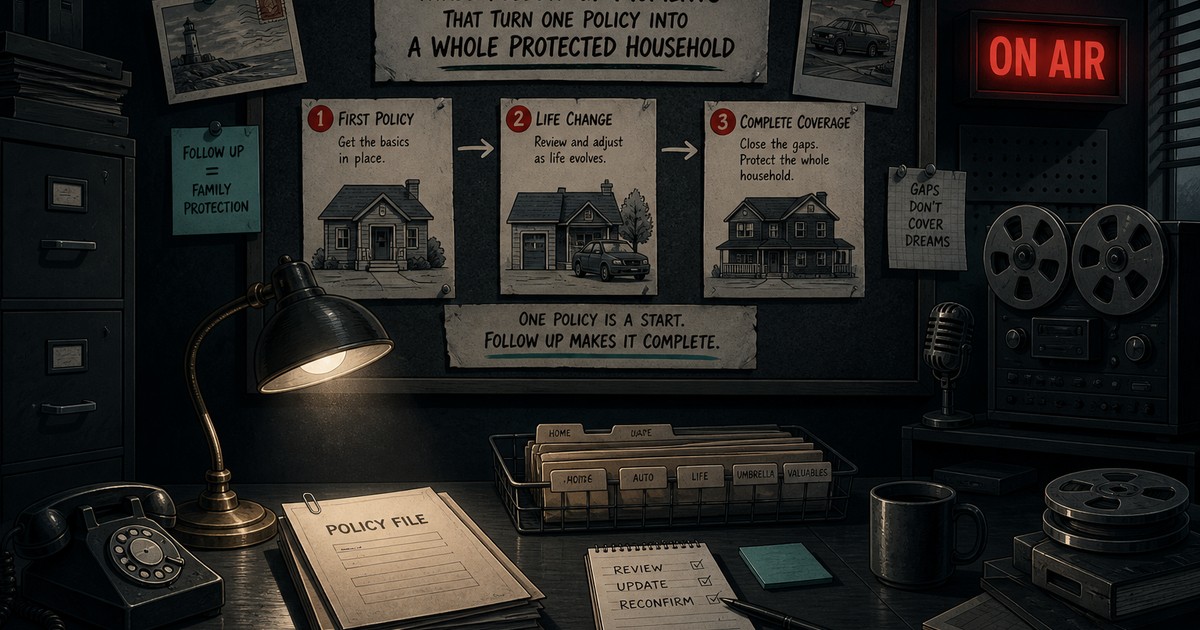
The new homeowner onboarding sequence. A client who just closed on a home is in the middle of a major life transition. They have a mortgage now, which means they have financial obligations they didn't have before. They have a property that may need flood coverage, earthquake coverage, or other supplemental policies depending on the location. They may have life circumstances that suggest umbrella liability coverage. They often have auto policies with other carriers that haven't been reviewed since the home purchase significantly changed their asset profile.
The agency that contacts a new homeowner client within 30 days of closing, not to sell them something, but to check in, make sure the policy is correct, and offer a complete coverage review, initiates conversations that regularly surface additional coverage needs. That 30-day review is also the most effective retention tool you can deploy at the beginning of a new client relationship, because it signals that you're not just a transaction processor.
Escrow changes as re-engagement triggers. When a homeowner's escrow account adjusts, at the annual tax or insurance reassessment, it often results in their monthly payment changing. This is a moment of client attention: they notice the change, they may call to ask about it, and they're generally open to a conversation about their coverage and costs in a way they might not be during a routine renewal. Agents who have systems to identify and outreach during escrow change events convert those conversations into multi-line policy reviews at high rates.
The lender-placed insurance prevention play. When a homeowner lets their insurance lapse, whether by accident or intentional cancellation, the lender places insurance on the property at the owner's expense. Lender-placed insurance is dramatically more expensive than standard homeowner coverage and offers the homeowner essentially no protection. Eric's insight is that insurance agents who proactively communicate with mortgage servicers to identify clients at risk of lender-placed insurance can position themselves as the solution to a genuinely painful situation. This is a niche within the mortgage-insurance relationship that almost no agents pursue deliberately, which means the competitive landscape is virtually empty.
How do I act on this partnership playbook this week?
Building one excellent mortgage partnership is worth more than casual relationships with twenty loan officers. Focus your energy on finding one or two professionals in your market whose client profile aligns with your agency's strengths, invest in understanding their business, and build the operational discipline to be the agent they can count on in every transaction.
The reciprocal referral discipline is not optional if you want the relationship to last. Build the habit of identifying and referring potential homebuyers from your existing book, and do it consistently enough that the loan officer feels the flow of business going in their direction.
Then look beyond the initial transaction to the 30-day review, the multi-line conversion, and the escrow change outreach. The mortgage-insurance partnership doesn't peak when you bind the homeowners policy. It expands for years if you manage the client relationship with the same intentionality you brought to building the partnership itself.
What is the bottom line on mortgage-insurance partnerships?
Eric Kinneman's two-part conversation with the Insurance Dudes is a practical blueprint for transforming one of the most underutilized referral channels available to P&C agents into a consistent, high-quality source of homeowner business. Part 2 makes the partnership mechanics concrete: the structure of a productive relationship, the reciprocal referral discipline, the advanced cross-selling opportunities that most agents never pursue, and the niche strategies that put the sharpest agents in a category entirely their own. The mortgage-insurance partnership is available to any agent willing to do the work to build it properly. Now you know how.
Catch the full conversation:
This is Part 2 of a 2-part conversation with Eric Kinneman. Read Part 1 here.
About Eric Kinneman: Mortgage professional and lending educator known as the Mortgage Dude, focused on building productive cross-industry relationships between lending and insurance professionals., LinkedIn | Website
Level up your agency:
Listen to The Insurance Dudes Podcast
Get more strategies like this on our podcast. Available on all platforms.
Related Episodes
Eric Kinneman's Lending Nuggets for Cross-Selling (Part 1)

Major Mortgage Masterclass: Cross-Selling Insurance (Part 1)
Major Mortgage Masterclass: Advanced Cross-Selling (Part 2)
Mike Jones on Cross-Selling Insurance With Mortgage Leads

Real Estate Intelligence for Insurance Agents (Part 2)