Eric Kinneman's Lending Nuggets for Cross-Selling (Part 1)
Craig and Jason are licensed P&C agency owners, co-authors of Million-Dollar Agency, creators of the trademarked Telefunnel, hosts of The Insurance Dudes podcast, and speakers.
Written and reviewed under our editorial process. Found an error? See our corrections policy.

Cross-sell mortgage clients into homeowners by learning the lender's process. Same-day binders, clean coverage that survives CTC review, and proactive communication beat lowest premium every time. Loan officers refer to insurance agents who close transactions smoothly, not the ones who shave $50 off a quote.
To cross-sell mortgage clients into homeowners, learn the lender's process well enough to make their job easier. Same-day binders, clean coverage that clears CTC review without surprises, and proactive communication win loan officer referrals. Lowest premium does not. Eric Kinneman, the Mortgage Dude, lays out exactly what loan officers want from an insurance partner.
Why don't my mortgage referral relationships actually produce business?
Before getting into the substance of what Eric shared, it's worth naming the failure mode that this episode is designed to correct. Most insurance agent-mortgage lender relationships are not partnerships. They are referral exchanges that happen to benefit both parties occasionally. An agent meets a loan officer at a networking event, they swap cards, they send each other a few clients, and then one of them moves jobs or markets and the relationship evaporates.
This happens because neither party has invested in genuinely understanding the other's business. The insurance agent knows that mortgage lenders can refer homebuyers. The mortgage lender knows that insurance agents can handle the hazard insurance requirement quickly. That's the extent of the mutual knowledge, and it's not enough to build something durable on.
Eric's premise is that an insurance agent who understands the mortgage process, not superficially, but deeply enough to speak the language, anticipate the timelines, and understand what makes a loan officer's life harder or easier, becomes an indispensable partner rather than an interchangeable vendor. That shift in status changes everything about the quality and consistency of the referral relationship.
What do loan officers actually want from an insurance partner?
The insurance agent who understands closing timelines becomes a hero. From the moment a purchase agreement is signed, a mortgage transaction is on a clock. There are inspection contingencies, appraisal windows, underwriting timelines, and a closing date that everyone, the buyer, the seller, the realtor, and the lender, is oriented around. A delayed closing costs real money and creates real stress for everyone involved.
Homeowners insurance is one of the last items required before closing, and it's also one of the most unpredictable in terms of turnaround time. An insurance agent who can be reached quickly, issue a binder the same day, and communicate proactively with the loan officer about where things stand is a genuine asset to the transaction. An insurance agent who takes three days to respond, requires multiple information requests, and goes quiet at critical moments is a liability. Eric is direct about which type of agent loan officers remember and refer to again.
Know what "clear to close" means and what threatens it. CTC, clear to close, is the moment in the mortgage process when the underwriter has approved everything and the loan is ready to fund. At that point, the last thing a loan officer wants is a surprise. Homeowners insurance that comes in with a coverage gap flagged by the underwriter, or a binder that doesn't match the address, or a replacement cost estimate that the lender finds inadequate, any of these can delay or derail a closing that everyone thought was finished. The insurance agent who understands what lenders look for in a binder, and who proactively structures policies to sail through underwriting review, becomes the agent that loan officers call first because they create smooth closings rather than last-minute scrambles.
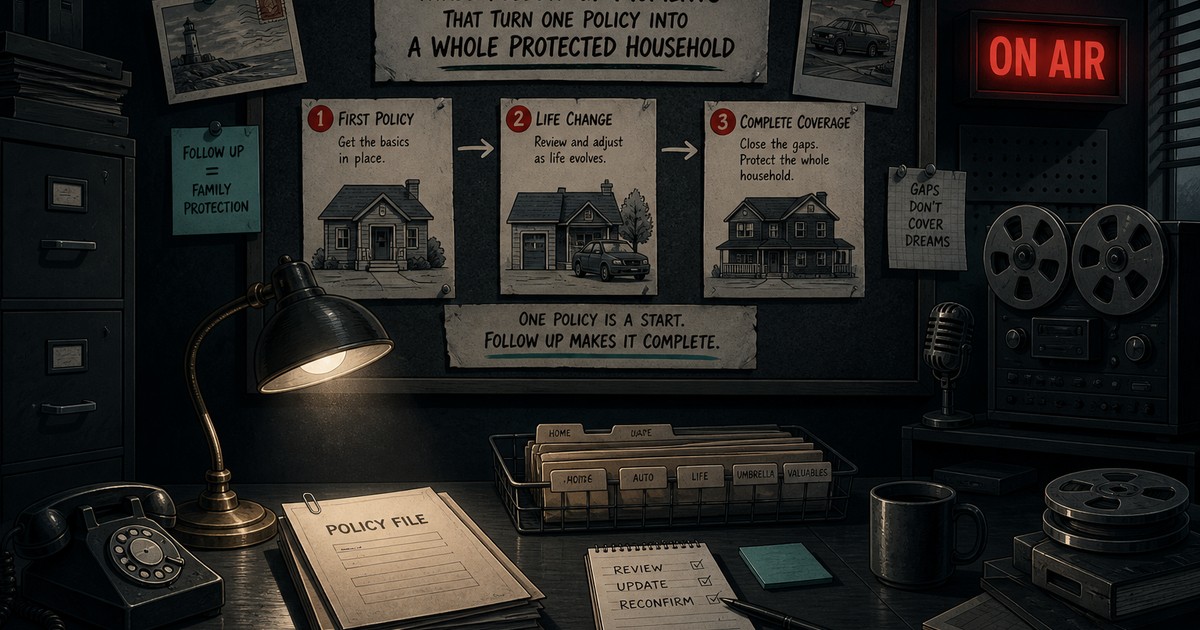
The cross-sell opportunity most agents miss. Eric makes a point that surprises many insurance professionals: mortgage clients are among the most financially aware consumers in any agent's book. They just went through a detailed financial disclosure process. They have a clear picture of their assets, their liabilities, and the things they want to protect. They are in a life transition moment, buying a home, that almost always involves other coverages coming up for review: auto policies, umbrella coverage, life insurance needs. The homeowners policy is the entry point, not the destination. Agents who treat the new homebuyer as a homeowners-only client are leaving significant cross-sell revenue on the table.
What loan officers actually want from an insurance partner. Eric lists these in order of importance: responsiveness (first and above all else), accuracy (the right coverage the first time, no surprises at closing), and communication (keeping the loan officer informed without requiring them to chase you). Notice that price is not on the list. Loan officers don't primarily care what premium their buyer pays, they care that the transaction closes on time and without drama. The insurance agent who provides that outcome will receive referrals over lower-priced competitors every time.
How to approach a loan officer for the first time. Most insurance agents get this wrong by leading with what they want, referrals, rather than what they offer. Eric's recommendation is to start with education: ask a loan officer to walk you through their process from application to closing, identify the moments where insurance creates friction, and then present specific ways you can eliminate that friction. That approach positions you as a problem-solver rather than a referral-hunter, and it opens a conversation that most loan officers have never had with an insurance agent.
Understanding rate locks and urgency. When a borrower locks their mortgage rate, they're often locking for a specific period, 30, 45, or 60 days. If the closing slips past the lock expiration, the borrower may face rate extension fees or lose the locked rate entirely. Insurance delays that contribute to timeline slippage are not trivial inconveniences. Understanding rate locks gives insurance agents context for why their speed and responsiveness has financial stakes beyond the transaction itself.
How do I turn loan officers into a reliable referral channel?
If you have mortgage relationships that are not generating consistent homeowner referrals, the most likely explanation is not that the loan officers don't like you. It's that you haven't differentiated yourself from the other insurance agents who occasionally show up in their orbit.
The differentiation strategy starts with one thing: learn the mortgage process well enough to speak intelligently about it. Spend an hour on the phone with a loan officer asking questions about their workflow. Read about the CTC process. Understand what a binder needs to contain to satisfy a lender's underwriting requirements. That investment of time will change how loan officers perceive you, from someone who happens to be in the same transaction to someone who understands what they're dealing with and makes it easier.
Then build the operational infrastructure to be fast. Same-day binders for standard risks. A direct line that loan officers can reach during business hours. A communication protocol that keeps them informed at every step. The agencies that build mortgage referral networks strong enough to significantly drive their homeowner premium don't do it through charm. They do it through reliability that becomes reputation.
What is the bottom line on mortgage cross-sell?
Eric Kinneman walked into this conversation as the Mortgage Dude and delivered exactly what insurance agents need, a candid look at how mortgage professionals think, what they value in insurance partners, and where most agents miss the opportunity to become irreplaceable. Part 1 covers the foundational lending knowledge and relationship principles. Part 2 goes deeper into the partnership structures and advanced strategies that turn occasional referrals into a consistent, high-value lead channel.
Catch the full conversation:
This is Part 1 of a 2-part conversation with Eric Kinneman.
About Eric Kinneman: Mortgage professional and lending educator known as the Mortgage Dude, focused on building productive cross-industry relationships between lending and insurance professionals., LinkedIn | Website
Level up your agency:
Listen to The Insurance Dudes Podcast
Get more strategies like this on our podcast. Available on all platforms.
Related Episodes
Eric Kinneman's Mortgage-Insurance Referral System (Part 2)

Major Mortgage Masterclass: Cross-Selling Insurance (Part 1)
Major Mortgage Masterclass: Advanced Cross-Selling (Part 2)
Mike Jones on Cross-Selling Insurance With Mortgage Leads

Real Estate Intelligence for Insurance Agents (Part 2)