Bryan Falchuk Returns: What He Sees in Insurance's Future
Craig and Jason are licensed P&C agency owners, co-authors of Million-Dollar Agency, creators of the trademarked Telefunnel, hosts of The Insurance Dudes podcast, and speakers.
Written and reviewed under our editorial process. Found an error? See our corrections policy.
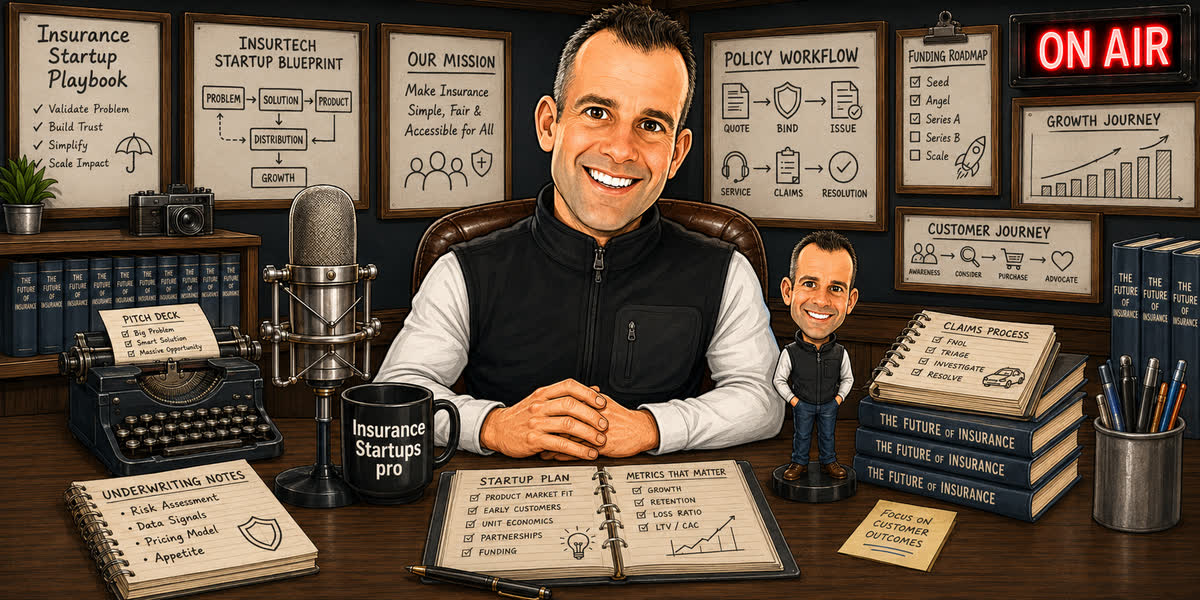
Bryan Falchuk sees insurance reshaping around agents who update their identity from salesperson to trusted advisor faster than the market moves. Survivors close knowledge gaps with curiosity instead of defensiveness, write down what they believe the industry looks like in five years, then build the version of themselves it requires.
Bryan Falchuk sees insurance reshaping around agents who update their identity from salesperson to trusted advisor faster than the market moves. The survivors close knowledge gaps with curiosity instead of defensive expertise, write down what they actually believe the industry looks like in five years, and build the version of themselves that future requires.
Who is Bryan Falchuk and why does his view of insurance matter?
Bryan Falchuk's biography reads like the kind of thing you'd outline in a personal development book, which makes sense, because he's written one. He's spent years operating at senior levels in the insurance industry, which gives him a practitioner's view of where the business is going. He's also a certified life coach and best-selling author who has studied the mechanics of human transformation with the same rigor he brought to insurance operations. That combination is rare and genuinely useful.
His personal story involves navigating serious health challenges, the kind that force a reckoning with what actually matters and what's just noise. That experience didn't just produce a book. It produced a way of seeing the world that's more calibrated than most, more honest about what real change requires, and less interested in the comfortable fictions people tell themselves when they're avoiding difficult decisions.
What Bryan brings to a conversation about insurance's future isn't data-driven market analysis. It's something more valuable: a clear-eyed framework for understanding how industries transform and what the individuals inside those industries need to do to come through the transformation in a stronger position than where they started.
What does Bryan Falchuk see in insurance's future?
Bryan's read on where insurance is headed doesn't start with technology or regulation or carrier consolidation. It starts with people. Specifically, with the question of whether the people running agencies and driving the industry are doing the inner work that sustainable change requires.
His premise, drawn from the same principles he writes and coaches around, is that external change, market conditions, consumer behavior, technology, always moves faster than internal readiness. The gap between those two speeds is where most professional suffering happens. The agent who hasn't updated their identity from "salesperson" to "trusted advisor" will struggle not because they lack skills but because their self-concept is organized around an approach the market no longer rewards.
This isn't abstract. It shows up in very concrete ways: in how an agent responds when a prospect asks to compare quotes online rather than meet in person, in how an agency owner reacts when a carrier reduces commissions, in how a producer handles a market where every conversation includes a client mentioning an app they saw advertised. The emotional register of those responses, defensive, curious, threatened, opportunistic, is a direct readout of the internal work someone has or hasn't done.
Bryan's framework pushes agents toward what he calls a future-orientation. Not optimism as a mood, but optimism as a disciplined practice of asking: What is this becoming, and what version of me needs to exist to be relevant in it? That question, asked honestly and regularly, generates the kind of incremental adaptation that adds up to genuine evolution.
Why do experienced agents protect their gaps instead of closing them?
One of the most useful things Bryan does in this conversation is name a specific pattern that holds insurance professionals back: the reluctance to admit knowledge gaps in a business where authority is everything.
Insurance is an expertise business. Clients come to agents because they don't know what they need and they trust the agent to know it for them. That dynamic creates real pressure to project competence at all times, which in turn creates real resistance to admitting that there are things you don't understand or haven't kept up with. The technology changes. The products change. Consumer expectations change. The agent who's been doing it the same way for fifteen years has real knowledge gaps, and the choice to protect the appearance of competence rather than close those gaps is exactly how experienced agents become irrelevant.
Bryan's life coaching background gives him a clinical view of this. Defensive expertise, the posture of already-knowing, is a response to fear, not a strategic choice. And like most fear responses, it makes the situation worse rather than better. The way through it is a deliberate practice of curiosity. Not "what do I need to know so I can look competent" but "what is actually true about what's happening in this industry and what do I actually need to understand to serve my clients better."
How do you build a 5-year future map for your agency this week?
The practical application here is a discipline, not a tactic. Once a week, spend twenty minutes reading about something in insurance that you don't fully understand and have been avoiding. New technology platforms. Coverage gaps in emerging risk categories. Changes in how consumers research and purchase. Not to become an expert in everything, that's not the goal. The goal is to stay curious and honest about the landscape you're operating in.
Separately, take Bryan's future-orientation exercise seriously. Write down what you believe insurance will look like five years from now. Not what you hope it will look like, what you actually believe. Then write down what that requires from you personally. What skills, what relationships, what ways of operating. That document is your development map. The gap between where you are and what that document describes is your work.
The agencies that come out of the current period of disruption in a strong position will be led by people who did this kind of thinking deliberately, not by accident. Bryan's message is that the future is not something that happens to you. It's something you either prepare for or get surprised by.
What's the takeaway for agency owners?
Bryan Falchuk's return to The Insurance Dudes is a reminder that the most important infrastructure in your agency isn't your CRM or your marketing system. It's the way the people running the place think about the future and their place in it. The industry is changing in real ways. The agents who engage that change with honest curiosity and genuine internal work will find opportunities inside the disruption. Bryan's been through the kind of crucible that strips away the comfortable stories, and what he found on the other side is directly applicable to anyone who wants to build something in insurance that's still standing ten years from now.
Catch the full conversation:
About Bryan Falchuk: Bryan Falchuk is a best-selling author, certified life coach, and insurance industry executive. He is the author of Do a Day and works with leaders navigating personal and professional transformation.
Level up your agency:
Listen to The Insurance Dudes Podcast
Get more strategies like this on our podcast. Available on all platforms.
Related Episodes
Kim Ades on the Coaching Method That Rewires How You Think
Bo Eason: What an NFL Pro Teaches About Commitment

Brad Lea on Billionaire Breakthroughs for Insurance Agents
Call Me Crazy: Why Bold Risks Are the Rational Move
Building Momentum in Your Agency When the Train Won't Stop