6-Step Success #2: The Systems That Make Scale Possible
Craig and Jason are licensed P&C agency owners, co-authors of Million-Dollar Agency, creators of the trademarked Telefunnel, hosts of The Insurance Dudes podcast, and speakers.
Written and reviewed under our editorial process. Found an error? See our corrections policy.
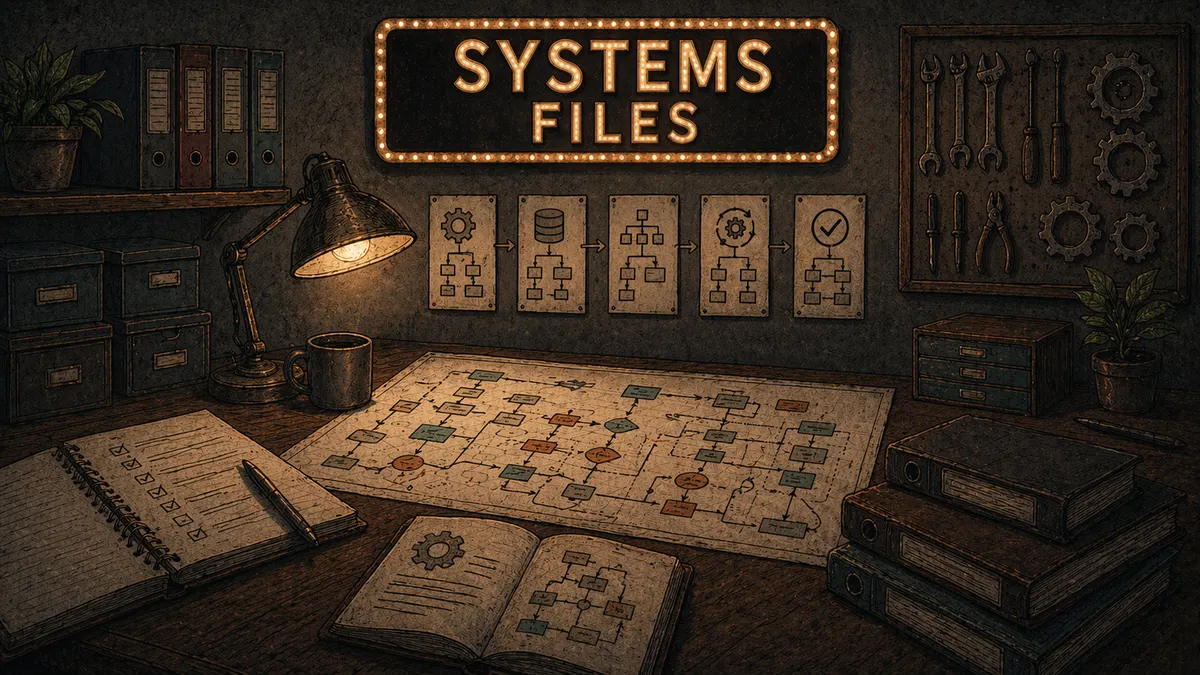
Step 2 of the Six Step Success framework: build documented systems for onboarding, service, renewals, and lead follow-up. Systems break the owner-bandwidth ceiling and let the agency deliver consistent results without the owner inside every transaction.
Step 2 of the Six Step Success framework: build four documented systems, client onboarding, service workflow, renewal management, and lead follow-up. Systems live in the organization, not in the owner's head, which is what makes real scale possible.
Without them, the owner's bandwidth is the agency's ceiling. With them, the agency delivers consistent results regardless of who picks up the phone.
What is the difference between a system and a habit?
A habit lives in a person. A system lives in the organization. This distinction sounds academic until you think about what happens when the person with the habit leaves.
When an agency's best producer leaves, the agency loses not just their production but all the tacit knowledge they carried, the way they handled certain client conversations, the sequence they followed for complex commercial quotes, the personal relationships with certain accounts. If that knowledge was never documented or made structural, it leaves with the person.
Systems extract the tacit knowledge from individuals and make it organizational property. A documented sales process means the next producer can learn how the agency does things, not just how one person does things. A service workflow means client experience doesn't degrade when a service specialist goes on leave. An onboarding process means new hires get the same orientation regardless of who happens to have time to train them that week.
This isn't about eliminating individual judgment, it's about providing the structure within which individual judgment operates. Good systems tell people how to handle routine situations, freeing up judgment for the non-routine ones where it actually matters.
Which systems are most insurance agencies missing?
Jason identifies the four systems that most growing insurance agencies are either missing entirely or have in primitive form.
Client onboarding. What happens after a policy binds? In many agencies, the answer is "the client gets a policy document and then hears from us at renewal." A real onboarding system ensures that new clients have a clear understanding of their coverage, know how to reach the agency for service needs, and receive at least one proactive contact in the first thirty days confirming they have everything they need. Agencies that do this have materially better retention in the critical first-year period.
Service workflow. When a client calls with a change, a question, or a claim, what is the specific process for handling it? A service workflow ensures that every service interaction is handled consistently, that nothing falls through the cracks, and that the client experience doesn't depend on which staff member picks up the phone. Without a documented workflow, service quality is as variable as the staff handling it.
Renewal management. Renewal is when clients are most likely to shop around, and it's also when agents have the most natural opportunity to deepen the relationship and cross-sell. A renewal management system identifies renewals in advance, ensures proactive outreach before the renewal date, and captures the outcome, retained, written changes, lost and why. Most agencies manage renewals reactively; a system makes it proactive.
Lead follow-up. The research on lead response in insurance is consistent: response speed is the single biggest factor in conversion. A lead follow-up system specifies response time standards, follow-up sequences for leads that don't convert immediately, and hand-off protocols between staff. Most agencies don't have this documented, which means follow-up quality is as variable as whoever is handling it on a given day.
How do you build a systems plan for the year?
The 2022 planning step this episode drives toward is a systems audit: for each of the critical systems above, what is the current state? Does the system exist in documented form? Is it actually being followed? What are the most visible gaps between the current state and what a well-run version looks like?
The audit doesn't need to produce all four systems in January. It needs to produce a priority order and a build schedule. Which system gap is most costly to the agency right now? Start there. Complete it to the point of actual implementation, documented, trained, and in use, before starting the next one. A completed simple system is worth more than a complex one that's still being designed in November.
The payoff for this work isn't immediate, but it compounds. Every system you build reduces the complexity the owner carries personally, creates more consistent client experiences, and makes the agency more resilient to staff changes. Over three years of consistent systems building, an agency becomes qualitatively more manageable, and qualitatively more valuable.
Catch the full conversation:
Listen to The Insurance Dudes Podcast
Get more strategies like this on our podcast. Available on all platforms.
Related Episodes
6-Step Success #4: Why What Your Team Knows Matters Most

6-Step Success #5: Building the Team That Builds the Agency

6-Step Success #1: Mindset, Vision, and the Foundation
6-Step Success #3: Building a Lead Engine That Actually Runs
6-Step Success #6: Building the Business Itself, Long Term