Dan Elzer on Sustaining Sales Excellence at Shelter (Part 2)
Craig and Jason are licensed P&C agency owners, co-authors of Million-Dollar Agency, creators of the trademarked Telefunnel, hosts of The Insurance Dudes podcast, and speakers.
Written and reviewed under our editorial process. Found an error? See our corrections policy.
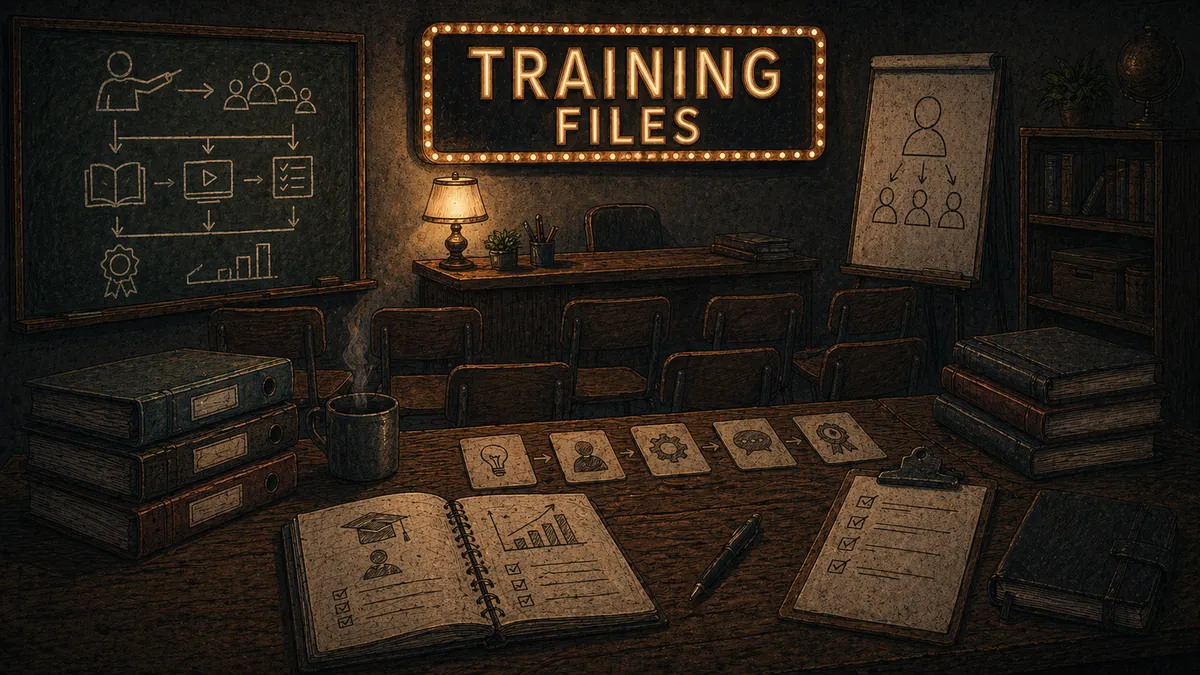
Train sales process through deliberate practice, then verify execution with live call observation, recorded conversations, and documented discovery notes. Give specific feedback tied to specific moments. Run monthly role-plays and quarterly call reviews. Process decays in three to six months without reinforcement.
Teach a sales process by combining deliberate practice, real observation, and feedback specific enough to change behavior, then keep reinforcing it on a schedule. Without active reinforcement, every team drifts back to old habits within three to six months. Documentation is the easy part. Execution is what separates real agencies.
Why does sales process implementation fail in most agencies?
The most common failure pattern when agencies try to implement a sales process is this: the owner or manager documents the process, presents it to the team in a meeting, and then expects behavior to change. It doesn't. Producers who have been doing it their own way continue to do it their own way. The documented process lives in a folder or shared drive and is referenced occasionally when onboarding new staff, but doesn't actually change how sales conversations are conducted.
Dan is direct about what this tells you. A process that isn't reinforced isn't a process, it's a wish. Real implementation requires three things that most agencies skip: practice before the process goes live, observation to verify execution, and feedback that's specific enough to actually change behavior.
Practice means producers rehearse the process before they use it with real clients. Role-play, recorded mock conversations, whatever format works for your team's learning style. Producers who have never run through the discovery phase of the sales process ten or twenty times in a practice setting are going to default to their own habits the moment they're in a real conversation. Practice converts the documented process from something the producer knows about into something the producer knows how to do.
How should I observe sales calls and give feedback that actually changes behavior?
Observation is where most managers are uncomfortable. Sitting in on sales calls, listening to recorded conversations, reviewing documented discovery notes, it feels intrusive, and many managers rationalize skipping it. Dan's view is that without observation, you don't actually know what's happening in your sales conversations. You have reports and results, but you don't know why results look the way they do.
Observation reveals the gap between the process as written and the process as executed. Almost always there's a gap. Sometimes it's small and easy to address. Sometimes it's substantial, a producer who has skipped the discovery phase entirely and is essentially selling on price, or a producer whose coverage explanation is technically accurate but impossible for a non-insurance person to follow. You can't know these things from results data alone, because the same closing rate can be achieved in very different ways.
The feedback conversation that follows observation is the actual coaching moment. Dan describes a feedback structure that produces change: start by having the producer self-assess what they thought went well and what they'd do differently. This surfaces the producer's own awareness of the gap before you tell them about it. When producers diagnose their own weaknesses, they're more receptive to specific coaching than when they receive a manager's assessment without context.
The specificity of feedback matters enormously. "Your discovery could be better" is not actionable. "You moved to the coverage presentation before asking about prior claims history, let's talk about what you might have missed and why that matters for the recommendation you made" is actionable. Specific feedback about a specific moment in a specific conversation is the kind of coaching that produces genuine skill development.
How do I use process data to spot systemic problems on my sales team?
One of the underused advantages of a documented sales process is that it generates data that can surface systemic issues, not just individual performance problems but issues that affect the whole team.
When multiple producers are consistently struggling with the same stage of the process, that's not an individual performance problem. It's a training problem, or possibly a process design problem. If discovery notes are consistently thin across the whole team, either the training on discovery wasn't sufficient or the discovery framework itself is unclear. Either way, the fix is systemic rather than individual.
Dan describes reviewing process adherence data across a team regularly, looking for patterns in where the breakdowns cluster. If most producers handle contact and qualification well but the coverage explanation stage is where things fall apart, that tells you something specific about where the next training investment should go. Without this data, managers are guessing about training priorities.
How do I keep a sales process from decaying over six months?
Processes degrade. Without active reinforcement, even well-trained teams drift back toward their own habits over three to six months. Dan has a phrase for this: "decay without practice." It's not deliberate noncompliance, it's just the natural tendency of habits to reassert themselves when the process is no longer actively reinforced.
The solution is to make process reinforcement a regular feature of team life rather than an occasional event. Monthly role-play sessions, quarterly recorded conversation reviews, consistent documentation requirements, these aren't burdens when they're established as normal practice. They're burdens when they're introduced as interventions after decay has already occurred.
The agencies that sustain sales excellence over years are the ones where process reinforcement is structural and scheduled, not reactive and sporadic. Building that structure is an investment. The return is a sales operation that doesn't require constant rescue and that produces consistent results across the team rather than depending on a handful of individuals who happen to be naturally good.
Catch the full conversation:
Listen to The Insurance Dudes Podcast
Get more strategies like this on our podcast. Available on all platforms.
Related Episodes
Dan Elzer on Bringing Order to Agency Chaos (Part 1)

Neal Tricarico on the Process That Prevents Poor Production
6-Step Success #4: Why What Your Team Knows Matters Most

Randy Thompson on Coaching Tidbits That Never Get Old
Randy Thompson: A Captive Agent With a Coach's Mind